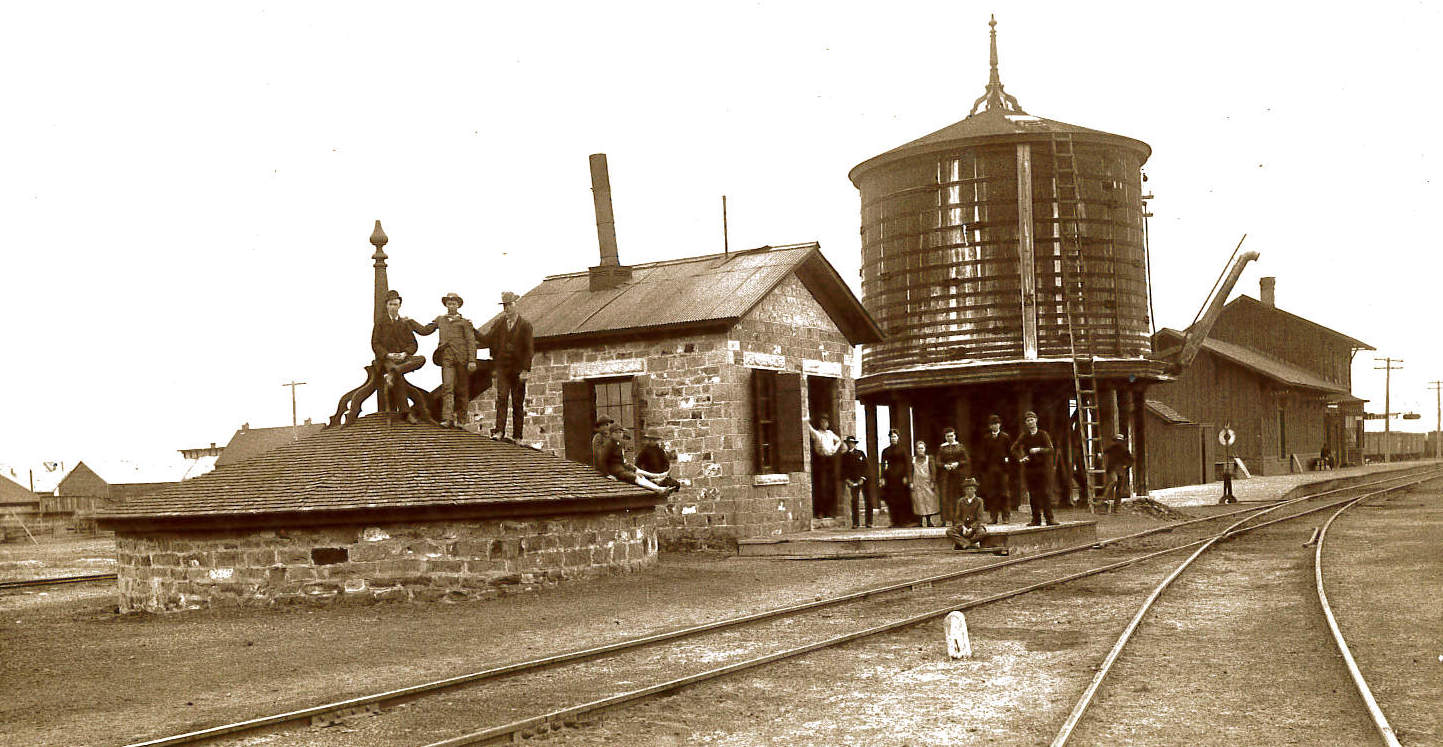
The Origin of Lakin’s Name

Lakin’s namesake, David Long Lakin, was born in Freeport, Harrison County, Ohio in May of 1830. Following his public school education, he attended and graduated from Denison University at Granville, OH, one of the earliest colleges established in the territory northwest of the Ohio River. Mr. Lakin then taught school for a few years before securing a contract with the U.S. government to survey and subdivide the public lands into townships and sections. In 1857, he located to Valley Falls where he conducted the supervision of the surveys in the north central part of Kansas. In 1862, Governor Robinson appointed Mr. Lakin to fill a vacancy in the office of the state auditor.

Shortly after arriving in Kansas, Mr. Lakin became associated with Cyrus K. Holliday, father of the Atchison, Topeka and Santa Fe Railroad. Mr. Lakin’s knowledge and experience in land matters made him valuable to the Santa Fe organization, and in February of 1864, he was elected as the first treasurer on the newly formed railroad’s board of directors. Four years later, Mr. Lakin was appointed as the company’s first land commissioner. He opened an office in Topeka in 1869 to develop the Santa Fe Land Department the duties of which were to begin and carry to successful completion the huge task of surveying, classifying, appraising, selling and colonizing the railroad land.  In the spring of 1870, Lakin took to the field with a team consisting of a compassman, flagman, cook, outfit boss, wagon boss and three appraisers. The work of laying out routes and selection of townsites started at Emporia and proceeded westward to the state line. The group traveled well-armed in a covered wagon and frequently met bands of Arapaho, Cheyenne and Comanche Indians. While the surveying party often had to resort to vigorous diplomacy, they never had a conflict with the Native Americans.

Bad health compelled Mr. Lakin to resign from this task in 1872. As a reward for his faithful services, the railroad company named our townsite for him. Mr. Lakin was honored by the gesture, and although he never lived here, he became equally proud of Lakin’s development. A highly trusted, principled and respected man, David Long Lakin remained with the Santa Fe system until the close of his life in 1897 and was one of the organization’s most active and influential managers. Much of the railroad’s success and early prosperity were due to his devotion.
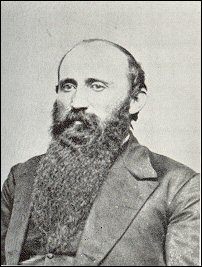
Sources: The Story of the Santa Fe by Glenn Danford Bradley; History of Shawnee Co. Ks and Representative Citizens by James L. King; Kansas State Historical Society; The Lakin Independent, August 27, 1948; History of Kearny County Kansas Vol. 1, and museum archives. Photo courtesy of KSHS.
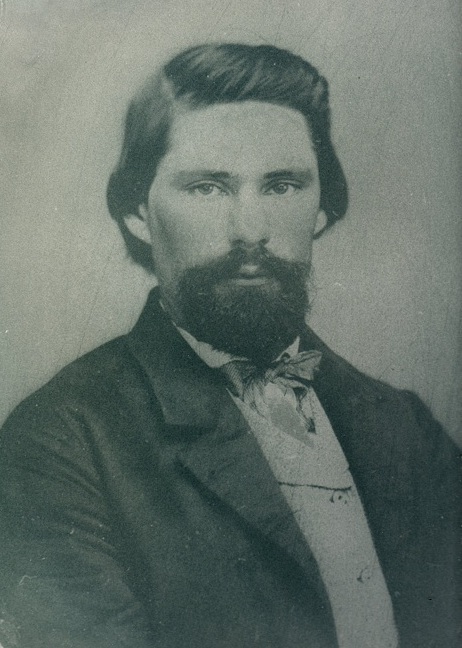
John O’Loughlin committed to family, fellow man and the community of Lakin

John O’Loughlin arrived in Lakin in the spring of 1873, the first permanent settler. He set up a trading post next to the newly completed railroad in an abandoned dug-out that had been used by the railroad’s construction crews. John offered the ordinary line of staple dry goods and groceries as well as rifles, ammunition, ox yokes, ox shoes, boots, clothing, hats and handkerchiefs.

O’Loughlin served cowboys, hunters, trappers, travelers on the Santa Fe Trail and railroad crews. Well known for his honest dealings, friends often entrusted John O’Loughlin to hold their money for safe keeping as there was no bank in Lakin in the early years. Eventually Lakin began to grow, and O’Loughlin’s business flourished. By 1879, he had more business than the dugout store could handle. He built a 30×50-foot store building just a few feet away from the dug-out. Using eight horses, chains and large logs, the store building was moved to Main Street in 1883. For a time, John’s brother-in-law, Michael Weber, joined him in the mercantile business, and they expanded their services to include clothing, hardware, agricultural implements, cement, lumber, coal and more. But John’s business dealings were not limited to the store. He had stints as postmaster and vice-president of the Lakin State Bank as well as considerable land and cattle interests.

John and his Irish bride, Mary Farrell, raised seven children. When their sons were grown, they took over the O’Loughlin store and John’s ranching interests.

John’s daughter Margaret once said that John was the last person to want any fuss made over him or what he did. “One reason I think the old timers said so many nice things about my father was that he was able to extend credit to so many of them for so long while they were proving up. When settlers got discouraged, they’d come and want to sell their land. But Papa wouldn’t let them. If there was any way he could persuade them, he would not let them sell the land. Then he would arrange either for them to … work on his farm, or they could work on one of the other ranches, so they’d have groceries and things to get through the winter. And that way, they could stay in this country.”

John O’Loughlin died at the age of 73 in 1915. Unwavering in his commitment to family, fellow man and this community, John O’Loughlin is known as the father of Lakin.


Sources: “Timing is Everything” by Fern Bessire, Kansas Territorial Magazine July-August 1983; The Lakin Independent Aug. 9, 1935; “Ft. Hays – Ft. Dodge Trail” by C. E. Roughton, History of Kearny County Kansas Vol. I, and museum archives.

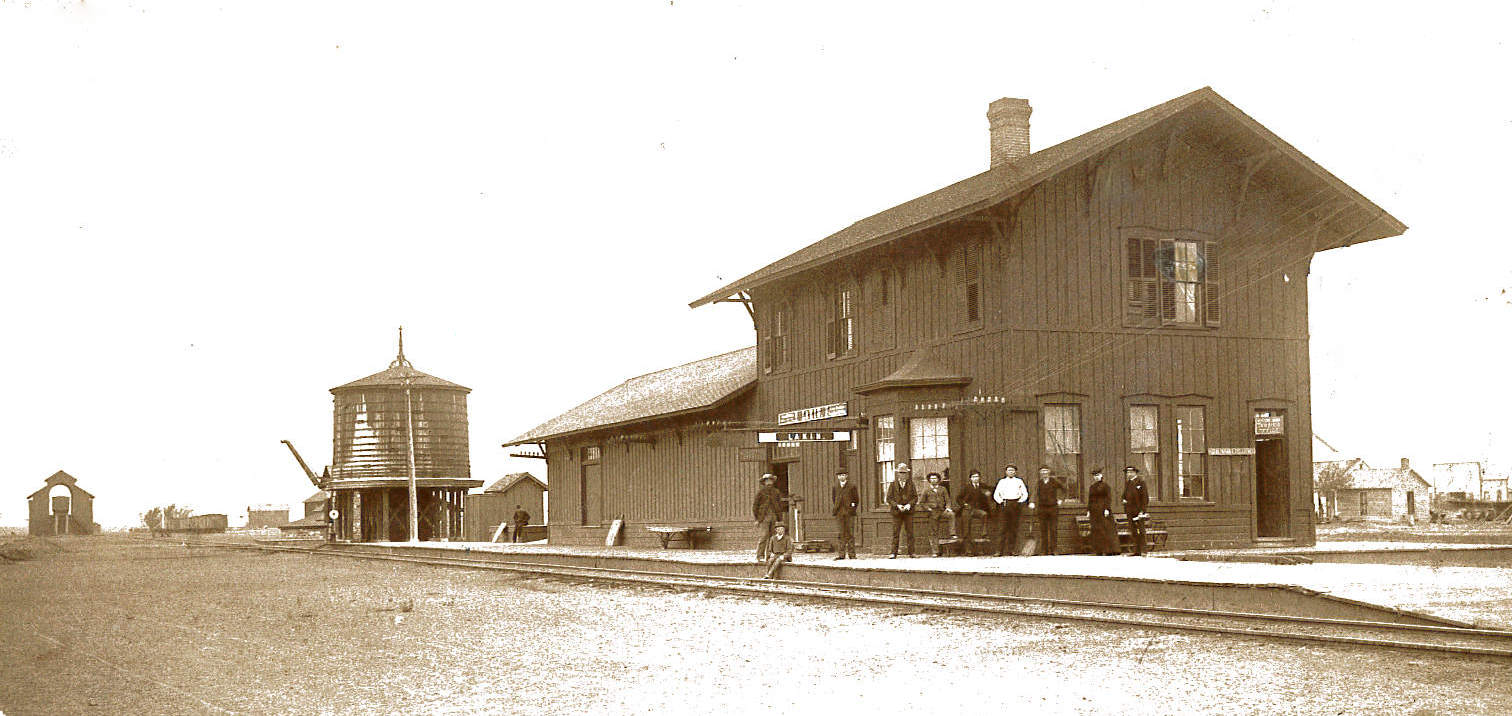
Atchison, Topeka and Santa Fe completed through Lakin 150 years ago

Lakin began as a railroad town. The United States government made a grant of land to the Atchison, Topeka and Santa Fe Railway. By law the A,T&SF acquired the title to all their lands within the ten mile limits as fast as they could complete and operate the road, that is, taking it in subdivisions of twenty miles in length of the road. They also acquired the title to the indemnity land, which is outside of ten miles and within the twenty miles of the road on each side, when they completed and operated the road to the west line of the State of Kansas, provided they completed the road by March 3, 1873. In spite of human predators, bad weather, tight money, long supply lines, and innumerable other complications, the track of the railroad reached the true state line on Dec. 28, 1872.
J.D. Criley, Superintendent of Construction, announced the good news in a wire to the General Manager of the railroad, “We send you greeting over the completion of the road to the State line. Beyond us lie fertile valleys that invite us forward, and broad plains die away in the distance, dotted with mingling herds of bison, and cattle, awaiting our further advance … We send you three cheers over past successes, and three times three for that which is yet to come.”
The A,T&SF then established stations every 18 to 20 miles where a well was dug, a windmill and water tank erected, and coal bins built. A section house for the railroad workers and a box car equipped for a depot was included. The towns west from Dodge City located and named in 1872 by the railway company were: Dodge City, Cimarron, Pierceville, Sherlock (now known as Holcomb), Lakin, Aubrey (now known as Kendall), Holidaysburg (which became Syracuse) and Sargent (known now as Coolidge).
As Lakin enters its 150th year of existence, check in frequently here or on our Facebook page to learn more about the history of our community.
(Information from Kansas Historical Quarterly Collections Vol. 51 and Virginia Pierce Hicks, first president of the Kearny County Historical Society.)