Francis L. and Carolina V. Pierce

There is no better time than Kearny County Fair week to learn more about Francis Livingston Pierce, the first treasurer of the Kearny County Fair Association. Known to many as Frank, F.L. Pierce was 100 years old when he died in 1947 and was considered by many to be the authority on Kearny County history as he had been around for most of it.
Pierce arrived here by covered wagon in 1879. He was born in Connecticut of honored New England ancestry, and his family lineage traced directly back to five of the 100 people aboard the Mayflower at Plymouth Rock, among them Miles Standish and John Alden. Pierce’s parents, Hezekiah and Julia Wilson Pierce, later moved to Illinois where Frank acquired his preliminary education. The family then went to Iowa in 1864, and F.L. completed his studies at Grinnell College. He engaged in farming, taught school a number of terms, and became active in public life. He served two years as the auditor of Powesheik County, Iowa and filled various township offices.
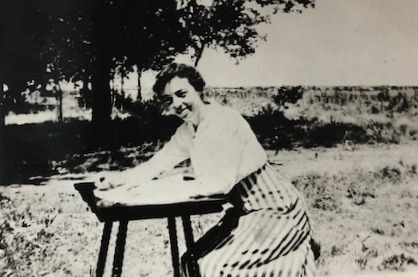
While in Iowa, Frank married Carolina Virginia Gray-McClellan, daughter of Major General Francis Gray and Sarah Roseberry Gray of Pennsylvania. It was the second marriage for Carolina who had divorced her first husband, James McClellan, with whom she had two children. Carolina and James’ daughter, Virginia Bell, died giving birth to her first child, and their son, Francis Gray, died at the age of 10. Frank Pierce and Carolina also had a son and a daughter. They named their son “Francis Gray” like his older half-sibling, but he had no better fate. The boy died before the age of one. Frank and Callie’s daughter, Virginia Pierce Hicks, was the third girl born in Kearny County and lived a long and industrious life. Sharing her father’s love for history, she became the first president of the Kearny County Historical Society.
When coming to Lakin, Frank Pierce filed homestead and timber claims just west of Lakin and planted a grove of trees where the first Kearny County Fairground was located. Pierce had the distinction of being the first farmer in Kearny County to fence his property. Paying 35 cents each for oak posts and 12.5 cents a pound for wire, he fenced a whole section of land. He was the first to introduce alfalfa into this section of country and made a specialty of raising alfalfa, cattle and horses. Pierce engaged in the real estate business for a while to sell railroad lands, setting up shop on Lakin’s Front Street first with C.O. Chapman and later with C.H. Longstreth. As justice of the peace in 1880, he solemnized the first weddings in this part of the country and also served three terms as county clerk. F.L. was identified with most civic movements in the early history of Kearny County and was a member of several fraternal organizations including Masons, Odd Fellows, Knights of Pythias, Woodmen of the World and others. He was the first Knight Templar to reside in Lakin and a charter member of the local Masons. Pierce served 45 years as the secretary of Emerald Lodge #289 garnering him recognition for the longest continuous service in the state of Kansas. He was instrumental in organizing not only the Kearny County Fair Association but also the Kearny County Old Settlers Association of which he served 17 years as secretary.
Many of the early county newspapers that were digitalized by the Kansas State Historical Society were those belonging to Francis L. Pierce, and much is written about his experiences in the first volume of our county history. In the Standard History of Kansas and Kansans, Pierce was spoken of as being distinguished not only for being a pioneer settler of this county but also for the prominence he attained in literary, political and fraternal circles. Francis L. Pierce died February 22, 1947.
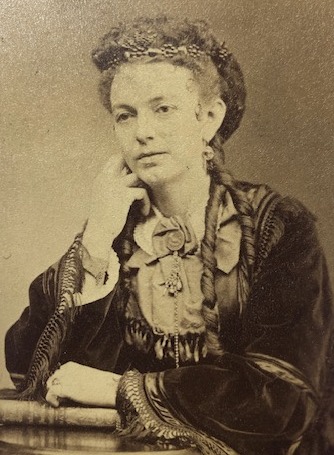
Like her husband, Carolina Pierce took an active part in the transactions of the county, and she was one of the main characters in Chantilly’s battle for the county seat. She was an excellent horseback rider. Along with her sister, Mrs. George Garrettson, and niece, Ella Garrettson, Callie started the Double PL Bar Cattle Company running over 500 head of cattle. Their successful cow camp was located on sec. 36-22-37 north of Lakin. Then came the blizzard of 1886, and the women lost a large percentage of their herd like so many ranchers did. Mrs. Pierce offered 80 acres of cow camp land to locate the proposed county seat. Originally known as Myton, the site was then renamed Chantilly. Carolina helped make the first flag that was used at Lakin as well as the first one at Chantilly. She was one of the charter members of the Order of Eastern Star and served as the chapter’s first secretary. She was also a Rebekah and a member of the Old Settler’s Organization. In 1889, Callie became afflicted with an abscess and consulted the best surgeons of western Kansas but found no relief. She went to Chicago in June of 1889 to have the abscess removed and came through the severe operation but never fully recovered. Carolina Virginia Pierce was an invalid for the last few years of her life, passing away in 1908 at the age of 64.
Kearny Countians owe the F.L. Pierce family a debt of gratitude not only for what they did for the county in those early years but also for helping preserve county history. The Museum has several photographs, archives and artifacts which belonged to the family and were donated by Virginia Pierce Hicks and her daughter, Virginia Womble. These items give us a glimpse into the lives of not only these important pioneers but also the many others who saw the potential in the rugged, undeveloped prairie of Kearny County.
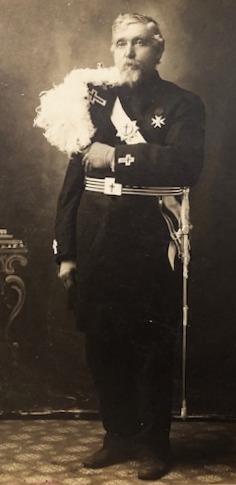
Francis Livingston Pierce
Carolina Virginia Pierce
Virginia Pierce Hicks near her father’s tree grove.
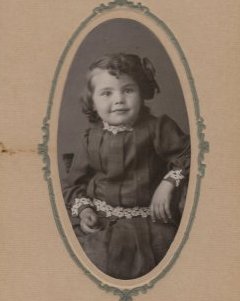
Virginia Hicks Womble, daughter of Virginia Pierce Hicks and Chauncey Hicks. Granddaughter of F.L. and Carolina Pierce.
SOURCES: Diggin’ Up Bones by Betty Barnes; History of Kansas and Kansans by William E. Connelley; History of Kearny County Vol. I; and Museum archives.
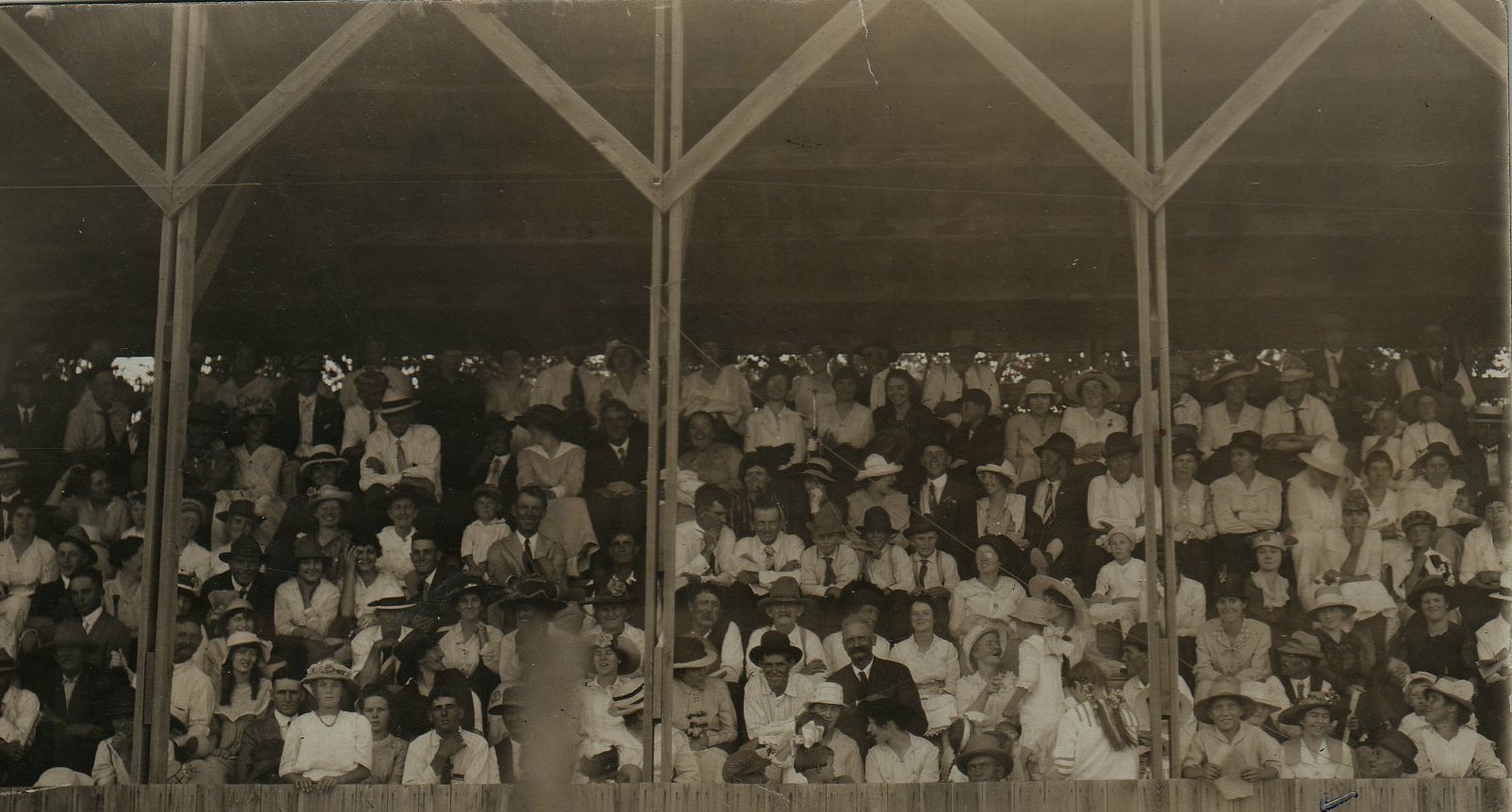
The first Kearny County Fair & Fairgrounds

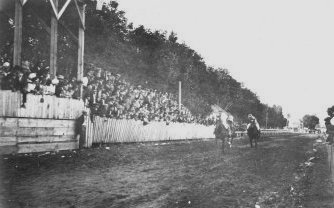
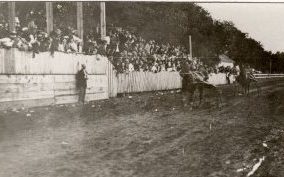
The Kearny County Fair is a long-standing tradition that began in 1914 in a shady grove just west of Lakin. The fairgrounds were west of present-day Bopp Boulevard between Lincoln and Railroad avenues on the timber claim of F.L. Pierce where he had planted walnut, Osage orange, cottonwood, locust, catalpa and mulberry trees in the 1880s. Through Pierce’s continued efforts, the fairgrounds became a shady picnic ground. A large grandstand sufficient to hold 400 or more people overlooked a half-mile race track and baseball park, and amusements and lunch counters dotted the grounds under the shade of the walnut trees.

The highly anticipated fair opened Thursday, Sept. 24, and attendance for the first two days was estimated at 1,100. Even Lakin’s schools closed so that all the children and teachers could have the opportunity to attend. The Lakin Independent reported that Pierce, who was the fair association’s secretary, “was in the ticket office shoving out the tickets and gathering in the nickels. Crowds from the four corners surged through the ground looking over the displays of machinery, farm products, horses and cattle, quilts, needlework, finery, etc.” To maintain order and make all fair visitors feel at home, the fair association recruited a squad of mounted police.

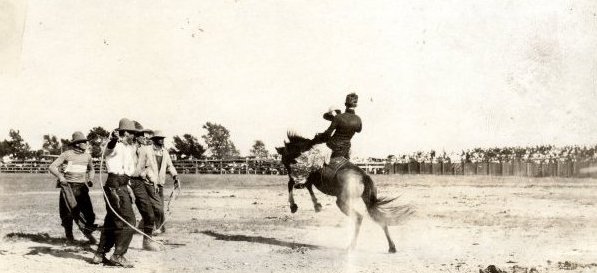
Horse racing was a big draw of the fair. Good purses attracted owners of some of the best horses in the country. Categories included pony racing, horse racing, ladies riding, Roman racing, harness trotting race and a relay race, but the racing was not limited to horses. There were also foot races, auto races and dog races. Other competitions included wrestling, a potato race on horseback, a sack race, bucking broncos, greased pig contest, and a challenge to see who could stay under long enough in a tub filled with water to secure a big silver dollar with their teeth. Fair-goers were also entertained by the Lakin band, the “hippodrome” or equestrian riding performance, and pole-vaulting demonstrations. A baseball game was played in the late afternoon each of the three days, and every game was called before ending because of darkness. Lakin, Deerfield, Midway and South Side were the competing teams, with Deerfield taking the championship game, 5-3.

That year was a very good year for gardeners, and produce entries ranged from grapes and sweet potatoes to an 80-pound pumpkin. Crops of wheat, corn, rye, oats, and broom corn were also entered. The poultry department had a good showing of geese, ducks, turkeys and chickens. Mules, a fawn and even guinea pigs were on display. Baked goods, handiwork and art rounded out the line-up.

The Oct. 2, 1914 Advocate declared, “The fair is over and success is written in large letters by the large number of people who attended the exhibition.” The Kearny County Fair Association attributed much of the fair’s success to local farmers and other exhibitors but also gave credit to those from Grant County who had entered items in the fair.

The movement for a county fair and fairgrounds had begun two years earlier. Stocks in the Kearny County Agriculture and Fair Association were sold for $10 each, and a board of directors was elected in the spring of 1914 to lead the organization. The association secured a membership in the Grain Belt Racing Association in May of 1914, and the fairgrounds were officially opened on June 13th with a running race between George Rider’s and William Gillespie’s horses followed by a baseball game.

The annual fair took a hiatus in 1918 and 1919 during World War I but resumed in 1920. As time progressed, more buildings were added and amusements and lunch counters increased. The fair took on a carnival air adding such amusements as a tug-of-war between communities, motorcycle races, airplane exhibitions, and a fat man’s race. The hard times of the 1930s forced the fair association to disband and dismantle its buildings and discontinue the fair. About that time, 4-H club work was started, and the annual fair became a 4-H event. A location was hard to find so booths and home economics projects were displayed in stores, the courthouse or wherever possible. Livestock was exhibited in some vacant lot, in the lumber yard or on a town street where trees could provide shelter. A few interested persons started working on a regular location for a fair and other entertainment early in 1950. Many were interested in horses so the Kearny County Saddle Club was organized, and Mr. and Mrs. Charles A. Loucks deeded a tract of land where the rodeo and fairgrounds are now located.

When county commissioners were preparing their budget for 1957, they approved the allocation of funds to operate a free county fair and the establishment of a fair board. Although the fairs may look differently than they did in the 1900s, commissioners, fair boards, the Kearny County Extension Service, 4-H groups, Kearny County Saddle Club, and other organizations, businesses and individuals have worked cooperatively through the years to ensure that the tradition that started over a century ago continues.

If you get the opportunity, venture out to the rodeo and fairgrounds this weekend and next week to partake in the fun at the Kearny County Saddle Club’s annual amateur rodeo and the Kearny County Fair! And don’t forget to attend the rodeo parade Saturday morning at 10 a.m. followed by a free ice cream social at the Kearny County Museum!

Sources: History of Kearny County Vol. I; Advocate and Lakin Independent archives; museum archives.

Mother Nature wreaking havoc on Kearny County’s 2023 wheat crop

Wheat harvest is usually either in full swing or finished in Southwest Kansas by this time of year, but an unusual amount of precipitation in recent weeks has delayed the cutting of the crop in our neck of the Wheat State. According to Mark Goudy, Kearny County Executive Director of Farm Services, this year’s crop may be hurt if farmers cannot get into their fields soon. The quality of the wheat will diminish because of the moisture content, and the longer the crop is in the field the greater the risk that inclement weather will do further damage. It is an uncommon dilemma in this area which has been plagued by drought the past several years, but the relationship between Mother Nature and wheat farmers has always been on shaky ground.
Turkey Red wheat was introduced into Kansas by Mennonite settlers from Russia almost as soon as Kansas was opened to settlement in 1854. Accustomed to growing the crop in a prairie climate, the Mennonites met with success and encouraged other farmers to plant wheat. As early as 1888, Kansas was being referred to as the “Wheat State.”
Like elsewhere in Kansas, Kearny County farmers began trying their luck at growing wheat as nearly as soon as the county was organized. Wheat did well under irrigation but did not respond to additional water as did sugar beets, corn, alfalfa, melons and other crops. As good as Turkey Red was, it lacked the drought resistance and yielding ability that was bred into later varieties. Successful wheat growing on dry land was not accomplished here until the 1930s when the practice of summer fallow was inaugurated. With this process, cropland is purposely kept out of production during a regular growing season. Resting the ground in this manner allows one crop to be grown using the moisture and nutrients of more than one crop cycle.
According to the Kansas State Historical Society, the standard farm size in the pioneering years was 160 acres which was not quite large enough for commercial ventures but more than what one farmer could plant. Like other industries, technology propelled farming into big business. Manual operations were replaced with draft animals enabling a single Kansas farmer to do the work of several men. In 1910, there were more than 24 million horses and mules on American farms with an average of three or four per farm. With three workhorses pulling a one-bottom walking plow, a farmer could break only about two acres in one day. With a two-bottom plow and a four or five horse-drawn sulky plow, he could plow five to seven acres.
As technology continued to advance, the way was paved for working larger areas of cropland in shorter periods of time. Threshing machines powered by steam traction engines in the 1870s and 1880s were replaced by internal combustion engines during the early 20th century. By 1938, the technology of tractor development had achieved what is known as a ‘dominant design.’ During World War II in the 40s, the U.S. Government was faced with the dilemma of how to provide both military tanks and tractors. On one hand, farmers were needed to produce more food than ever before, but many of their farmhands had been drafted. New challenges created innovation. Tractors got smaller and more powerful, self-propelled combines were introduced, and hydraulic systems made it possible to control larger implements.
The peak year of tractor production was 1951 during which 564,000 units were made. According to the U.S. Census of Agriculture, 1954 was the first time in recorded history that tractors outnumbered horses and mules on U.S. farms. Competing manufacturers began enticing farmers with more horsepower and more labor-saving features. In time, creature comforts became almost as important as the tractor’s performance. Enclosed cabs with heating and air conditioning, stereo systems and even built-in televisions make modern tractors quite comfortable in comparison with the machines of yesteryear.
In the 1950s, harvested crops were hauled to the elevators in small trucks that handled between 150 to 250 bushels. These were replaced by tandem dual-axle trucks with a load capacity of about 600 bushels. Now semi-trucks are used to haul the grain. Some of the most important developments for combine owners are advancements that have not only increased performance but operator’s comfort as well. The arrival of enclosed cabs in the 1970s and 1980s led to developments to manage the cab interior environment with reduced noise levels, dust suppression and air-conditioning. Major controls accessible in the cab enabled the driver to complete the starting procedure and carry out virtually all the operating adjustments without leaving the seat.
Kearny County’s modern farmers routinely embrace sophisticated technologies such as drones, robots, temperature and moisture sensors, aerial images, programmable variable rate applicators, the internet and GPS. With these tools, farming has become more profitable and efficient as well as safer and more environmentally friendly. These high-tech practices combined with hardy wheat varieties have helped Kearny County farmers do their part in securing that Kansas’s reign as the Wheat State continues. Last year 114,862 acres in the county were planted into wheat with an average yield of 35 to 36 bushels per seeded acre according to USDA statistics. This year’s production remains to be seen, but with a little help from Mother Nature, crews hopefully will be headed into the fields soon.
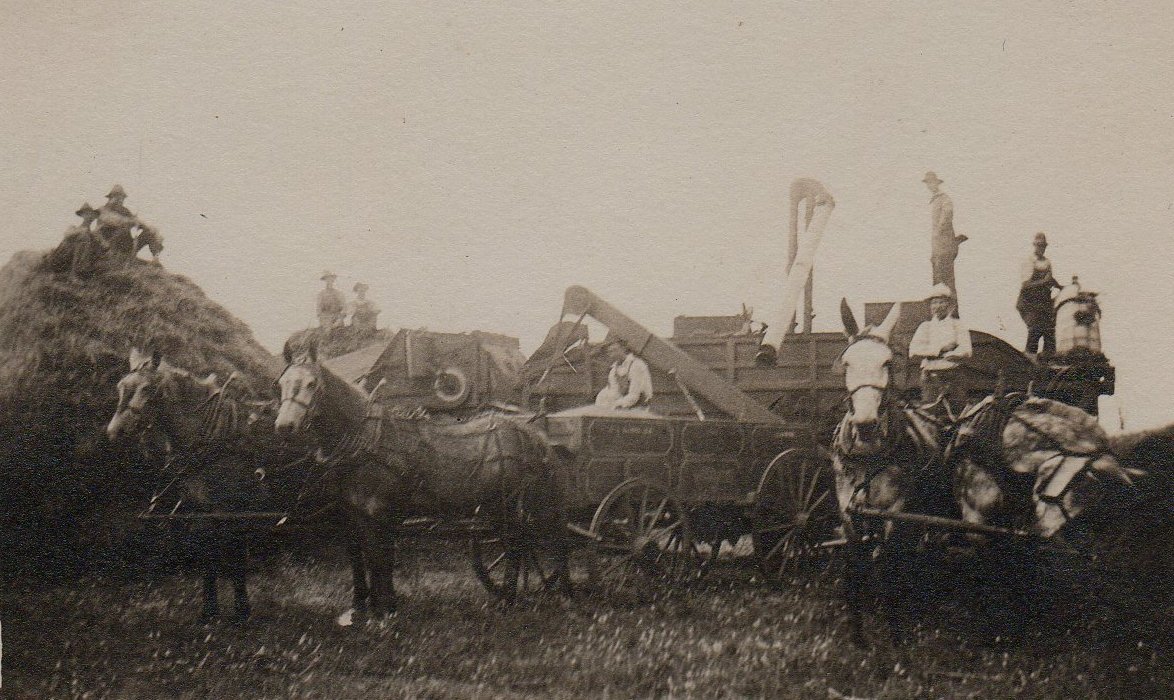
John Kash’s horse-powered wheat threshing crew. Date unknown.
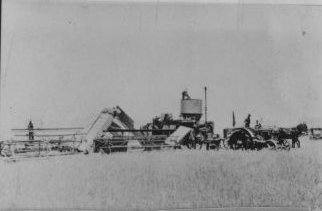
V.A. Paddack harvesting crew 1920.
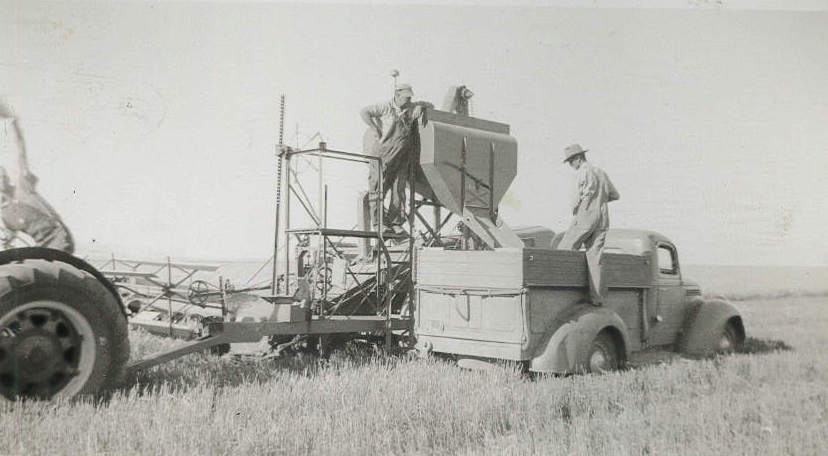
Harvesting wheat in 1941. Rhene Stinchcomb on tractor, W.H. Botts on combine and I.C. Wiatt on truck.
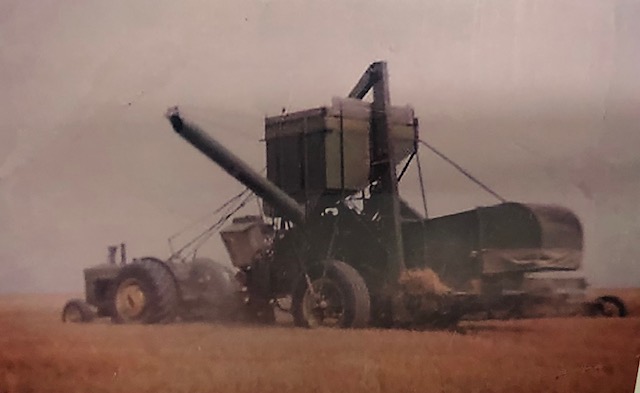
Harvest in 1960 on the R.W. and LeRoy Lohman farm. The combine is being pulled by an R John Deere tractor. Tractor is being controlled from combine so no tractor driver was needed.
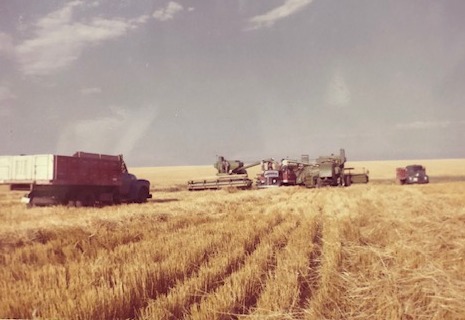
Undated photo from Museum collection.
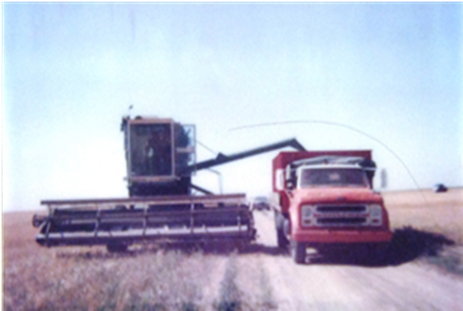
Undated photo of 7700 24’ header cutting wheat and loading truck on Lohman farm. The 7700 was produced in the 1970s.
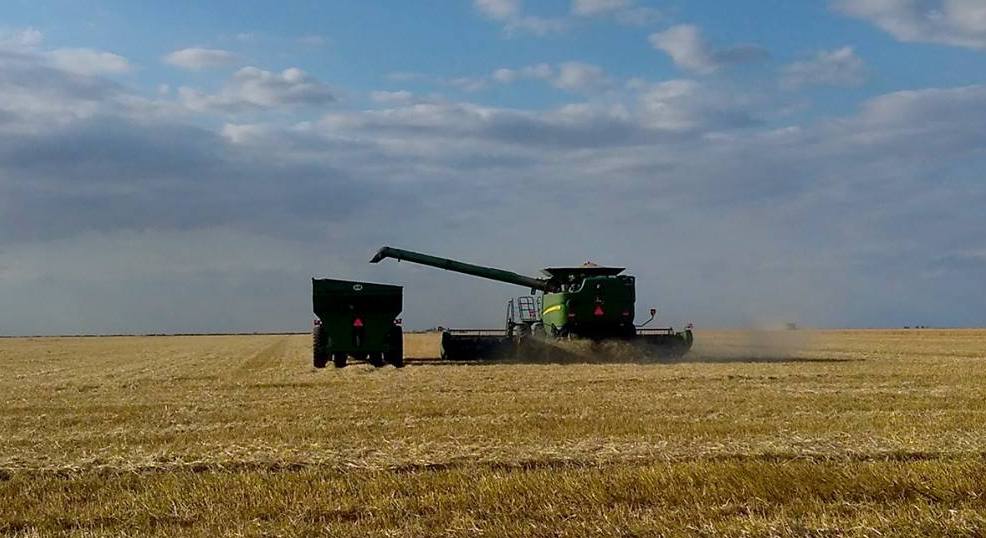
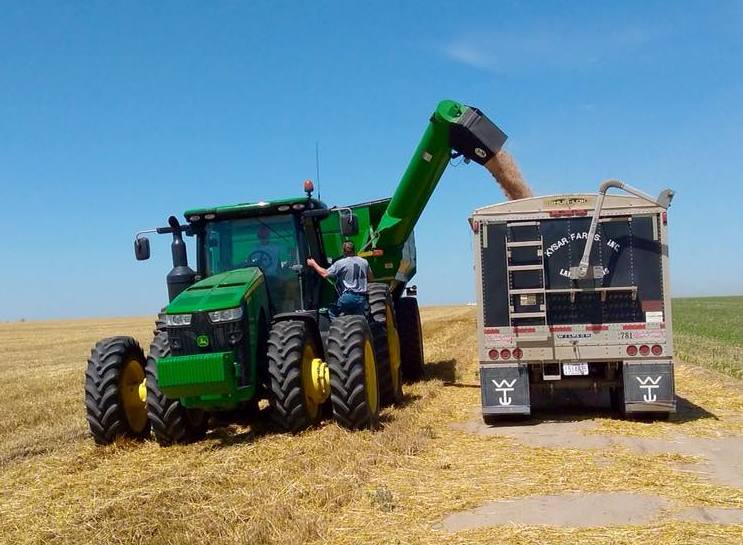
Wheat harvest 2017 at Kysar Farms. Photo courtesy of Janel Kysar.
Wheat is unloaded from the grain car into the semi at Kysar Farms during 2017’s wheat harvest. Photo courtesy of Janel Kysar.
SOURCES: Kansas State Historical Society; Economic History Association; 1954 U.S. Census of Agriculture; “Wheat” by Iman Wiatt for History of Kearny County Vol. 1; Museum archives; and USDA.gov, with special thanks to Kearny County CED Mark Goudy, and Joyce Kopfman who retired from the U.S.D.A. – Farm Service Agency in 2004 after 27 years of service.

Lakin’s Centennial Celebration

Visitors to Lakin in 1973 may have thought they had entered a time warp. Ladies in pioneer dresses and bearded men were a common scene as the community celebrated Lakin’s 100th birthday in a stylish year-long celebration. The “fuzz” phenom was the result of a beard and mustache contest, and some men began growing their facial adornments as soon as the year started. For beardless wonders, shaving permits could be bought for $5 each to save a fine or a dunking. The Blossom Club requested all women who were working downtown (and shoppers too) to wear pioneer dresses on Fridays in observance of the centennial year. Those who opted not to either faced a fine or wore a permit that was sold by the club for 50¢.

Many kept the permits as souvenirs for the big occasion. Other specially made souvenirs included plates, coins, car tags, and special edition Winchester rifles. A seal picturing key events and industries in Lakin was created for use on advertising materials to call attention to Lakin’s “big 100.” The seal was designed by Don Musick, a former Lakin High School principal whose painted school mascots adorned many gymnasiums in Kansas including Lakin’s.

Pitchers of beer, soft drinks, and food were available at the Centennial Ale House which was set up a half block west of Main and Waterman in a building that was owned at the time by Guy McCombs. Musical entertainment was also on tap there. The beer garden was the brainchild of a group of Lakin women who voluntarily worked the venue to raise money for centennial activities. The grand opening was held April 13, and the ale house was open to customers several Friday and Saturday nights throughout 1973.

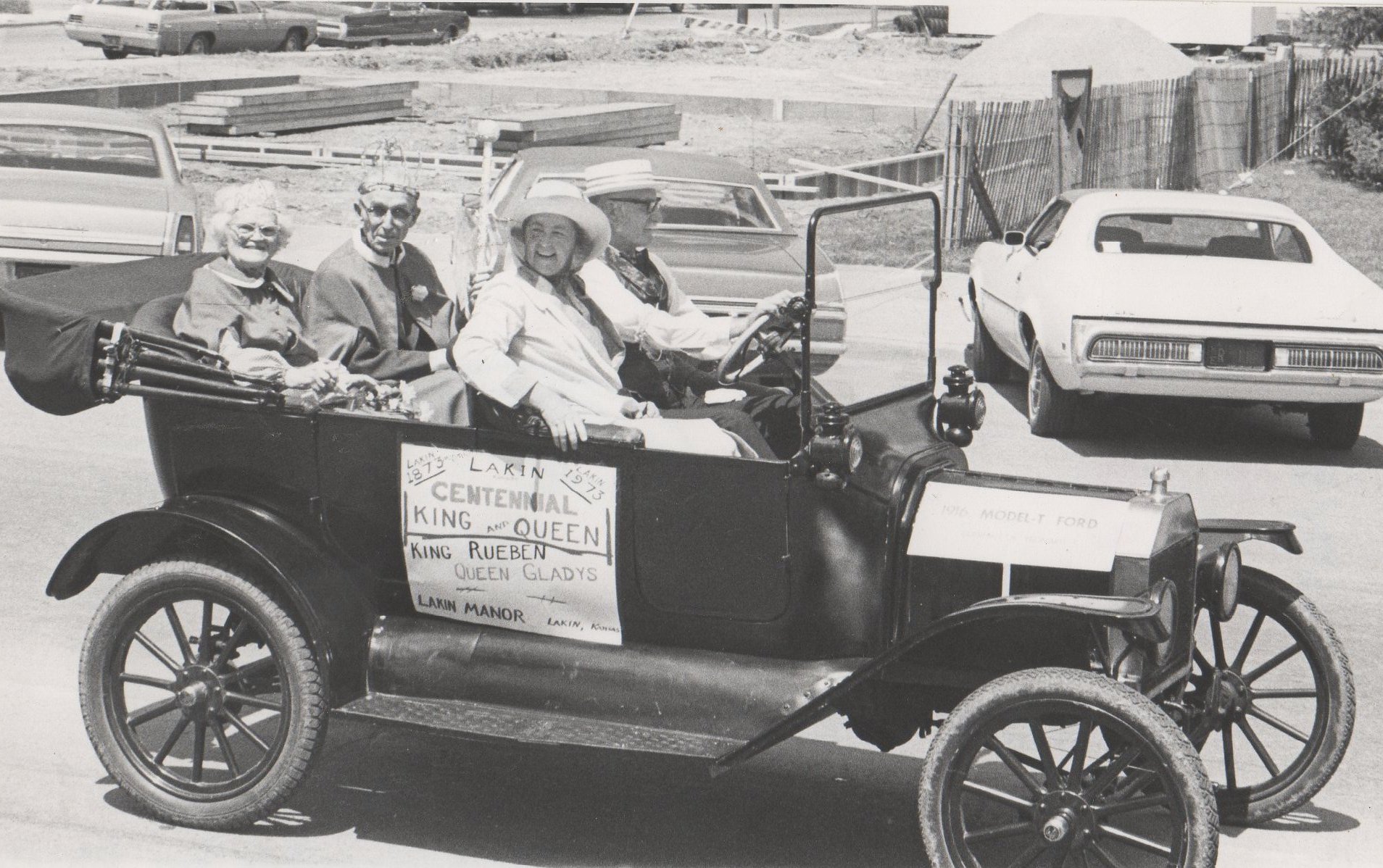
Also in April, Gladys Hoyt and Ruben Maerz were selected as Queen and King by Lakin Manor residents and staff to represent the manor in centennial events. An old-fashioned basket dinner and hymnfest were conducted later that month at the Methodist Church under the direction of Rev. Duane Harms.

Former Lakinites came from all over the country to attend Centennial Days June 1-3. Frances Bostrom of the Lakin Booster Club was the chairman and coordinator of the big shindig which took the cooperation of dozens of organizations and scores of individuals to successfully orchestrate. The V.F.W. Auxiliary assembled a display of historic significance in the Memorial Building and served chuckwagon lunches on Friday and Saturday and a dinner on Saturday night. Job’s Daughters held old-time ice cream socials Friday and Saturday afternoons at the Masonic Temple, and the Museum, located in the building now housing Golden Plains Credit Union, was open all three days. A carnival with rides was a major attraction for the kiddies.

The Lakin Methodist Women held a rummage sale, and the Lakin Young Women’s Club conducted a pie sale on Friday. That evening the Lakin 50 Club presented a fashion show featuring yesteryear fashions modeled by beautiful young girls and distinguished dames. The Rhythm Rangers played a dance to close out the day’s events. On Saturday, Homemakers E.H.U. hosted a bake sale, and the Civic and Study Club served hot homemade bread and rolls from the Country Kitchen in the Memorial Building. The afternoon parade was seven blocks long and had 49 entries with winners chosen among both the float and antique car entries.

Shortly before the parade started, a “raid on the village store” was staged for the amusement of the crowd which had gathered on Main Street. Desperadoes Jon Wheat and Stephen McCormick entered Gary’s Grocery and demanded the hidden money sacks. The dastardly duo fled the scene after taking Janice Spencer Urie, an innocent bystander, as hostage. Gary Hayzlett, the irate storekeeper, pursued the bandits with his famous Civil War musket in hand. According to the Lakin Independent, “the scoundrels escaped to their hideaway on the shores of Lake McKinney.”

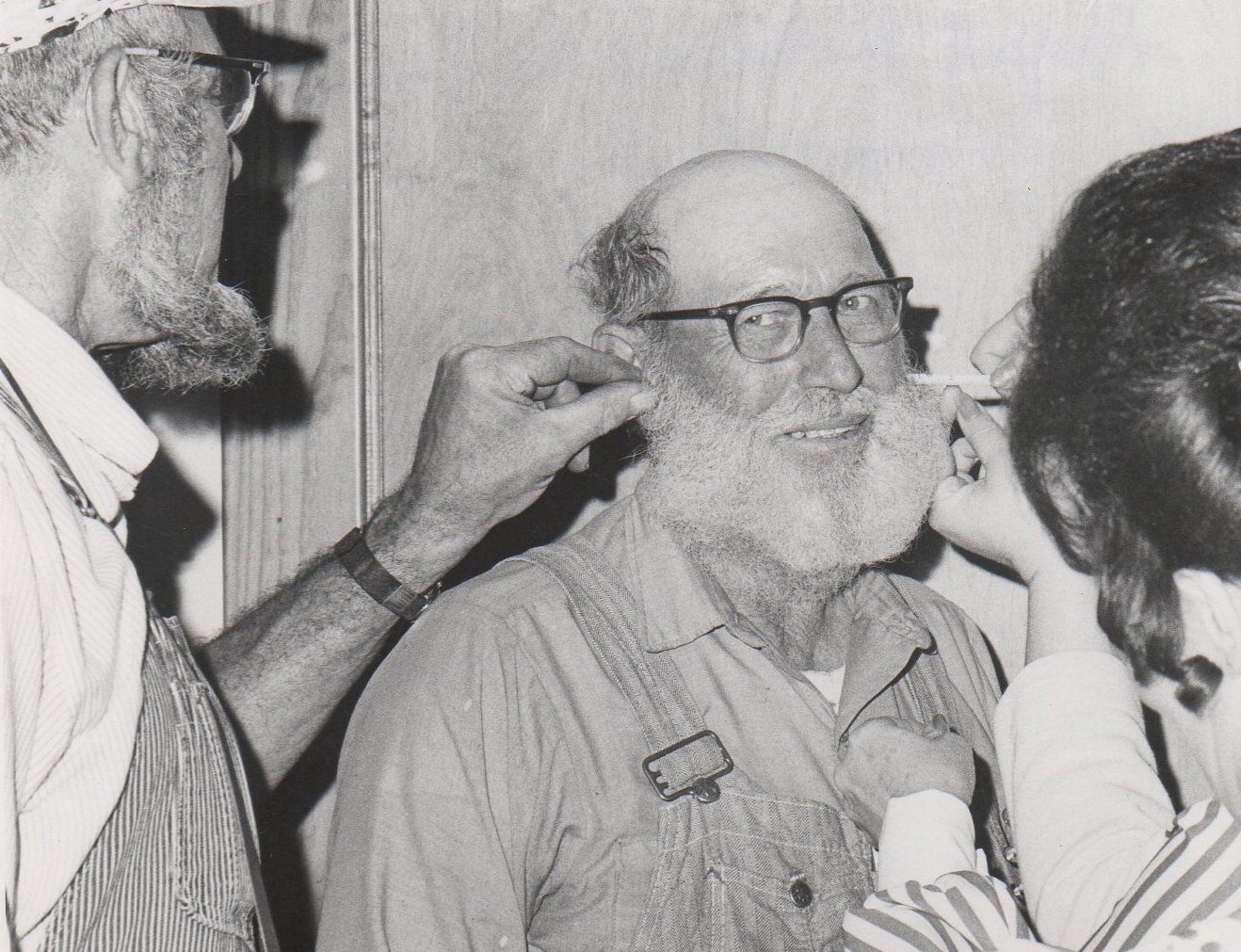
There were 47 entries in the beard and mustache contest which was judged after the parade. Awards were presented in eight categories with Warren Elliott awarded for fanciest beard and best all-around. Don Bemis won the longest beard category, Charles Hannagan won for fullest beard, and Paul Garcia won for whitest beard. Winning honors for their mustaches were Floyd Schwindt, longest mustache, and Everett Moreland, best trimmed mustache. The Rainbow King hosted a free dance that evening. The weekend’s festivities concluded Sunday with the LaFlora Garden Club and Ministerial Alliance hosting an old-fashioned picnic in the City Park.

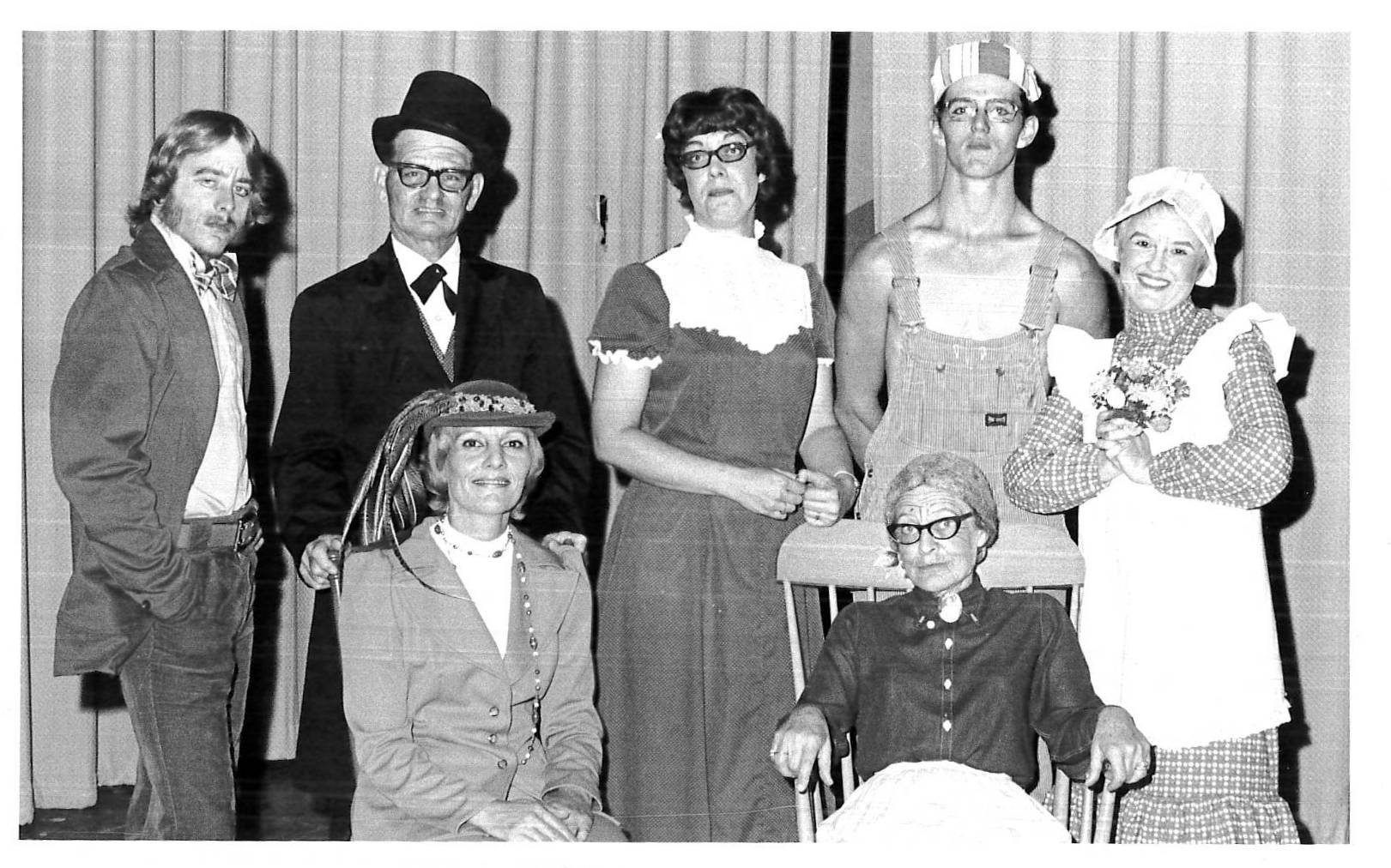
There was plenty of do-si-doing going on at the outdoor square dance sponsored by the Lakin Square Dance Club the following weekend, and in July, an enthusiastic and appreciative audience came out to boo the villain and cheer on the hero in an old-fashioned melodrama put on by the Centennial Players at the high school auditorium. Admission was 11¢ or free if wearing centennial garb. Six lucky participants won Shetland ponies in the Shetland pony scramble at the Kearny County Saddle Club’s Centennial Rodeo July 21 and 22. Other events that weekend included the annual Rodeo Parade, an old-fashioned chuckwagon BBQ and a dance at the Ale House. The Santa Fe Railroad’s Centennial rail car was also in Lakin.

A baby beautiful contest for persons 65 and older was one of many activities added to the county fair in August. Ruby Enslow and Oliver Coder won the TOPS-sponsored event. Lakin’s birthday got special attention when Brad Tate arranged for August’s feature race at Santa Fe Downs to be called the Lakin Centennial Stakes. A chartered bus of race horse owners and racing fans from Lakin attended the competition, and Lennus and Frances Bostrom had the honor of presenting a cooling blanket to the winning horse’s owners.

September’s Centennial Art and Antique Show featured the art work of several area artists and an array of vintage items, and the Centennial Christmas Parade in December was called the best ever. Blessed with perfect weather, a large crowd gathered to witness the event which was preceded by an old west shootout on Main Street between a group of bad men from the sandhills and keepers of the peace who were concealed on the roofs of buildings. After the smoke cleared, the posse loaded up the losers in the farm wagon they came to town in and cleared the street for the parade. Lakin’s big birthday year wrapped up with a “Harvey House” Centennial Christmas Luncheon Dec. 21 which was sponsored by the Kearny County Council on Aging and Budget Shop. The program was centered around Lakin’s early railroad history.

The year closed, beards were shaved, and pioneer clothing was packed away. But the memories of 1973 would live on in the hearts and minds of all those who were lucky enough to take part in Lakin’s big 100th birthday bash.

The Lakin Centennial Players standing L-R: Ric Meisel as the villain; Frank Thomas as the wealthy mill owner; Peggy Symes who directed the melodrama; Jay LeBeau, the hero, and Pat Fletcher, the heroine. Front row: Jeanette Wiatt, the other woman; and Cora Holt, Granny.
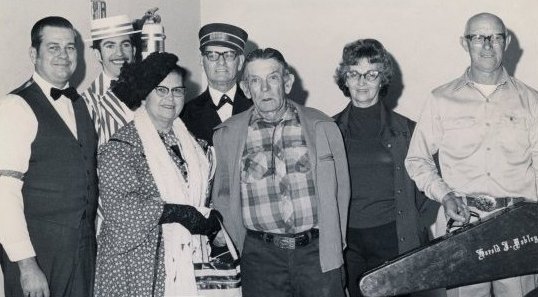
Rev. Duane Harms, far left, dressed as the Harvey House manager welcomes railroad passengers Esther and Billy Carter to the Centennial Christmas Luncheon. Standing behind them are Jerry Burden who led the singing of Christmas carols, Railroad station agent Frank Thomas, and musicians for the occasion—Jane Thomeczek and Red Harold Pebley.
Ralph Holden’s beard is carefully measured and inspected during the beard contest.
Centennial King Rube Maerz and Queen Gladys Hoyt were chauffeured in the Centennial parade by Lefty and Thelma Leonard.
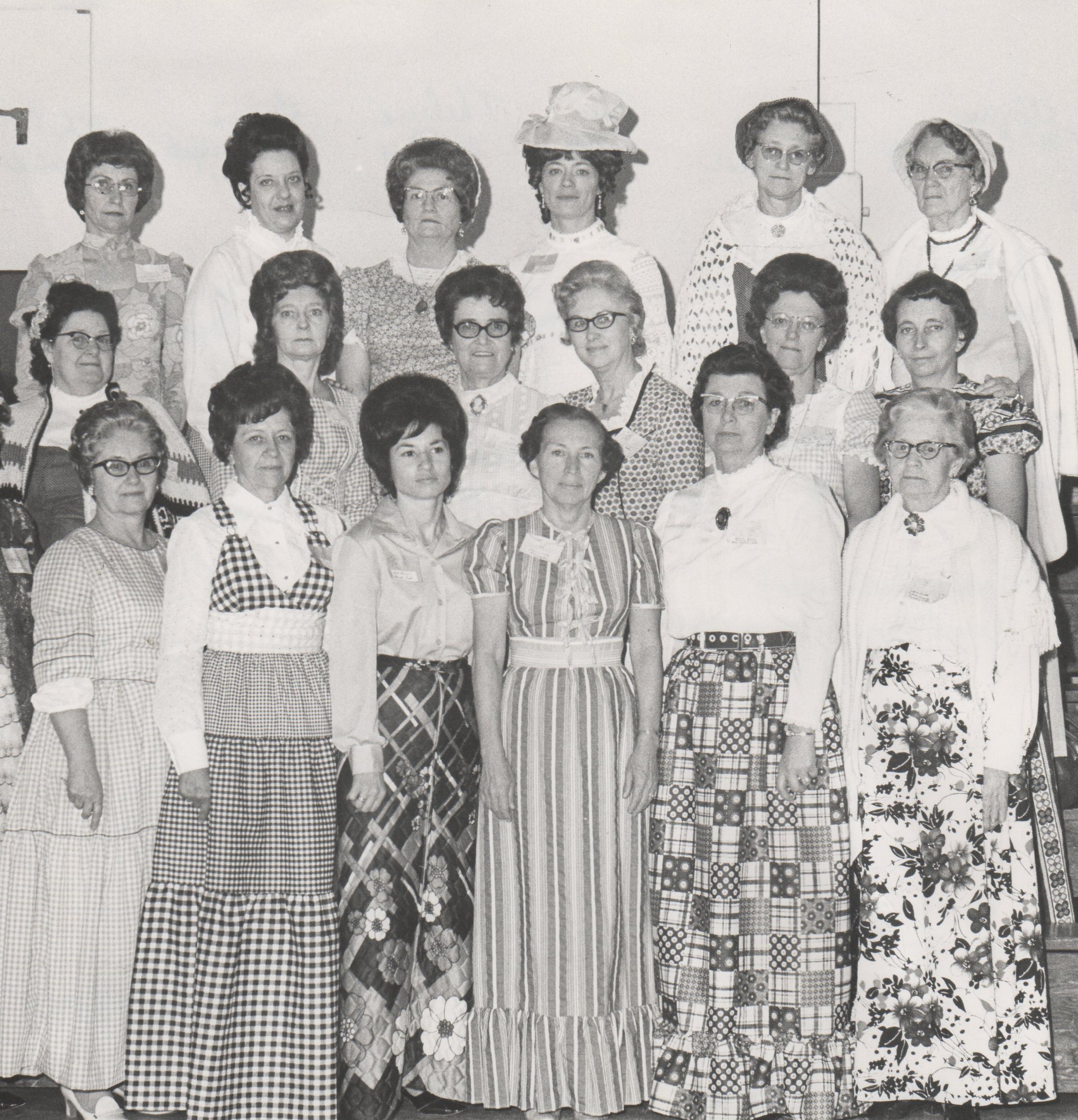
In April 1973, Kearny County hosted the Southwest Kansas Association of Counties meeting at the Lakin Grade School gym. The theme of the gathering was the pioneer days of Kearny County, and all the employees dressed in the appropriate dresses for the theme. Front Row L-R: Rachel Erskine, Gladys Michel, Ruth Burns, Joan Wiley, Velma Cox, and Della Barchet. Middle Row: Norma Penick, Zelma Coyne, Elizabeth Williams, Vera Kuhlman, Donna Watkins, and Betty Barnes. Back Row: Ethel Simshauser, Leona Randolph, Thelma Oakley, Pat Jones, Cleo Fouser, and Alma McConaughey.


SOURCES: 1973 Lakin Independent archives. History of Kearny Co. Vol. II, Museum archives, and mikelynchcartoons.blogspot.com