USD 215’s facilities have come a long way in the past 48 years

Lakin Unified School district voters rejected bond issues for new construction and remodeling of Lakin High School facilities not once, not twice, but three times in 1973 and 1974. If passed, the high school campus would look totally different than it does today. The measure would have provided for an addition to the north and west of the high school gym that would have contained girls’ physical education facilities and a new auditorium with band and vocal rooms. Also in the proposal was the addition of industrial arts facilities to the vo-ag building and remodeling of the high school to maximize space and meet fire codes. Instead, a partial remodeling project to meet fire code requirements which involved ceilings, doors, and walls in the main high school building was completed in 1975 using capital outlay money.

Still faced with overcrowding and the need for improved facilities, school officials presented two building plans to the voters in October of 1977. An overwhelming approval was given for the issuance of $1,014,580 in bonds towards a plan designed to get the utmost potential from the buildings already on site as well as new construction. The plan called for additions to the gymnasium which included a boy’s locker room and weight room, common’s/concession area, girl’s locker room, and multi-purpose rubber gym.  An addition to the vocational ag building provided space for industrial arts. The interior of the main high school building was remodeled, the auditorium renovated, and new vocal and instrumental classrooms were added. When finished, the new facilities provided classroom and gymnasium space to meet the mandated requirements for Special Education and Title IX. Work began in 1978 with an anticipated finish date of January 1980 which was not met. Facilities/classrooms were moved into as they were completed, and according to the late Vernon Dietz, former superintendent of schools, the completely new and remodeled facilities were ready for the 1980-1981 school year. The work was done by L. R. Foy Construction of Hutchinson. Due to unsatisfactory work, the company was sued by USD 215. The case, argued by the late Ted Morgan, went to the Kansas Supreme Court which awarded USD 215 over $190,000 in damages.

The need for additional classroom space for the first eight grades of school became increasingly apparent in 1983 when a preschool census was taken and indicated that space would soon be a problem in the district’s elementary school. The decision was made to build a new middle school that would house 7th and 8th grades. No bond referendum was required because sufficient funds were available in the capital outlay budget of the school district, but the board elected to send a straw poll ballot to registered voters which ultimately showed that patrons were in favor of the project nearly two to one.  The board accepted a negotiated contract with Rhoads Construction in the amount of $1,249,614. Ground was broken on March 28, 1985, and construction was completed the following spring.

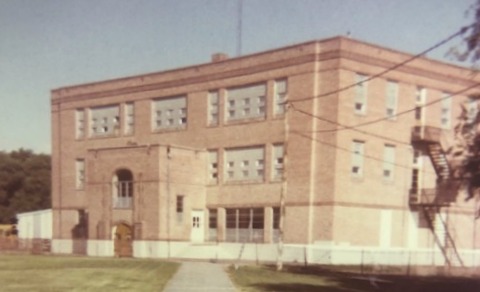
The building, located between the gymnasium and vocational building, was constructed with a passive solar design to reduce heating and cooling costs and contained six regular classrooms, two special education classrooms, science lab, and a computer lab and art room that were utilized by both middle school and high school students. A new board of education meeting room and office space for administration were also included. The building was opened for classes in August of 1986 with an open house the following month. With the completion of the 7-8 middle school, LMS and LHS students were able to eat school lunches served in the high school’s auxiliary gymnasium instead of having to go to the grade school cafeteria. Under the satellite program, meals were prepared in the grade school’s kitchen and transferred to the gym by van. The high school’s music and band rooms, auditorium, home ec. room, library, vocation shops and gymnasium were shared with the middle school.

Increases in student population and expanded curriculum requirements for high school students in the late 1990s created a need for even more classroom space. On October 21, 1997, voters approved a $9.5 million bond issue for the construction of the current middle school complex. Ground was broken in August of 1998, and the facility was ready for grades fifth through eighth at the start of the 2000-2001 school year. The project added approximately 96,000 square feet of space to the school district and included state-of-the-art classrooms, a technology lab, modern library-media center, computer lab, music education area, prep kitchen and lunchroom/commons area, weight room and 1800-seat gymnasium. D & D Builders was the main contractor.

A new auto mechanics/welding shop was also included in the project. The 1949 vo-ag building was razed and an expanded shop facility was erected with 9,420 square feet of space for four auto bays, a welding area, and locker and restroom facilities for both boys and girls. The former 7-8 middle school was renamed the Academic Building and became part of the high school campus while still providing space for USD #215 Administrative offices and middle school art classes. A daycare for the children of USD 215 employees was housed in the building during the 2020-21 school year but was moved to the main high school building following renovations in the summer of 2021.

The final building of learning on the LHS campus is the 40×24 greenhouse made possible in with a generous donation of $30,000 from the Edgington family. In addition to providing the funding, the Rodney, Daryan and Alyssa Edgington and Kyle and Steve Berning completed the work of providing water, electricity and gas to the greenhouse. Placed on the old tennis courts behind the main building, the green house and 10 cinder-block garden plots provided by a grant from the Kearny County Wellness Coalition were ready for their first growing season in the spring of 2022. The gardens and greenhouse are part of a revival in agriculture-focused education.

Sources: Kansas Magazine; 1979 Bronc Yearbook; Archives of The Lakin Independent; Museum archives; and information provided by the late Vernon Dietz, former Superintendent of USD 215 Schools.
Lakin’s main high school building is the oldest in the USD 215 school system

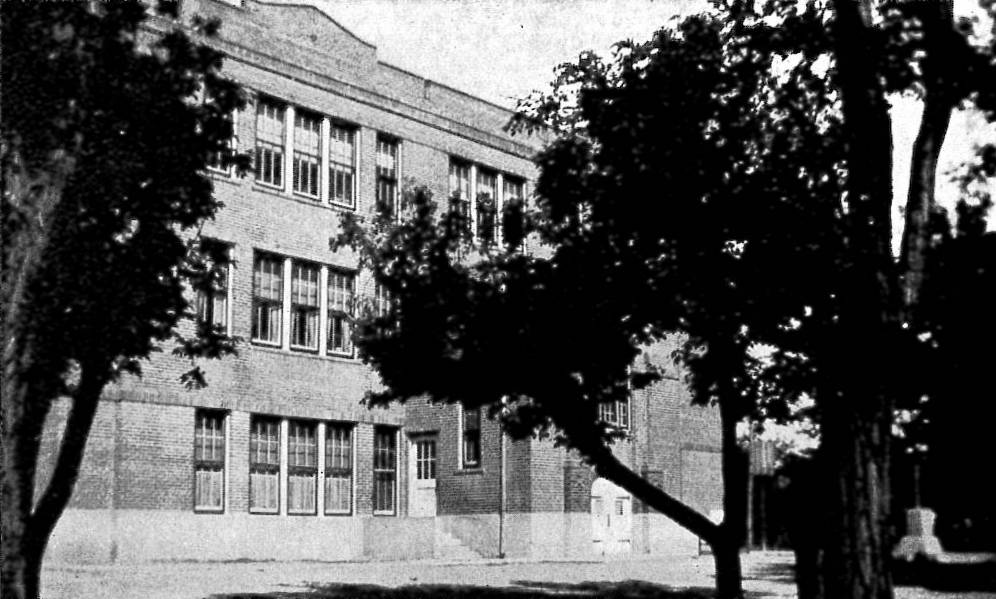
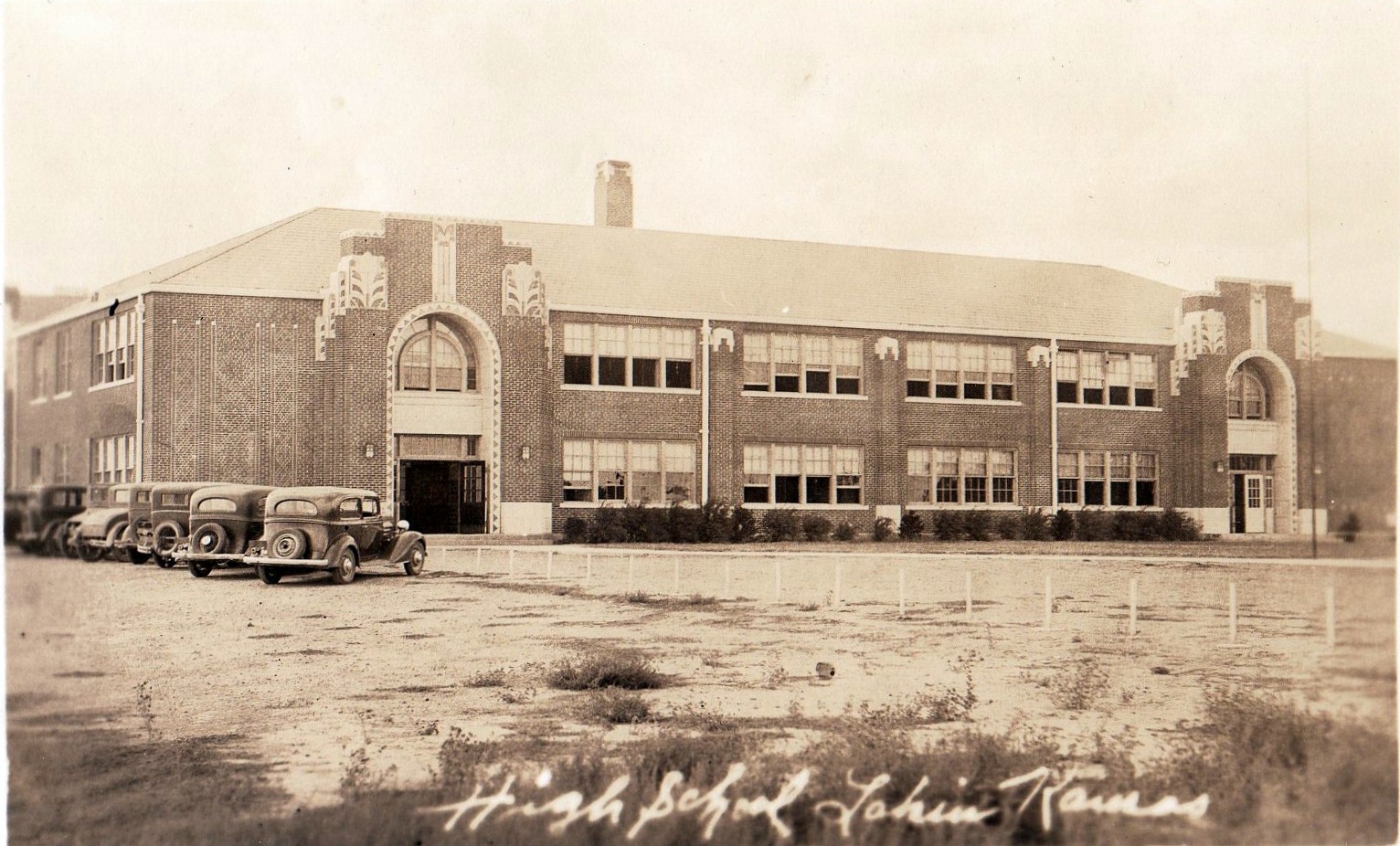
A few remodels, updates and additions have helped Lakin’s main high school building withstand the test of time. By the spring of 1930, the combination grade school and high school that was completed in 1921 was already overcrowded. At the annual school meeting on April 11, 1930, Superintendent Mrs. Virginia P. Hicks presented her vision for Lakin which included a new, well-equipped high school building. Her suggestion was well received, and voters approved the proposal in a special election that fall. Twenty acres of land were purchased for a building site, and the board secured the services of S.S. Voigt of Wichita as architect. Building contracts were let out in March of 1931 with the stipulation that the building be completed in 120 working days using as much local labor as possible. The school was ready for the fall semester and was officially dedicated Oct. 10, 1931. The new high school accommodated twice as many students as the 1920-1921 school and included an auditorium with a seating capacity of over 600 and a gymnasium of the same size on the opposite end.
In January of 1949, a building contract was let to construct a vocational agriculture building. Due in part to the efforts of State Representative Joe Eves, Lakin’s new vo-ag program was approved by the State Board for Vocational Education in March which allowed USD 215 to receive federal and state funding. Dean Hoppas was hired that same month to take over the new department. The building was opened for the fall semester, and a formal open house was held in December of ‘49. Offering classes in slaughter, welding, gasoline motor repair, farm carpentry, painting and general agriculture, the program was far in advance of the regular high school curriculum prescribed by state law. Lauren Whips, State Supervisor of Vocational Ag, inspected the local plant and commented that it was the nicest in the state.
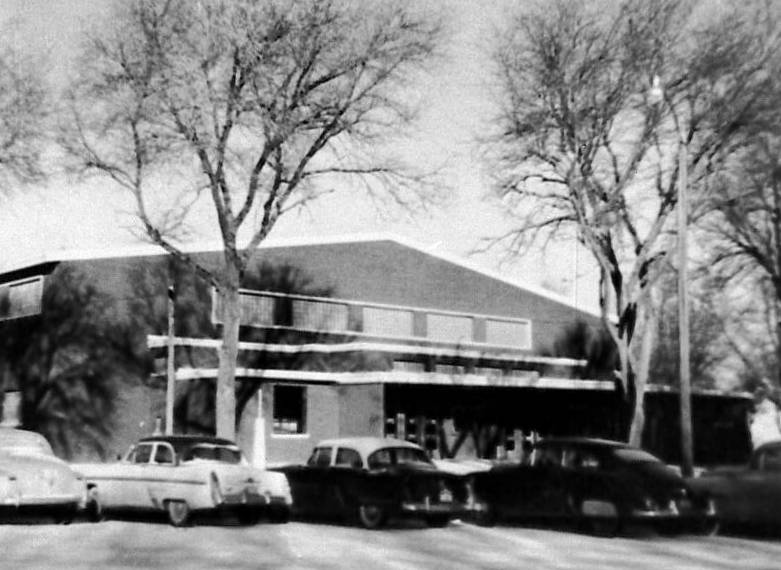
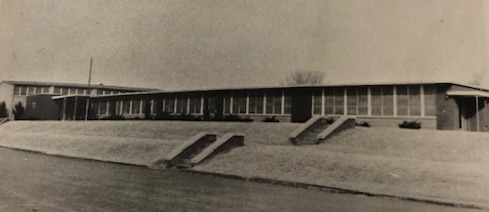
The third building constructed on the high school campus was the gymnasium/physical education building. Designed by architect Howard Blanchard, work began on the gym in April 1955, and the facility was completed the following March. None other than legendary basketball coach Phog Allen delivered the address at the dedication of the building on May 6, 1956. An electrically operated folding door weighing 14 tons was installed in the gym to divide the space in half so that boys’ and girls’ gym classes could be held at the same time. The facility had a seating capacity of 1,546, and a unique feature of the building was the use of directional glass blocks for light. The gym located on the north end of the 1931 school building was remodeled into a complete industrial arts department on the first floor and a music department on the second. Both departments were included in the dedication ceremony for the gym.
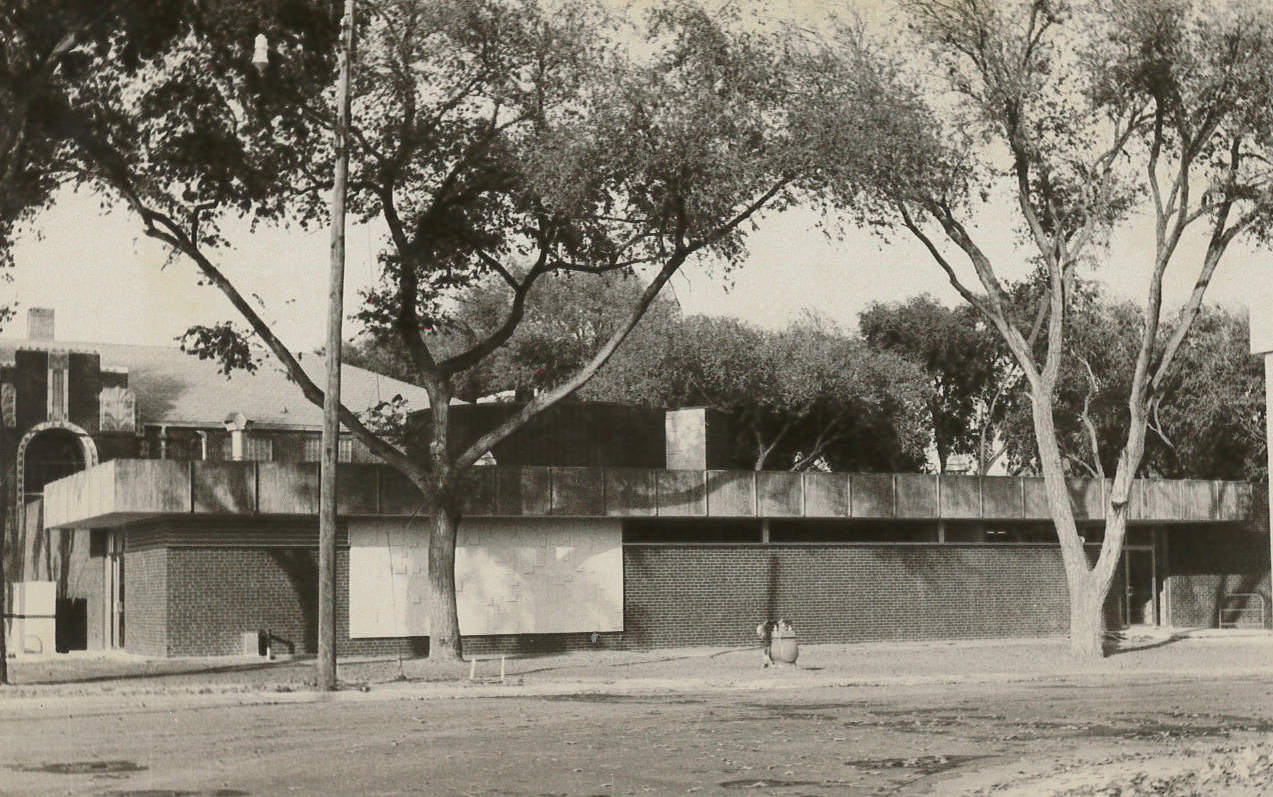
In November 1965, students moved into the new science and mathematics building which included two science rooms, two mathematics rooms, a dark room to be used by journalism and science classes, office space for the school superintendent, and 100 lockers. The most interesting part of the air-conditioned building was the planetarium. When Lakin was rated the previous year, it was noted that improvement in the mathematics and science facilities was necessary to keep the school’s high comprehensive rating. According to Don Musick, then principle of Lakin High School, “We have gone from the poorest to the best in southwestern Kansas.”
Check in next week as we cover more modifications and additions made to the buildings on the Lakin High School campus during the last 48 years.
Sources: Archives of The Advocate and Lakin Independent and Museum archives.

Lakin’s 1920/1921 school building served community for 50 years

When Lakin’s students headed back to school in 1920, they didn’t have a school house to go to. The 1886 school building had been impressive and a testament to the importance of education to our founding fathers, but the school’s stone foundation had become unstable by 1919. The walls of the building were laid to the ground in May 1920, and workers began clearing off the debris so that a new school could be started immediately in its place. Students started off the 1920-1921 school year by meeting for class in other buildings. High schoolers met in the courthouse while the primary grades were divided among three of the churches in town. Seventh and eighth graders started off in the Willis & Eves land office, but within a matter of days, the two grades were moved to the Knights and Ladies of Security Hall on the upper story of the building that still remains at 112 N. Main.
The cornerstone of the 1920/1921 school was laid in July of 1920 in an impressive service which featured addresses, music and prayer. The foundation of the school was done at that time, but it was late March 1921 before the school was completed. The primary grades and high school moved in first followed by seventh and eighth grades a few days later. The April 1, 1921 Advocate proclaimed, “When the school bell rang Monday morning the children were not obliged to run hither and yon to take up their studies but proceeded direct to the school house, once more our city school is under one roof.”
Voters passed a $43,000 school bond election in June 1919 to build the school, but found the amount insufficient after reviewing bids for the building. Voters went back to the polls in March of 1920 and voted an additional $26,800 in school bonds. The building had three floors and fronted to the south facing Prairie Street with the main entrance leading directly to an auditorium and gymnasium. A smaller entrance on each side of the main entrance led to the first floor. The splendid brick and concrete building was modern in every respect from electric lights to heating and plumbing methods. Although Lakin did not have water or sewer systems until 1926, a pressure pump was put on the soft water well to supply water, and a cesspool was dug for sewage disposal. Gas was not installed until after 1936 which meant the custodian had to be on the job by four or five o’clock in the morning during cold weather to awaken the coal furnace.
The Class of 1921 was the first to graduate from the new building which was surrounded by the beautiful school park. The much-loved grove of trees had been planted by A.W. Sudduth, a custodian of the 1886 building and was a popular place for community picnics and gatherings.
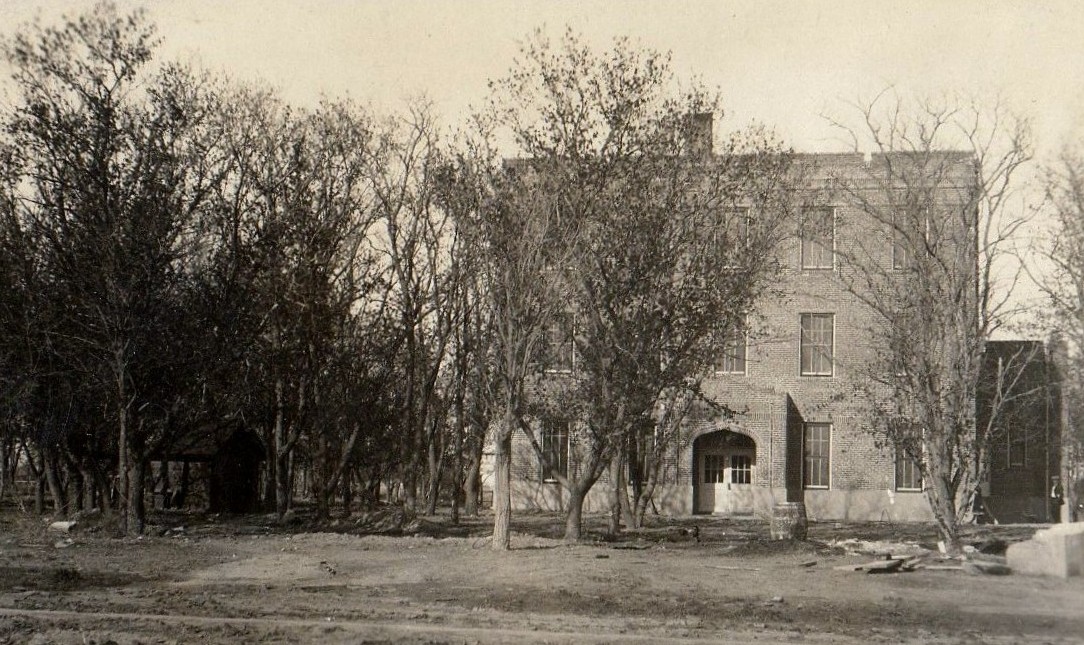
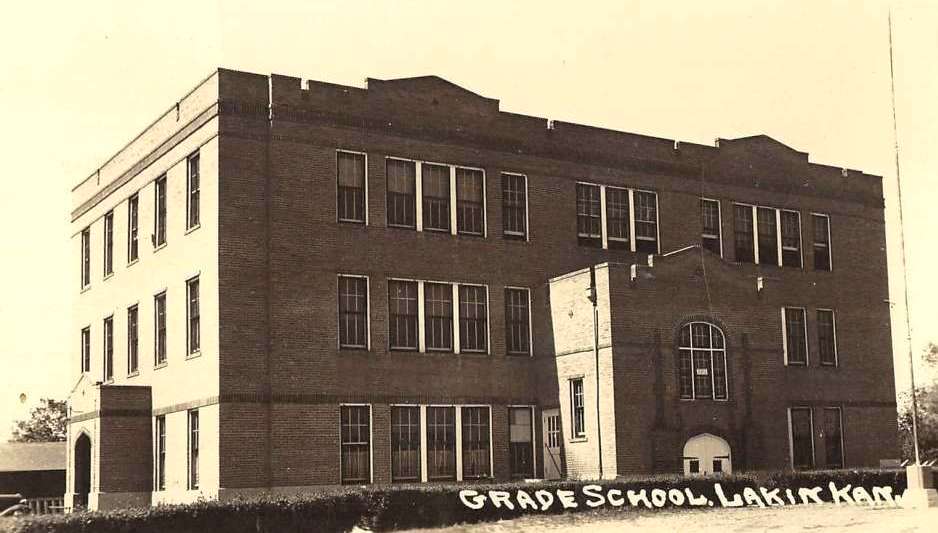
When the building was built, board and community members believed that the school would accommodate future growth and changing conditions, but within 10 years the school was crowded. On April 11, 1930, the school had an enrollment of 218 in the primary grades and 103 in the high school. To combat the overcrowding, a plan was proposed at the annual school meeting to organize a rural high school and retain the 1920/1921 school building for primary grades through eighth grade exclusively.
A population boom created by the expansion of the natural gas, oil and irrigation industries in the area led to overcrowding again by the late 40s. In 1949, kindergarten through fifth grade moved out of the building and into the new grade school building, leaving only sixth through eighth grades in the 1920/1921 building which then became commonly known as the “junior high school.”
Fifty years after the school’s completion, only seventh and eighth grades were using the old school when part of the ceiling on the third floor gave way and crashed to the floor in April 1971. Fortunately, no students or staff were in the building. Harold Smith, teacher and a substitute bus driver, took his briefcase up to the third floor that morning where his classroom was, placed it on his desk, and left. Harold said the ceiling was still intact at that time. When he returned after driving his bus route, there were police officers and people on the lawn panicking. The ceiling in his classroom had collapsed first, and the library’s ceiling did the same soon after. The plaster fell from the 12-foot ceilings, and most of it was from one to one and one-half inches thick and carried considerable weight which could have easily caused severe injuries or even death.
Bill Adams and George Sauer, Jr., both members of Lakin High’s Class of 1975, vividly recall the incident. Adams said he remembered coming to school that morning after the ceiling gave way in his home room. “We carried desks down to the lower floors. The ceiling had metal lathe, and there was a pretty deep gouge in the top of my desk from the metal.” Sauer said a classmate’s desk was completely flattened. “We held the last 9 weeks of school in the grade school gym.”
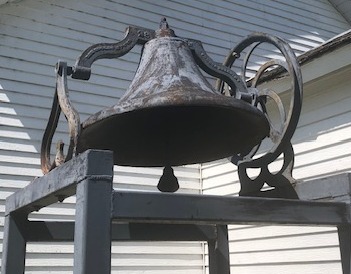
Experts were brought in to determine if the structure could be saved, but the building did not pass the test and was torn down. The school’s bell was saved and is now on display at the Kearny County Museum outside our one-room schoolhouse. When the decision was reached to raze the 1886 building, F.M. Hyames, superintendent of schools, announced that contractors were to take as much of the old school as possible to re-use in the 1920/1921 building. Could this mean the 28” Goulds bell that was donated to the Museum was also used in the 1886 school? Museum staff researched vintage Goulds Manufacturing catalogs and discovered that bells like ours were advertised in several catalogs from the late 1800s. We reached out to Goulds Manufacturing as well as experts in the field who collect, refurbish and sell school bells and hope to have an answer soon.
SOURCES: Archives of The Advocate and Lakin Independent; History of Kearny County Vol. I; Facebook; museum archives; GoogleBooks; and a personal account by the late Harold Smith, former teacher and Kearny County Museum Director.

Deerfield’s first schoolhouse built in 1886

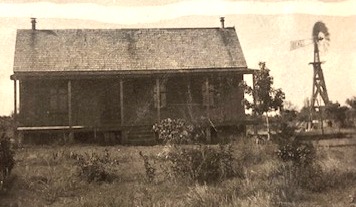
Summer break officially ended for Deerfield’s students yesterday when the U.S.D. 216 Spartans started back to school. In the early days of our county, school typically did not start until September and sometimes even later as children were often needed to help on their family’s farms. The first school for the children of the Deerfield community was a subscription school located a half mile east of town in the home of H. Charles and Belle Nicholls. According to their granddaughter, both Mr. and Mrs. Nicholls taught that school term of 1885-1886.

The first school for Deerfield area children was a subscription school held in the home of H.C. and Belle Nichols.

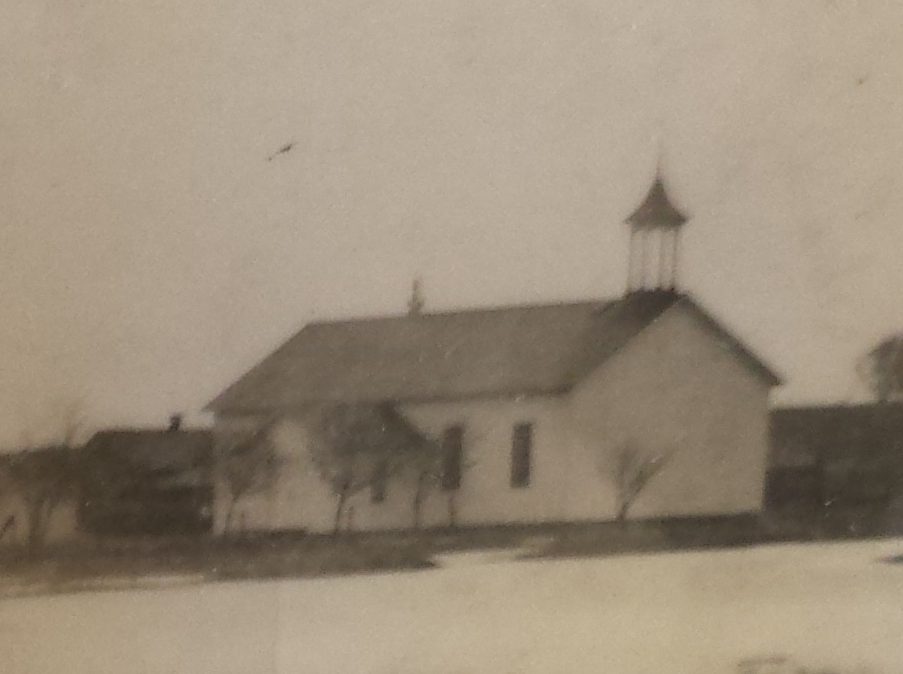
Mr. Nicholls was serving as the secretary pro. tem. of the District 3 school board in August of 1886 when the decision was made to build a school house in Deerfield. The area had experienced a large influx of settlers, and a frame building was erected that was large enough to be divided into two rooms when needed to accommodate all the children. The school opened in October of 1886 with Miss Sallie Eastham as the teacher. In March of 1911, voters approved bonds to build a new brick school house in Deerfield. The old school building was sold to the Baptists and moved two blocks south of the school grounds where it served as a church. Later the building was used as a first-grade classroom, then as an industrial arts class room for the high school, and finally as a community building and grange hall for the Deerfield and Pomona Granges.

Deerfield’s first brick school house was constructed for an approximate cost of $12,000 and was available for the 1912-1913 school year. Although the building itself was very modern for that time, the school lacked the conveniences of running water, electricity and gas heat. The first heating system used was a coal furnace, and drinking water was provided by large water cans in each room with each student providing his or her own drinking cup. Part of the recess period was spent in refilling water cans. No lighting of any type was used. That school year a covered wagon drawn by a team of horses and driven by Bert White was used for Deerfield’s first organized mode of transportation for school children.

The school housed both grade and high schools with the high school faculty consisting of only one teacher, C. Edgar Funston, who taught Latin, algebra, English, ancient history, geometry, medieval and modern history to freshmen and sophomores. Funston also taught a full course of eighth grade subjects. His classes were conducted on the upper story while the two lower rooms were used for the primary grades. The following year, the high school classes were moved into the west room upstairs which had been partitioned to provide for a class room and to accommodate an additional teacher. By the end of the 1914-1915 school year, Deerfield had become a fully accredited three-year high school. The first graduating class in May of 1916 had three students.

The school term of 1915-1916 saw many improvements made to the school building. Among these was the addition of electricity and running water. Wells were drilled and equipped with automatic electric pumps, and pressure tanks were installed in the building. By the end of the 1919-1920 school year, Deerfield’s high school had become an accredited four-year school. Enrollment increased significantly necessitating the need for a new high school building. A new brick building was ready for classes in the fall of 1920 at a cost of about $33,000. The new building had the added bonus of a gymnasium. At this time, there were approximately 30 students and three faculty members in the high school. Rosamond James Eves and Oscar Maddux were the first two graduates from the new high school in the spring of 1921.

Coal-burning furnaces gave way to more modern gas heating systems in the 1920s, and 1948 marked the end of the school system’s private water system as water was then provided by the Deerfield’s city water system. Indoor rest rooms were installed and first used in the old grade building in 1951.

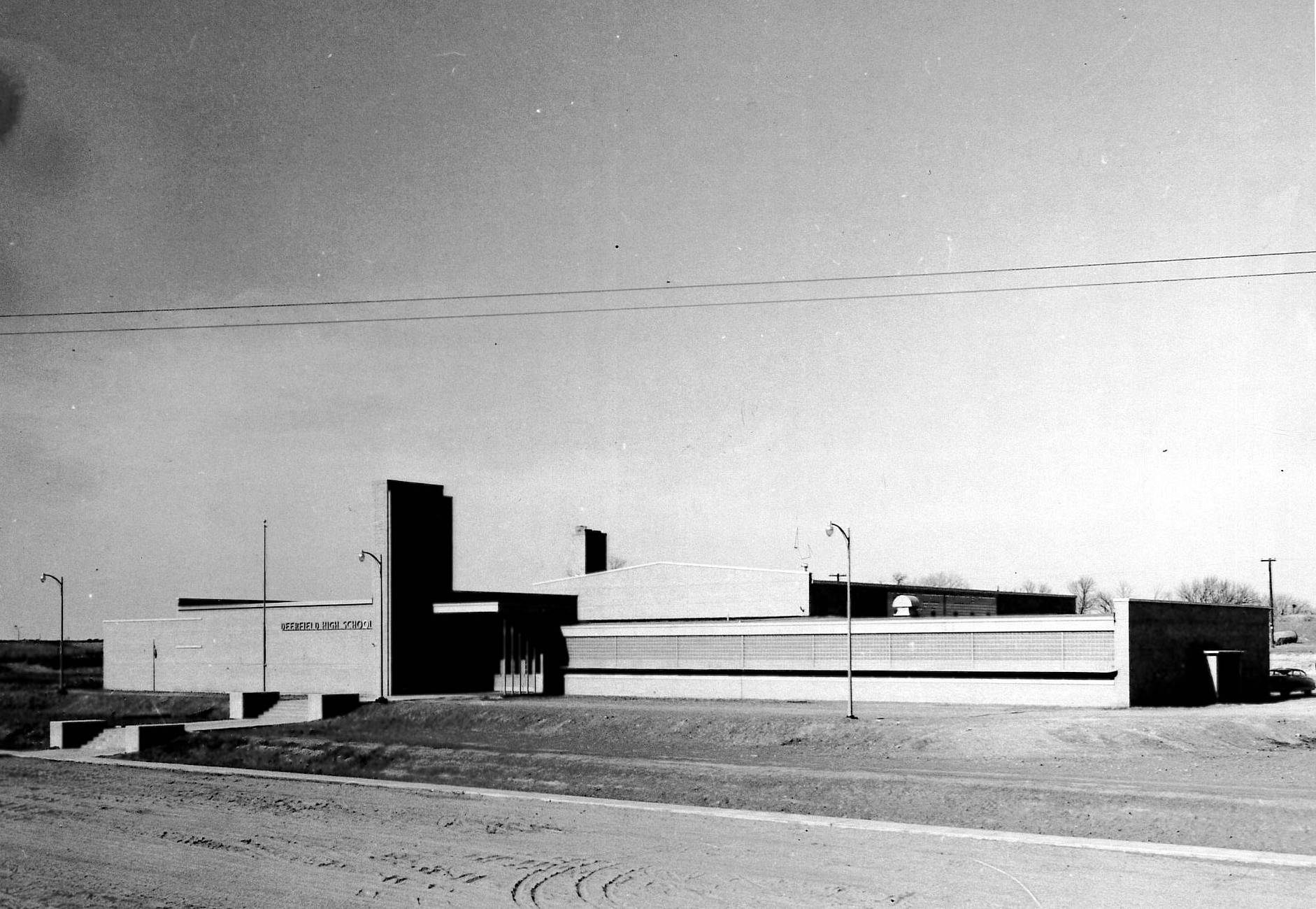
In 1946, the rural Prairie View and Harmony schools consolidated with the Deerfield Grade School while Pleasant View School District was added to the Deerfield district the following year. With added students and overcrowded conditions, Deerfield High School District No. 3 voted to build a new high school. In February 1950, 46 students and faculty moved into the $330,000 building.

Meanwhile, more space was badly needed at the grade school. A lunch program was added which required space for a kitchen and dining room, and the addition of a music room further depleted the available classroom area. More elementary teachers were added which ultimately provided a teacher for each grade. Since there were not eight classrooms available, the seventh and eighth grades were housed in the old brick high school from 1951 until 1957. After considerable groundwork, a bond election was held in January of 1956 in which bonds in the amount of $294,000 were approved for building and equipping a new grade school which would house kindergarten through eighth grades as well as a lunch room. Construction began in September of 1956, and the school was ready for occupancy in October of 1957. An estimated crowd of 300 people attended the dedication of the building on November 11, 1957. The school’s all-purpose hall was also dedicated that day in memory of Rex Miller, a member of the school board who had perished in an explosion in August of 1956.

The two old brick school buildings were razed, and recently city crews uncovered some of the bricks from the buildings when they were installing a new sewer extension for lots north of Deerfield’s tennis courts and swimming pool.

Deerfield’s first brick school building while under construction.
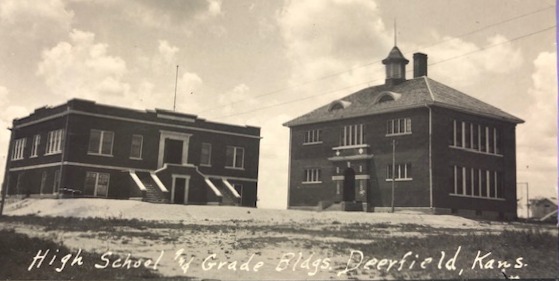
Deerfield’s first brick school building is pictured on the right and housed all grades until the high school building was built next door and opened in 1920.
Deerfield’s current high school building was opened to students in February of 1950.
Deerfield’s current grade school building, along with Rex Miller Hall, was dedicated on Veteran’s Day 1957.

SOURCES: History of Kearny Co. Vol. I; archives of The Advocate and Lakin Independent; “Deerfield School Advancement” by Norval Gray, Supt. Of Deerfield Schools 1951-1962; information provided by the late Mary Russell, granddaughter of H.Charles and Belle Nicholls; and Museum archives.


Lake McKinney sight of many tragedies

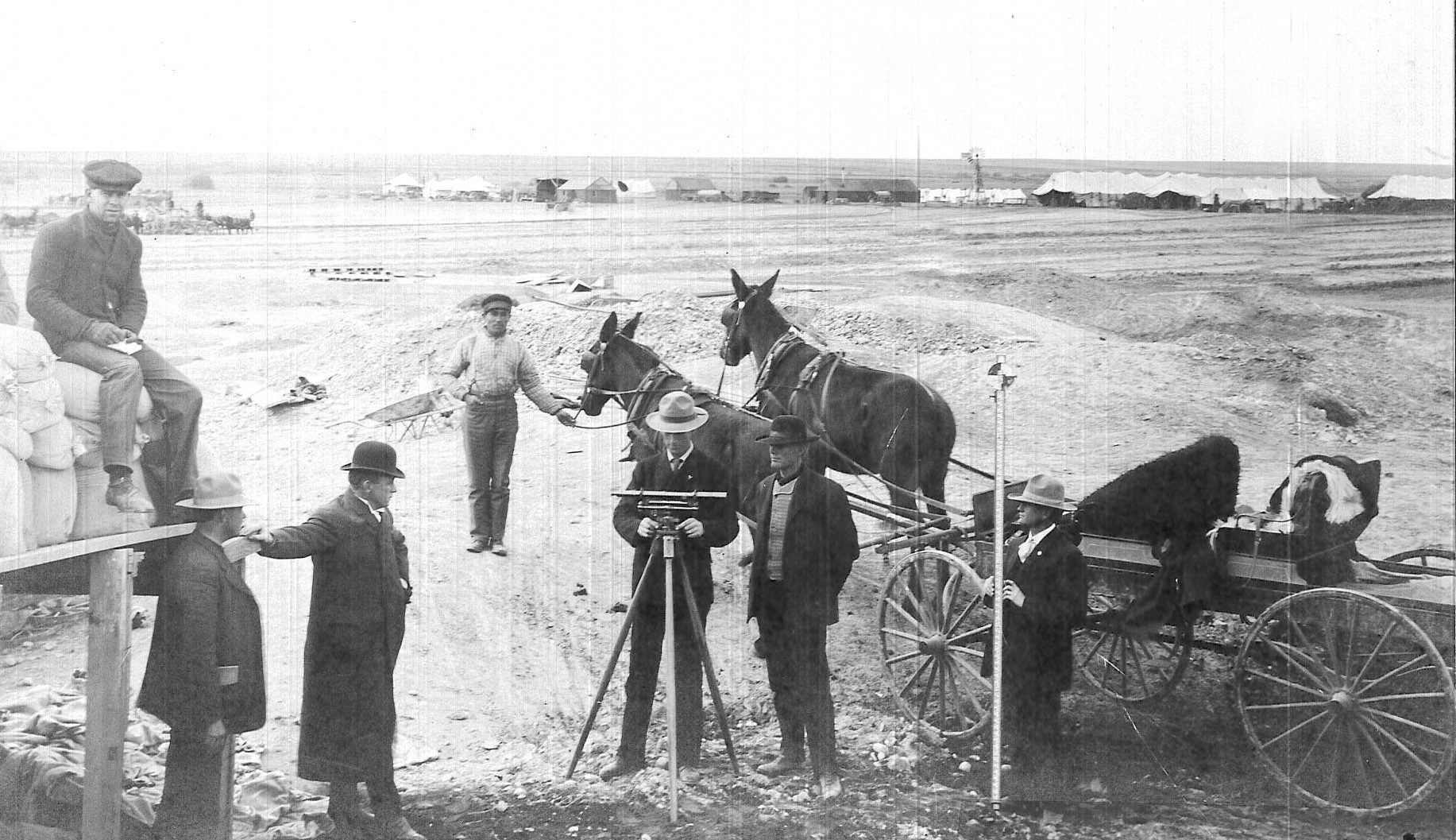
Although numerous outdoor enthusiasts, families and scout troops enjoyed Lake McKinney’s benefits, the reservoir was also the sight of several tragedies. The first of many drownings occurred on the second day that the lake was being filled, Feb. 12, 1907. John Phillips, Harry Beckett and Fred Frost went to the lake to complete some unfinished work. They were returning to Lakin in their wagon when they came to a spot where water covered the road. Certain that they knew where the road was and that the water was shallow, the men decided to cross the strip instead of going around. Frost turned the team of mules into the water. Head surveyor Henley Hedge was following them in his buggy and watched as one of the mules slipped off the road bed into deeper water, pulling the other mule and wagon in after him. Hedge jumped into the icy water, cut the mules free and managed to pull Frost to safety. Hedge pushed into the cold chilly water to rescue Phillips, but Phillips refused to take hold of the pole extended to him. Both Phillips and Beckett drowned. Beckett was the rodman and chief assistant to Phillips, a rising young civil engineer who had been the engineer in charge of the project.

In July 1908, 14-year-old Fred Schagun of Deerfield drowned when he and his brother were fishing. The boy waded into the water to unfasten his tangled line and got into one of the channels where water was several feet deep. In February 1909, 17-year-old Gilbert Kimball was mortally wounded while on a hunting expedition with his brother and four friends on the east side of the lake. The Lakin teen was getting out of a surrey when his gun inadvertently discharged, the ammo hitting Kimball in the throat. Clarence Parcells died a month later after being shot while hunting ducks with a number of other Lakin businessmen at Lake McKinney. The 24-year-old Parcells was inside a hunting blind with Charles Waterman and stepped in front of Waterman’s gun just as he pulled the trigger.

In August of 1910, teachers James Hemphill, Frank Hibner and Will Bruner rowed their boat about 200 feet from shore and anchored it in order to fish. Noticing their team of horses which had been tied on the bank was loose, the 24-year-old Hemphill jumped into the water and began swimming to shore. Hemphill had swam about 50 yards then called for help but could not be reached in time. Seventeen-year-old Eulojio Montoya drowned in July 1922. He had come from New Mexico to work in the sugar beet fields and was with four companions, all of whom jumped from a leaky boat when 150 yards from the bank. Montoya was seized with cramps while swimming to shore.

Milton Clare Downer, 22, of Garden City, drowned in August of 1946 when the boat in which he was riding capsized in about eight feet of water. Downer could not swim. Thirty-five-year-old Ray Barrett of Syracuse drowned while attempting to swim to shore after his motorboat overturned in June of 1948. Barrett was approximately 500 yards from shore. The lake at that time was described as rather windy with raising six-inch high waves. In July that same year, a Garden City family of four drowned when the two-man boat they had borrowed was swamped by waves and capsized. Clarence and Angeline Jansen and their young sons, ages 3 and 4, were fishing in the middle of the north end of the lake. A fifth person in the boat, Preston Jones of Garden City, managed to fasten himself to the side of the boat and stay afloat until he attracted the attention of fishermen on the shore.

In December of 1953, Sam McGinness was hunting ducks and apparently had gone after one that had gone down on the ice. The 49-year-old Garden City man broke through the ice nearly 400 yards from shore. McGinness’s cries for help were heard, but he drowned before rescue boats could reach him. Orval Glancy, 55, of Garden City, lost his life when he fell from a small speedboat while fishing in September 1957. After searching futilely for 15 minutes, Glancy’s companion summoned for help. Glancy’s body was found after a seven-hour search. Garden City brothers, Gary and Larry Gossman, ages 12 and 13 respectively, drowned in May of 1959. They were on a 12-foot fishing skiff with five other passengers when their boat was swamped by high waves fueled by 30 to 40 mph winds. Another boat took three of the passengers to a nearby fishing raft and returned for the brothers and their parents, but while trying to pull them into the rescue boat, the boat that the Gossmans were in capsized.

Seventeen-year-old John Yager Jr. was on his way to see his parents at Lake McKinney in June 1962 when his car went out of control and rolled into an irrigation ditch that filled the lake. The Lakin teen was pinned under the car which was in about two and a half feet of water. The other occupant in the car, Robert Yoxall, attempted to free Yager but was unable to do so and ran about three quarters of a mile to a field where Jim White was working and collapsed. White revived Yoxall and phoned officers for help when he learned of the accident. The car was lifted using a chain and jeep belong to White, but Yager was pronounced dead at the scene.

In April of 1970, Joseph Randolph of Lakin was hunting with two friends at the spillway bridge where the Amazon diverted into the west end of the lake. The gun of one of Joe’s companions accidentally discharged, and the bullet struck Randolph in the head. The 16-year-old Randolph was taken to Kearny County Hospital for treatment and then flown to Wesley Medical Center in Wichita where he died three days later. In 1972, a young Wichita father was killed instantly when his car plunged from a low dike on the east shore which ran from the recreation area near the boat docks. Charles Heuett apparently attempted to pull his car back when it went out of control on a sharp curve, but the car flipped and then landed on Heuett who was ejected. The 35-year-old suffered multiple injuries including a skull fracture.

In June of 1998, 16-year-old Tiana Marie Vasquez went to the lake with three of her friends to swim. The Deerfield girl immediately disappeared after jumping in near the spillway. She was apparently dragged under by the strong undercurrent and sucked through the spillway as her body was recovered in the Great Eastern Ditch about a mile and half from where she jumped into the lake. Vasquez’s drowning was tragic and serves as a sad reminder about the dangers of trespassing on public property. Since Lake McKinney closed to the public in 1978, there has occasionally been scuttlebutt about re-opening the lake, but the fact remains that the lake and the surrounding property is owned by The Garden City Company. The only people allowed on the property are company personnel and persons who have been given prior authorization.

John Phillips at tripod and Harry Beckett holding rod with Fred Frost between them during construction at Lake McKinney. Both Phillips and Beckett were victims of accidental drowning when the lake was being filled

Sources: Diggin Up Bones by Betty Barnes; History of Kearny County Vols. I & II; Archives of The Garden City Telegram, The Advocate, Lakin Investigator and the Lakin Independent; and Museum archives.