June is the most popular to month to marry

The popularity of June weddings dates back to early Roman times and a Roman festival which honored the goddess Juno. Wife of Jupiter, Juno was considered to be the protector of women in all aspects of life, but especially in marriage and childbearing. A June wedding was thought to bring good fortune and many offspring. June marriages often led to pregnancy with babies born the following spring when their chances of survival were much better than in the long and often very lean winters. Also, spring births would not interfere with harvest in the fall.

The history of June weddings is also connected with the Celtic calendar. Even the term “honeymoon” has an historical origin. The first moon after the summer solstice, June 21, was called the “honey moon.”

Another less popular belief was that most people got married in June because they took their yearly bath in May. The overall population smelled fairly fresh still in June, and the bride’s bouquet masked her body odor. Whether or not there is any truth to this notion, the good weather of June promised ample fresh flowers for the ceremony and celebrations.

According to The Old Farmer’s Almanac, June is still the most popular month to marry, but a list of early marriages performed in Kearny County indicates that June was no more favored than any other month for weddings. As far as days of the week, Sunday used to be the most popular wedding day as it was the one day most people were free from work. In early U.S. history, Wednesday was considered to be the luckiest day for weddings, and Fridays were avoided as they were known as “hangman’s day.” An old rhyme reads, “Monday for health, Tuesday for wealth, Wednesday best of all, Thursday for losses, Friday for crosses, Saturday for no luck at all.” Despite the rhyme, Saturdays are currently the most popular day for weddings (which might explain the high divorce rate).

The concept of weddings as a reflection of romantic love is a rather new one.  The first weddings were more like a business transaction between the bride’s father and the family of the groom. The bride and groom had very little say in the matter. Women were considered their father’s property; hence, the tradition of being walked down the aisle and “given away” by their fathers. In some cultures, the father had to pay a dowry to the groom’s family; while in others, the groom had to give a “bridewealth” to the bride’s family. Often a bride with a handsome dowry was kidnapped on her way to the wedding and forced to marry her captor. The original purpose of bridesmaids and best men was to aid in capturing brides, getting them to the church, and keeping away anyone who might interfere with the wedding.

Bridesmaids were dressed in the exact same clothes as the bride so as to confuse any would-be captors. The groom stood on the right of the bride so he could wear a sword on his hip should anyone try to steal the bride during the ceremony. Standing on the right allowed him to draw his sword without beheading his bride.

In the 1800s and 1900s, many marriages were born out of necessity. During times of war, men were often obligated to marry their fallen brother’s widow. Widowers often took younger wives to help them raise their offspring, and children meant guaranteed help on the farm. Romance versus practicality was the topic of an entry in an 1892 Lakin Index, “The young man in search of a wife goes about looking for an ideal woman. The older man goes about looking for a practical woman when he wants to wed.”

The historical roots of mail-order brides can be traced back to the days of the Wild Wild West. Although many men found financial gain upon migrating West, they lacked the company of a wife. With few women to pick from, they attempted to attract women living back East by writing letters to churches and publishing personal ads in magazines and newspapers. Wanting to gain financial security and intrigued by what life on the frontier could offer them, women would write to the men and send photographs of themselves. Courtship was conducted by letter until a woman agreed to marry a man she had never met. In 1906, the Kearny County Advocate reprinted an article about an H.W. Flowers of McLean, Tex. who asked an employment agent to find him a young widow or old maid in Kansas who was matrimonally inclined. Flowers said he wanted a Kansas wife and that he had heard there were good crops of wheat, widows and old maids in our state. The employment agent replied that there was a good crop of wheat but there was a shortage in widows and old maids and “the latter crops never remain on the market.”

After Queen Victoria wore a white lace dress when she married Prince Albert in 1840, white wedding dresses became more popular. Prior to this time, brides often wore their best available dress or a new gown that could be worn again. White dresses were considered impractical; however, the color white had long been associated with purity, virginity and innocence in some cultures. Following World War II, white wedding dresses became increasingly popular in the U.S. as economic prosperity allowed more people to purchase a special dress for their wedding day.

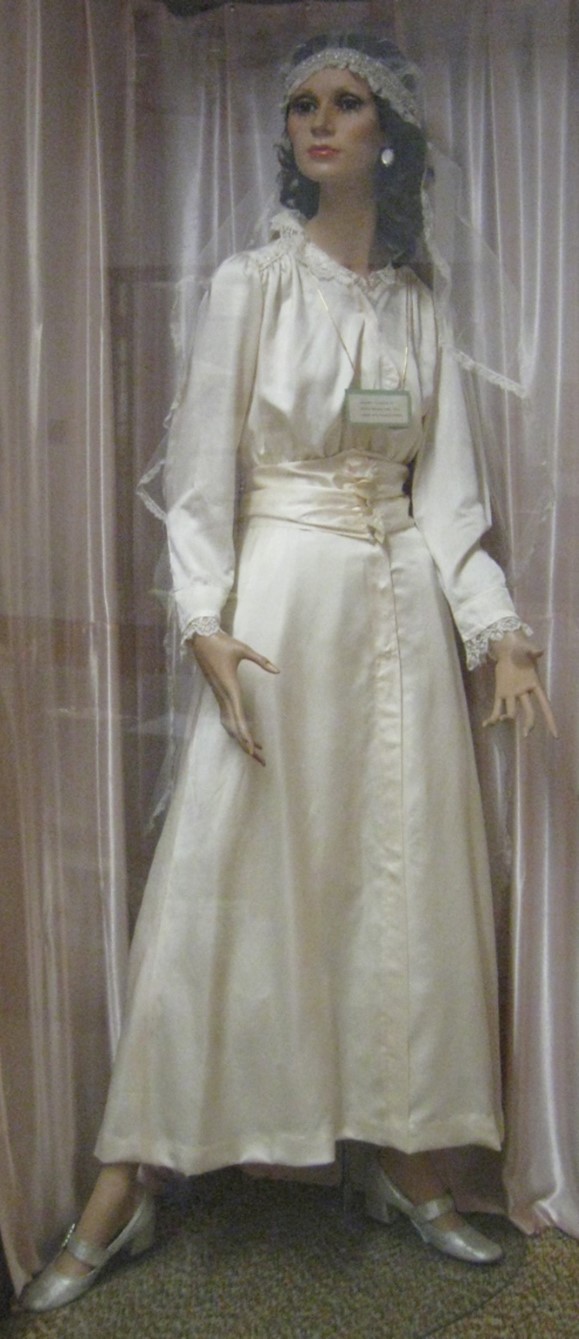
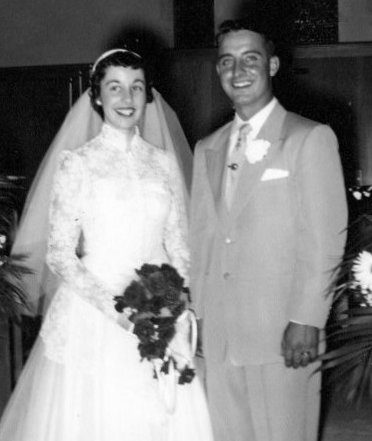
Kearny County Museum is home to many wedding artifacts including dresses, men’s attire, wedding certificates, invitations and more! Some of our items date back to the late 1800s with the oldest dress on display being that of Louise Sower worn in 1884. Dresses from June weddings in our display include those worn by Ethel Beymer in 1913, Barbara Kash in 1954, Ann Tate in 1956, Twila Smith in 1957, Diana Loeppke in 1966, Sheryl Bostrom in 1967, and the dress that Debby Yount made for her wedding in 1972. We also have the suit that she made for her husband, Dale. We encourage visitors to come in and check out our wedding exhibit as well as all the other fascinating displays and items we have in our hometown, home-grown museum! Hours are 9 a.m. to 4 p.m. Tuesday through Friday.
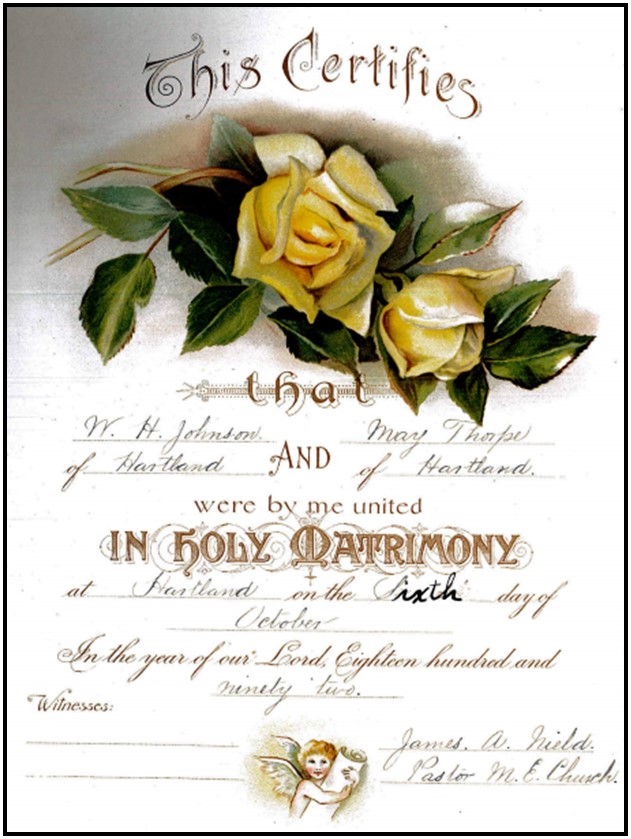
This 1892 marriage certificate was issued to W.H. Johnson and May Thorpe, both of Hartland. It is one of many marriage certificates in our collection.
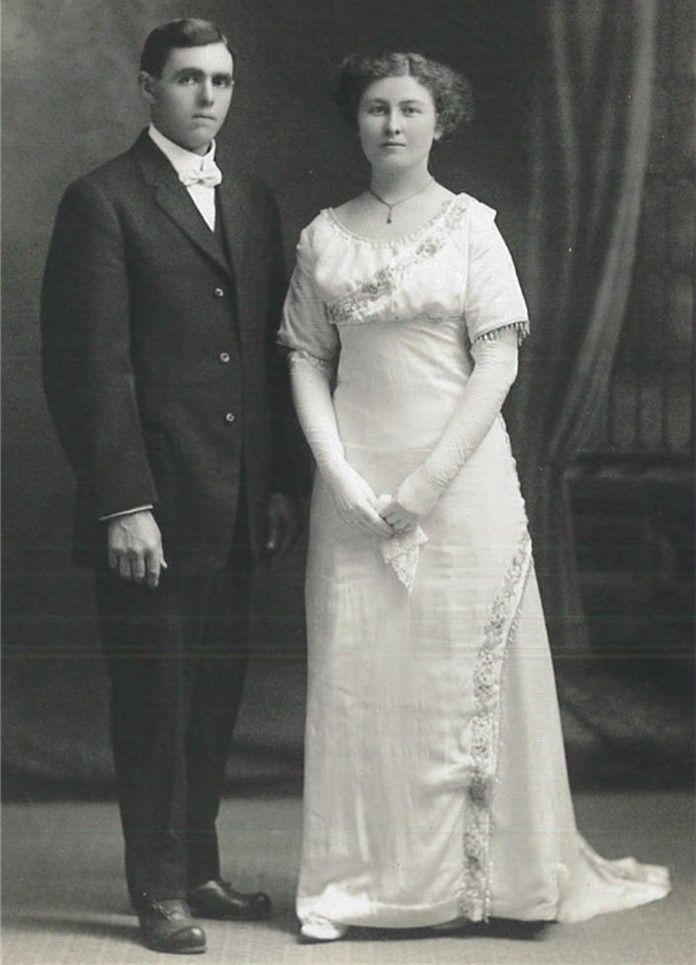
Louise Corbett and Louis M. Smith were married at the Corbett Ranch in Deerfield, Jan. 7, 1913. Both Louise’s wedding gown and Louis’s vest are part of our collection.
This dress was worn by Margaret O’Loughlin when she married Bertchard Hurst on February 23, 1916. We also have Margaret’s wedding night gown.
Among the dresses on display at the museum is this one worn by Barbara Kash in June of 1954. The dress was designed and made by her mother, Leona Davis. Leona made a second overlay which was worn with the dress by her other daughter, Diana Crump, in November 1954. The dress was worn again by Arnold and Barbara’s daughter, Susan, on her wedding day in 1985.

SOURCES: Lakin Index; Kearny County Advocate; Saturday Evening Post; Old Farmers Almanac; Museum artifacts; brombergs.com; and Wikipedia.
 

The Flood of 1965

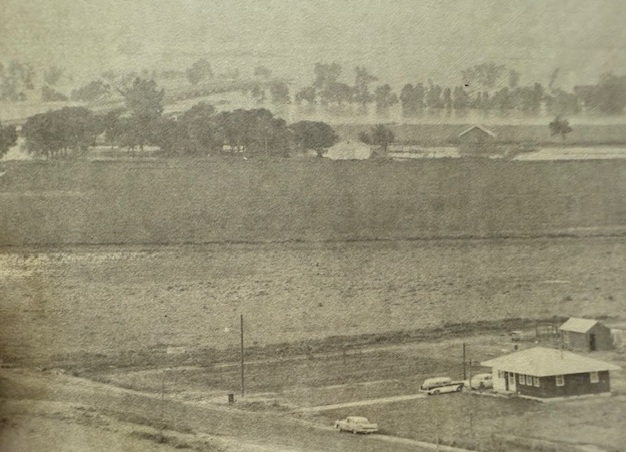
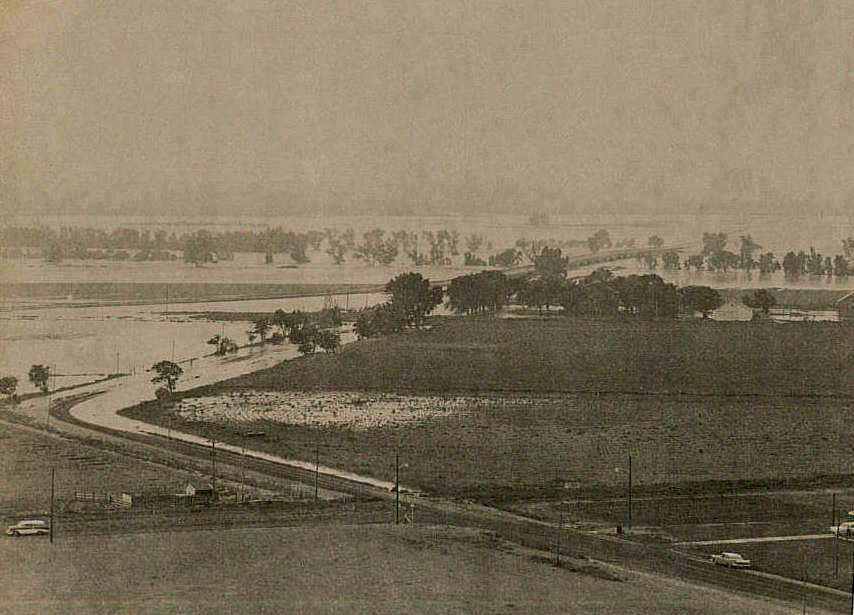
There had been numerous floods in the Ark River Valley before 1965, but the flood that ravaged Kansas, Colorado and New Mexico in June of that year was labeled a 100-year-flood or a once-in-a-lifetime flood. The catastrophic event was the by-product of torrential rains that began on the eastern slope of Colorado’s Rocky Mountains on Monday, June 14 and continued for three days. Many of Colorado’s streams began to flood, including East Plum Creek which joined the equally swollen Plum Creek at Sedalia about 20 miles south of Denver. Their combined waters demolished bridges and swept houses off their foundations. Floodwaters reached the South Platte River then began spreading over open farmland. The Clay, Bijou, Fountain and Purgatory creeks and flooding Platte all rushed towards the Arkansas River, and on the 17th, a 15-foot flood crest struck Pueblo. Gates at John Martin Dam were closed to trap waters in the early morning hours of June 17, and the reservoir held nearly the entire volume of flood run-off. Still, many of the streams that were flooding were east of the big dam.

Flood waters inundated Holly, Colorado where more than six inches of rain fell overnight and caused the raging river to expand even more as it headed further east. Granada also sustained heavy damage. The flood crossed into Kansas early on June 17, and more heavy rain exacerbated the issue. Water from six to eight feet deep filled homes south of the Santa Fe Railroad tracks at Coolidge. The flood stretched more than 1.5 miles across by the time it reached Syracuse where one home was moved a half-mile from its foundation, four others were destroyed and a total of 100 were affected in varying degrees.

The turbulent tides raced towards Kendall, and the rain just kept falling. Residents there were spared the damage because the water never crossed the protective railroad dike at the south boundary of the berg. Miraculously, the approaches to the Kendall bridge were not cut out, but nearby rural residents were not as fortunate. Whole herds of cattle were carried away, and numerous farm homes fell victim. The normally dry Bear Creek also went on a rampage, and the water soon spilled out of the hills into farmland west of K-25. Several sections of roads and highways in Kearny, Grant and Hamilton counties were washed out by Bear Creek water.

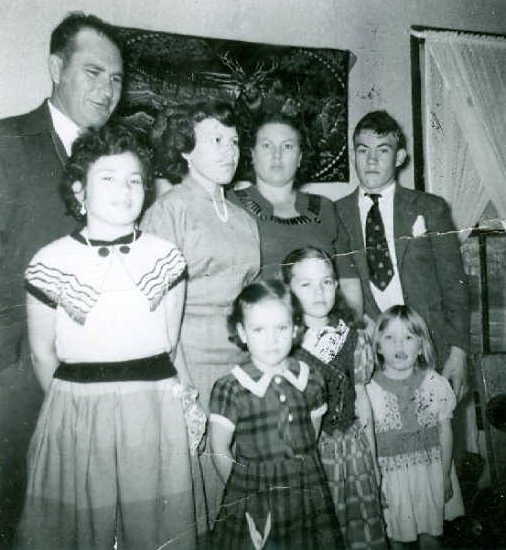
In the early morning hours on June 18th, 45-year-old Emanuel “Bud” Weldon, a ranch hand at the Bar-HK Ranch five miles southwest of Lakin, drowned in the high waters. Bud and five others were attempting to flee the area in a pickup after doing what they could to get livestock to higher ground, but the rapidly rising water engulfed the truck. The men clung to a 25-gallon gas tank that was in the back of the truck and floated until reaching a large tree where three took refuge. One man made it to another tree, and another clung to a gatepost. The men had hold of Bud at first, but the force of the water and his weight made him slip from their grasp. Weldon’s body was recovered two days later by helicopter, and the others in his party were eventually rescued via boat and helicopter.

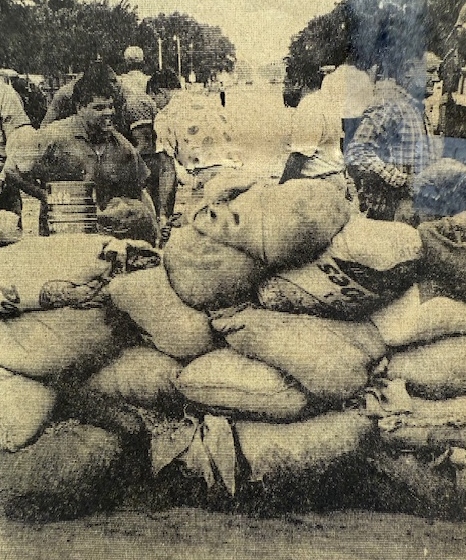
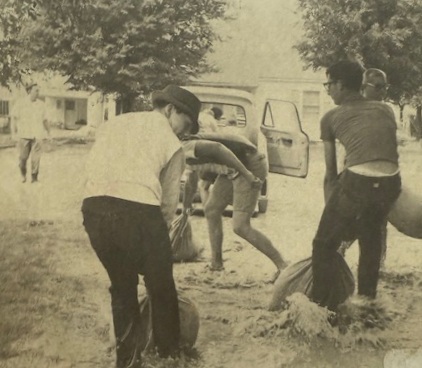
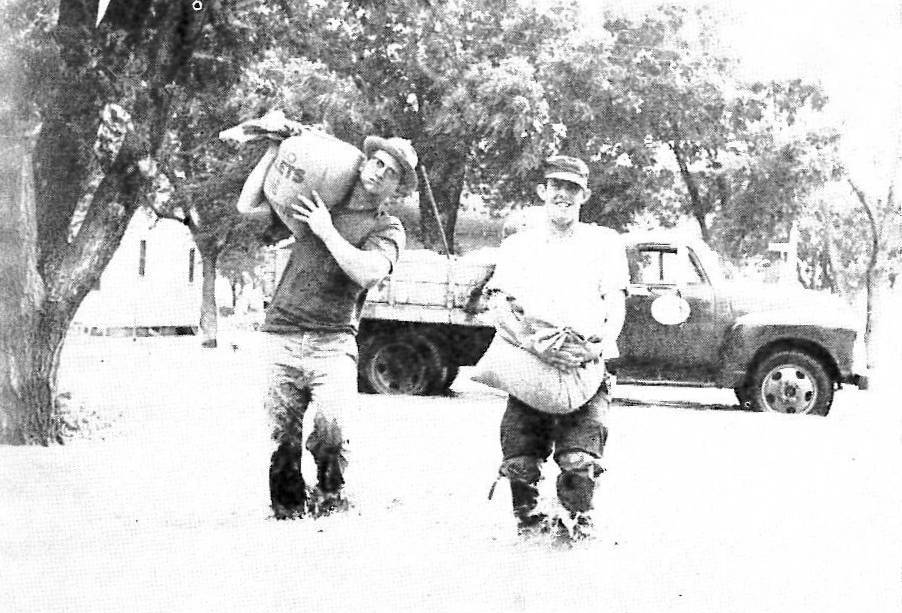
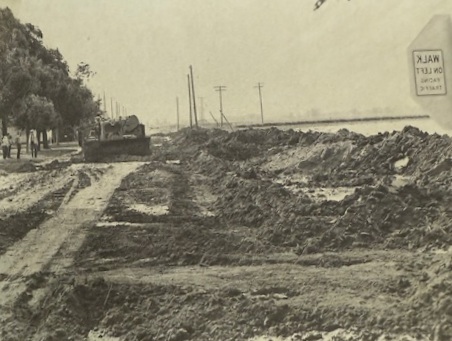
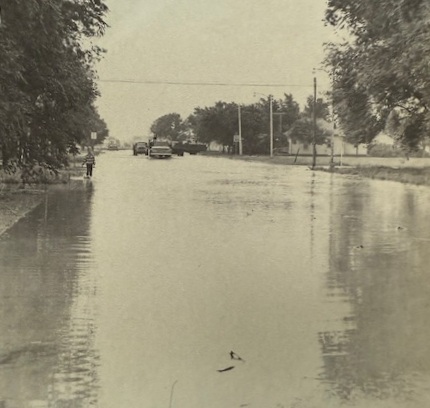
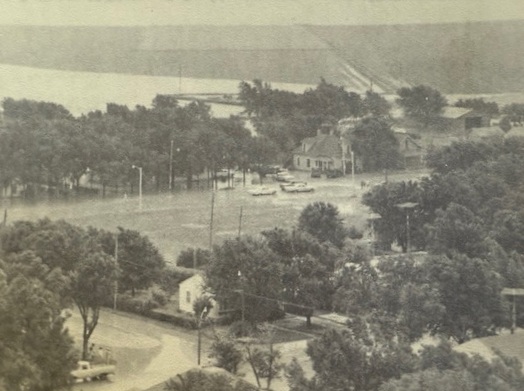
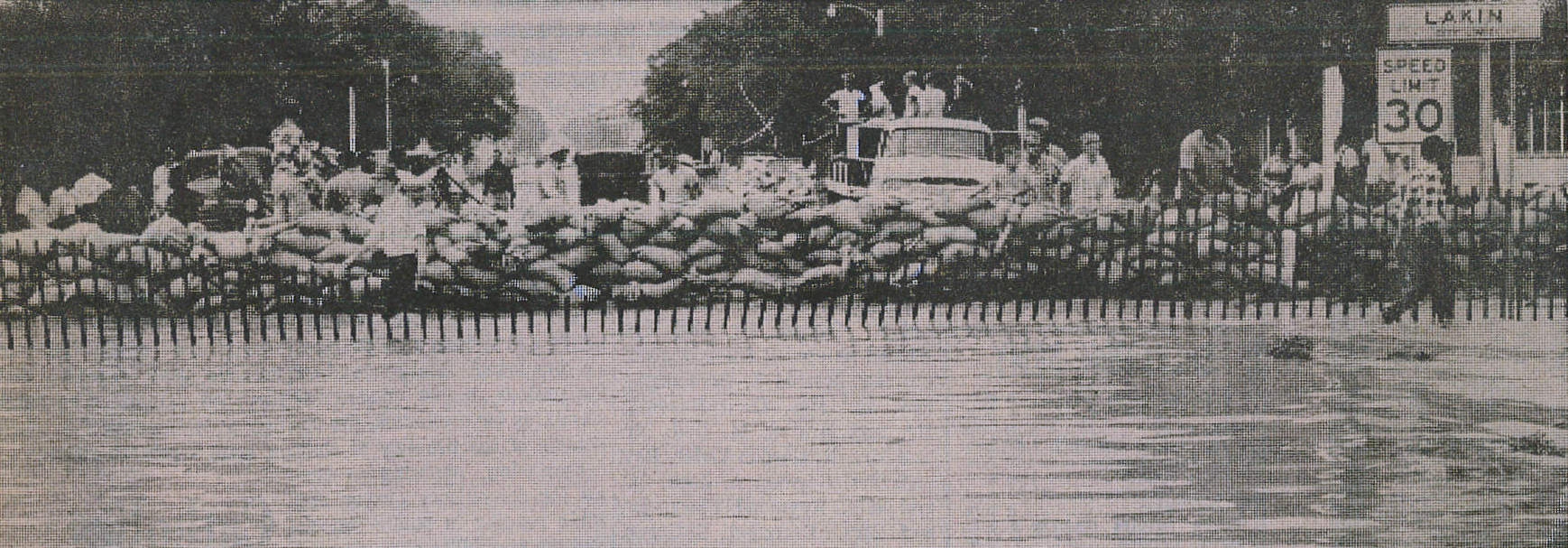
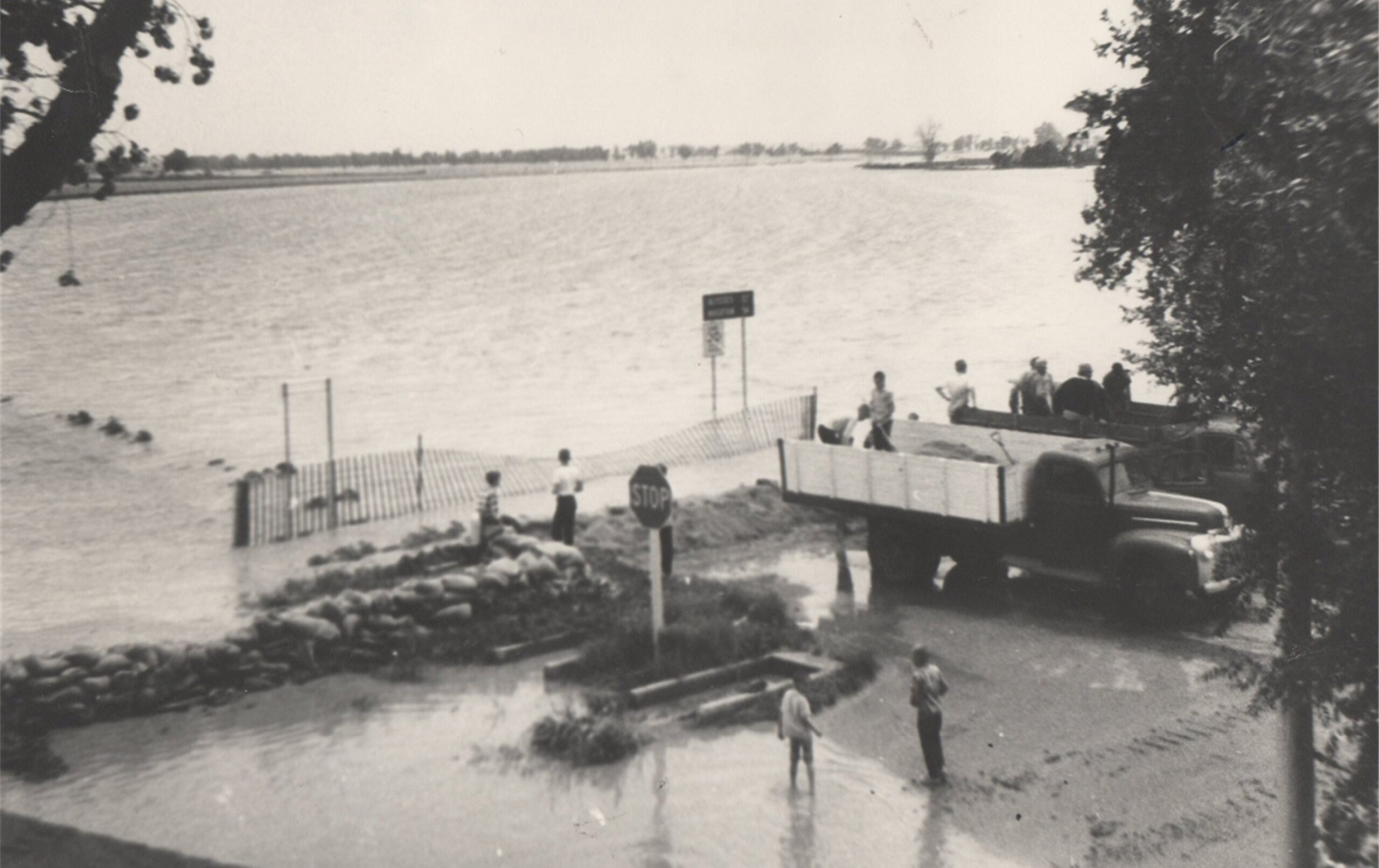
The waters edged into the south side of Lakin around 6:30 a.m. Thursday. Volunteers from all over the community joined forces with city and county employees, the fire department and civil defense to build a dike on the south side of Avenue C. They came with shovels to fill sandbags and with trucks to haul material or do whatever was necessary. As building of the dike progressed, the flood waters were forced to flow east away from town. On the other side of the dike, flood water raced over HWY 25 to a depth of 22 inches. It soon became evident that the highway was acting as a dam. About the time the dike was completed, with permission of the State Highway Department, Gene Hornbaker maneuvered his backhoe around the dike and cut a gash across the road about a quarter of a mile south of the dike which allowed the water to escape on east.

Elderly patients at Lakin’s Sabo manor were evacuated to the Memorial Building in busses, cars and ambulances. Property damage was minimal as most residents who lived south of the tracks had sandbagged around their basement windows. As soon as the dike was completed, county road crews moved their equipment to Deerfield and did revetment work to protect the town. There was no flooding in Deerfield as the water only came up to the railroad tracks, but the south approaches to the river bridges at both Lakin and Deerfield sustained damage. Water poured into Lake McKinney via the Amazon ditch, and the intake at the headgates was badly damaged. State and county health officials ordered the lake closed for all recreational purposes until the first part of July.

The flood waters had taken on a large amount of debris and dead livestock by the time they reached Finney County. By mid-afternoon on Friday, the swirling waters were seen under the Holcomb bridge, and a few minutes later the bridge was cut off and water was spreading out from the edge of the small community south into the sandhills. On higher ground than the river valley, Holcomb was virtually unharmed. At Garden City, famers trucked loads of dirt and sand to build a 25-block long dike which stood six feet high in some places. Three hundred families were evacuated from the south part of the city where the water reached a depth of 16 feet, and most of the animals at Lee Richardson Zoo were relocated. Flood water backed up through storm sewers, causing serious flooding along Fulton and Chestnut, and some basements north of the tracks filled up. Over $1 million in damage occurred at Garden City, and 24-year-old Jerry Morris drowned when he was swept away as he scrambled toward a tree for refuge south of the Garden City airport.

Pierceville residents were evacuated, and the water rose 15 feet and grew to a mile width in half an hour at Ingalls. Cimarron homes and businesses south of the railroad tracks received extensive damage. A 1/2-mile wide sheet of water rose from 3.8 to 17.2 feet in 15 minutes at Dodge City Saturday morning, and about 1,500 residents in south Dodge left their homes. Boats and helicopters were kept busy in rescue and supply operations. The following day, six feet of water was coursing through some of the homes, and 615 residences and 155 businesses at Dodge City and Wilroads Gardens were damaged. The flood waters reached Kinsley June 21 where highways from three directions were blocked by gushing waters of the Arkansas River and Coon Creek. Dikes at Larned and Great Bend prevented serious damage in those communities, but the surrounding rural area looked like a swamp.

The Department of the interior reported 14 drownings and at least two other deaths resulting from the storms and activities related to what many consider the worst flood in Kansas history. Millions of dollars of damage was done in Kansas, Colorado and New Mexico, and the laborious task of cleaning up began as soon as the waters started to recede.


Facing the camera, John Perez on the left and Lawrence “Beans” Urie on the right
Sandbagging in south Lakin
Jack Harris and Doug Stebens carry sandbags to reinforce the dike.
Building the dike
Main Street, Lakin
Looking southeast from the Lakin elevator


South Hamilton Street in Lakin looking towards the river
Bridge Street
from June 19, 1965 Wichita Eagle, Deerfield Bridge


Bud Weldon with his wife and children


SOURCES: U.S. Dept. of Interior; National Weather Service; History of Kearny County Vol. II; archives of the Lakin Independent, Hutchinson News, Garden City Telegram, and Wichita Eagle; and museum archives.

Former Kearny home is 125 years old

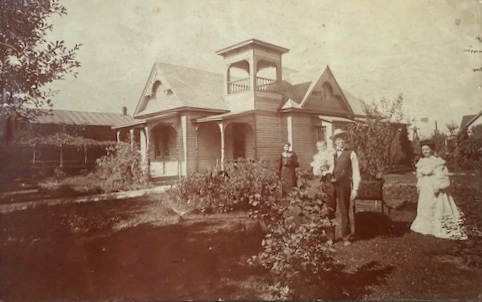
One of the oldest houses in Lakin has graced the northwest corner of Waterman Avenue and Kansas Street since its completion in 1900. Originally the home of Daniel Patrick Kearny, the structure’s historical charm is undeniable.

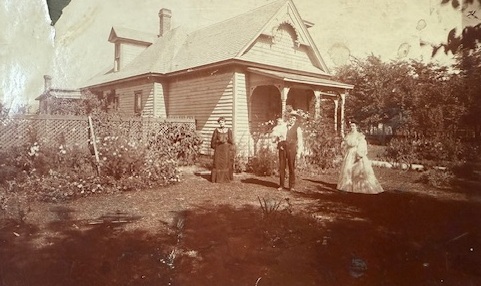
D.P. Kearny holds his daughter, Mary Frances, in the front lawn of his home on the corner of Waterman and Kansas. Also pictured are his mother-in-law, Cornelia Hitt Caton, and his wife, Florence.

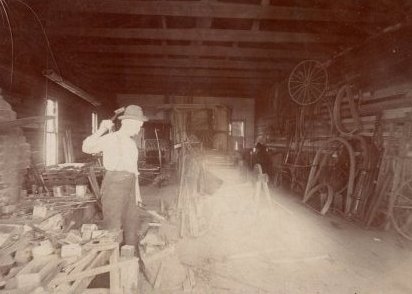
Born in 1846 in Brooklyn, N.Y., D.P. Kearny moved with his parents at an early age to Racine, WI where he grew to manhood. He married Eliza McKenna in 1868, and their family moved to several different states before coming to Kansas and settling on a claim 20 miles north of Syracuse in 1887. Mrs. Kearny died in 1889, leaving behind D.P. and their three children: Edward, 23; Evelyn, 12, and William, 10. Kearny then moved his family to Hartland where he operated a blacksmith and wagon shop on the west side of Hartland’s Main Street.

In November of 1893, Kearny relocated again, this time to Lakin. He purchased a residence and blacksmith shop on East Waterman Avenue, and by December of 1894, his business had become so successful that he was building an addition to the shop. Soon he was selling carriages, buggies, plows and other implements. By 1899, Kearny had expanded into the hardware trade, and customers could purchase stoves, tinware, windmills, and more at D.P. Kearny & Co.

Daniel Patrick Kearny in his blacksmith shop on East Waterman Avenue in Lakin.

In 1899, work began on Kearny’s new residence which sat just to the east of his booming hardware business. The Oct. 18, 1899 Investigator reported that Kearny was “sparing no pains to make his new dwelling elegant and comfortable, Mr. Kearny is one of Lakin’s most successful business men.” By the end of January 1900, the fine residence was near completion. “He has been careful to have all the work done in first class style, and this has taken a little longer than was at first expected.” The cottage was eye-catching with its gingerbread trim, tin roofing and cupola. In 1906, Kearny constructed a three-room addition “to his already extensive and handsome mansion.” D.P. spared no money when it came to his lawn either. He recruited expert floriculturists from Topeka and Manhattan to lay out flower beds and plant flowers.

In October of 1903, the beautiful residence was the scene of Kearny’s wedding to Florence Amelia Caton who was 34 years his junior. In February of 1904, daughter Evelyn married John J. (Jack) Nash at the Kearny home. “The house was handsomely decorated with carnations and roses, which were sent by friends from Hutchinson, and the most beautiful the florists of that city could provide.”

Part of the D.P. Kearny and Co. building, which sat west of P.D. Kearny’s home, can be seen in the background of this picture. After Kearny’s death, his eldest daughter and son-in-law returned from Colorado to run the hardware store. A few months later, the firm name changed to Nash Brothers when Jack Nash went into business with his brother Bern. Leon Davis later joined his Uncle Jack in the firm, and the business began advertising as Nash & Davis in 1939.

In November of 1904, P.D. and Florence joyfully welcomed a daughter they named Mary Frances. A few months later, D.P. received word that his eldest son had died in the Philippines where he had been sent in 1898 to fight in the Philippine-American War. Daniel Patrick Kearny died February 14, 1910 at his East Waterman residence. At the time of his death, his youngest son had not been heard from since 1894 and was presumed dead; however, it was later learned that William died in Montana in 1930.

D.P.’s widow and young daughter continued to live in the Kearny house, and it was the site of yet another pretty wedding when Florence remarried in February of 1914. Her second husband, Homer Allyn, hailed from Washington State, and the couple soon moved to the west coast where Homer raised Mary Frances as his own. The Allyns also had a son, but he died in infancy. Mr. Allyn died in 1938, and Florence married again in 1944 to Ora Penning. She died in 1962 at Centralia, Washington. Mary Frances was 24 when she married Dayton Van Vactor. The couple had one son, and Mary Frances died in 1995 at Portland, Oregon.

After Homer and Florence Allyn went west with Mary Frances, the Kearny home was utilized as a boarding house/hotel. In 1919, Joseph and Martha Dunkle purchased the home and ran it as the Dunkle House. In 1922, Orren and Lydia Francis began running the Francis Hotel out of the building, and they resided there until the 1940s. About 1947, Arthur “Pete” and Gladys Marx began operating it as the Marx Hotel, but many Lakinites will remember it as the home of their son Vernon “Dutch” Marx, his wife, Vicki, and their two children, Marc and Kathy. The home remains in the Marx family.


SOURCES: “Diggin’ Up Bones” by Betty Barnes; Ancestry.com; Archives of Lakin Investigator, Kearny County Advocate, Lakin Independent and Garden City Telegram; and Museum archives. Special thanks to the Kearny County Appraiser’s Office.

The First Christian Church of Lakin

Over a two-week period in November of 1900, the Revs. E.M. Carr and R.H. Tanksley conducted a series of meetings in Kearny County in the interest of the Christian Church. Carr, of Dodge City, was the president of the Eighth District, and Tanksley had recently been appointed to serve Syracuse and Lakin. The Nov. 29, 1900 Advocate reported, “Rev. Carr immersed four converts to the Christian church, in the Day pond,” while “Rev. Tanksley immersed seven converts of the Christian faith in Fulmer’s pond in Southside township.” This was the beginning of Lakin’s First Christian Church. In January, the Kansas Messenger reported that 14 had been baptized in Kearny County during this time. Among the charter members were Mr. and Mrs. Harmon Tipton, Mary Tipton, Hanna Neely, Lottie Neely, Mr. and Mrs. H.H. Cochran, and Mr. and Mrs. Nathan Fulmer.

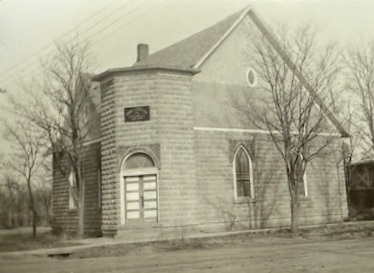
The members met in the Presbyterian Church at first, but later the congregation began meeting in the courtroom of the old courthouse that was located on the southeast corner of Main and Waterman. In late June of 1907, the congregation assembled at Mr. Tipton’s home and elected him, Fulmer, Cochran, Thomas Gibson, Charles Bastion and N.C. Walls to serve on a building committee for a new church with Rev. J.R. Robertson serving as chairman.  A lot at the corner of Buffalo Street and Lincoln Avenue was purchased from A.G. Campbell for $190, and excavation work for the foundation, heater and coal bin were nearly finished by mid-September with most of the labor being performed by Tipton, Cochran and Fulmer. The cement block walls started going up in November. The roof was in place and the church fully enclosed by mid-March. The edifice of the church was designed in a square to “enable the audience generally to get nearer to the preacher than in a church of ordinary shape.”

Dedication services took place on June 14, 1908. The church had a “splendid seating capacity” but was filled to the doors to hear the sermon of Dr. W.L. Harris of Washington, D.C. Over $1,100 was raised in less than half an hour, and the church was dedicated clear of debt. There were no services at the other local churches that day as Presbyterian, Methodist and Baptist ministers were present and took part in the services. “The Christian people are to be commended and congratulated on their liberality in building this beautiful church home,” praised the Lakin Investigator.

In 1909, the Advocate reported that the Christian Church had put in “a baptistry just back of their meeting house.” The baptistry and classrooms were added inside the church in the late 1940s. In February 1951, Brother and Sister Robert E. Larson came. The church had been working on a parsonage, but it was only partly completed. Thanks to the willing and able hands of Brother Larson, the five-room, one-bathroom parsonage was completed. New stained glass windows were also put in the church and floors were refinished. Over the years, other remodeling projects were completed such as the installation of a bathroom, a handicap ramp on the west side of the church and a paved parking lot to the south.

The church had many good ministers, but there were also times when a minister couldn’t be found, and the pulpit was filled with lay people or ministers from other denominations here in Lakin and Christian churches in nearby communities. The first minister after moving into the new church was Bro. C.F. Bastion. The church had 94 members and gained some during his pastorate. By 1931, the membership was 65, but many members left the community during the Dust Bowl and Great Depression. The members who were left were so nearly stranded financially that it seemed it would be necessary to close the doors, but the few faithful ones still carried on.

The ups and downs in membership continued through the years, but no matter the size of the congregation, there were always enough dedicated members to keep the church going . . . until there wasn’t. In November 2014, the church, parsonage and other miscellaneous property were auctioned off due to declining membership. Serving the church as chairman, treasurer and secretary respectively at that time were Raymond Kitten, Cary Henderson and Curtis Young who worked unselfishly and tirelessly until the doors were closed. Two pews and the church bell were donated to the Kearny County Museum, and the church building now houses the congregation of IGLESIA APOSTOLES Y PROFETAS.


SOURCES: History of Kearny County Vols. I & II; museum archives; and archives of The Kansas Messenger, Dodge City Globe, Kearny County Advocate, Lakin Investigator, and Lakin Independent.