Resiliency has been key to Kearny County’s survival

The prospect of cheap land and owning something of their own led settlers to Kearny County in the 1800s. This area, once labeled as the Great American Desert, was promoted as the Garden of the West by land speculators and the Atchison, Topeka & Santa Fe Railroad.  From 1883 to 1888, extensive advertising campaigns and the passing of the Homestead and Tree Claim Acts brought in settlers in ever-increasing numbers. Then a seven-year drought and nation-wide economic depression set in. This led to a large number of settlers leaving the area. Only the hardiest remained, trudging ahead with faith and fortitude.

A new boom arrived in the early 1900s. Real estate companies like the Lakin Land & Immigration Company lured settlers to the area by touting the benefits of our county. In a large, multi-page brochure, the land company beckoned potential residents. “Kearny County wants people, thrifty, intelligent, law-abiding citizens to come and build homes, help develop our agricultural and industrial resources and share in the general prosperity . . . If you want to make an investment that will double in three years, come to Lakin and let us show you.”

Irrigation was Lakin Land & Immigration Company’s main drawing point. “The underflow, as it is called, furnishes an unlimited supply of water at all seasons of the year. This remarkable underground flow has been the marvel of government engineers. They have never been able to determine its exact area, but they have tested it for years, and have pronounced the supply practically inexhaustible.” The underflow referred to was the Ogallala Aquifer, the largest underground store of freshwater in the nation.

Our long-gone Lake McKinney was the largest body of water in the state at the time and also another benefit hailed by the company. Fed by the Arkansas River, it afforded the best fishing, duck and goose hunting, boating and swimming to be found within hundreds of miles.

“If you would share in the greatly increased prosperity, which this community is bound to enjoy, now is the time to come to Kearny County . . . Kearny County’s growth in the immediate future is assured.”

Things were looking pretty peachy here, but those real estate men had no idea that irrigation, their main talking point for moving to this region, could one day lead to the area’s downfall. They didn’t know how long the battles would go on between Kansas and Colorado over the waters of the Arkansas nor could they have predicted the Dirty 30s and the Great Depression that caused some to move away while others stayed and persevered.

The rains returned, the crops were bountiful once more, and the economy improved. Then the gas and oil industry arrived and changed our economic landscape even more. Although natural gas was discovered in the Hugoton gas field in 1922, very little was done in the way of development as there was no market for gas at that time. Lakin and Deerfield received their first gas for domestic use in 1936 when the Tri-County Gas Company laid lines here, and that fall we became a producer of natural gas. Then, on a Sunday morning in July of 1941, Stanolind hit pay dirt, striking oil on the G.O. Patterson farm northwest of Lakin.

Gas and oil brought prosperity to Kearny County, added greatly to our tax base, led to a leap in population and a frenzy of building activity. We have enjoyed amenities here for years that other small towns could only dream about. But now, gas and oil production is but a shadow of what it once was. According to the Kansas Geological Survey, Kearny County’s gas/oil production is at its lowest point in 30 years. The KGS also reported that the Ogallala fell more than a foot last year.

Without the monies that the gas and oil industry brought into our county, property owners are now shouldering a larger tax burden. Last year, members of the Historical Society’s board met with county commissioners and were told that funding may be affected for some of the quality of life programs/services that Kearny Countians benefit from. When we presented our budget to the commissioners in May this year, the forecast was even more bleak. Commissioners had tough decisions to make, and one of those decisions was to drastically reduce the historical society’s appropriation for 2026.

What will that mean for the Kearny County Museum? Fortunately, we have been good stewards of county appropriations and donations so there is some money in our reserves. However, those reserves are not endless nor are they likely to be replenished. Some of our donation money has also been earmarked to erect another building on museum grounds which means it cannot be used for other purposes. While the museum will continue to be conservative with our funds, we may need to start charging for programs and services that we have offered at no cost in the past. We have already started applying for grants, and the board is considering various fundraisers – like having a booth in the Finney County Museum’s Flea Market Festival this summer IF we have enough antiques donated specifically for this purpose. We will NOT get rid of nor sell any museum artifacts.

Our KCHS board and staff are thankful for all the support we have received and to all those who came before us. We are forever indebted to those 16 charter members who had the foresight, faith and fortitude to embark on this journey back in November of 1957. Nearly seven decades later, we have a fine museum, and with a little help, the Kearny County Museum can continue to grow, improve and give back to our community.

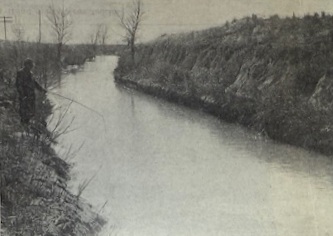
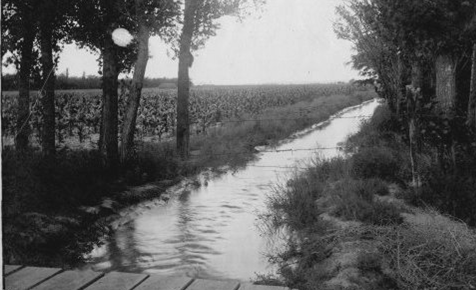
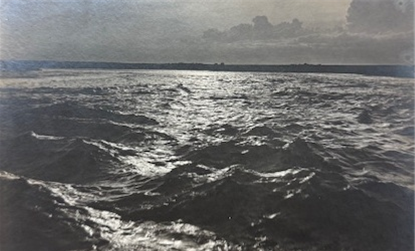
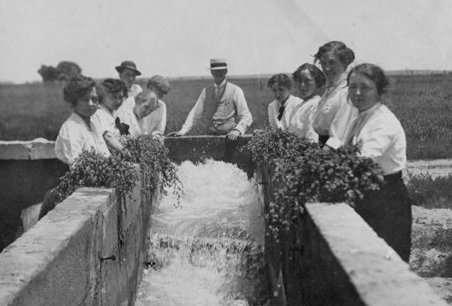
Photos from The Lakin Land & Immigration Co. flyer.
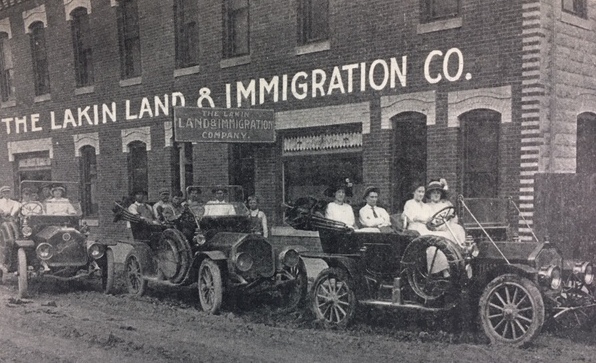
Offices of The Lakin Land and Immigration Company on West Waterman Avenue.
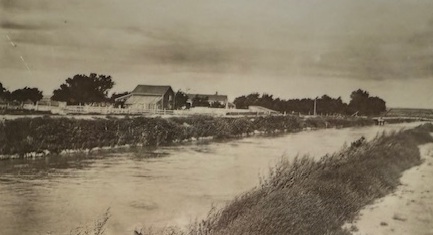
Amazon Irrigation Canal, Owned by Kearny County Farmers.
Southside Irrigation Ditch.
Waters of the Arkansas River.
Pumping Plant located 5 miles southwest of Lakin and owned by E.R. Thorpe, President of The Lakin Land and Immigration Company.
Great Eastern Canal.

Busy Times!

While sorting through our files to write the history of the Kearny County Historical Society and Museum, I came across this gem of a story written by the late Dick Crump. Crump  was elected KCHS president in 1976.

When Naomi Burrows asked me if I would serve as president of the historical society (if duly elected), she told me that it wouldn’t be very busy. There would probably need to be quarterly meetings, but there wasn’t much going on. We got off to a great start at the annual meeting when several folks commented that it was good to have someone so young in charge! And, of course, I ate that up!

The first meeting I conducted was in the former Scotty’s Café building, where the museum was located at that time. There were about eight people present with about ten different ideas on how we should build a museum! The problem was that most weren’t legal. As a tax entity of Kearny County, we couldn’t borrow money or commit the county to anything we didn’t have the money to pay for. That was the last quarterly meeting we had! At our next meeting, I asked county attorney Bob Frederick to join us and explain our rules and options. After lots of interruptions and protests, we knew what we had to do. But there wasn’t any question about the intent of that board. They wanted to build a museum! Although we were short of money, we weren’t short of dedication!

Jennie Rose O’Loughlin had given us the O’Loughlin house along with a complete half a block of property. The house had great potential but lots of problems. The roof leaked! The front porch wasn’t safe to walk on! Most of the woodwork was original, but it was covered with about 17 coats of paint. Lucile Dienst and Ella Maune volunteered to begin work on the house. Most of us buy paint remover a pint at a time, but we bought it in case lots in gallons! The first thing we had to do was put on a new roof! We barely had enough money to buy the shingles.

Things were so different then. The state of Kansas had a surplus! The state would return money to the county to be used on some ongoing project. When we found out about this, Della Enslow (society treasurer) took the bill for the shingles to the county commissioners. And they paid it! We used this program a lot the next couple of years. We began to build a museum. I remember thinking it was so big it would be quite a while before we had it anywhere near full! We decided on a cinder block building, partly because we could stop and start building. We would build as much each year as we had money to do so. We bought supplies as we could afford. When we learned the commissioners had X number of dollars, we had enough going on that we could present a bill for that same X number of dollars! We bought cinder blocks, roof supports – whatever we needed. Della made quite a number of trips to the commissioners’ office. We had also asked for and received an increase in mill levy! We had expected it to take several years to build the museum, but each time we were able to get something paid for, we made more progress. We had such great cooperation. A limestone barn was torn down in Kendall, and we were offered the stone. All we had to do was haul it to our site and clean the Kendall site. We had plenty of trucks and helpers to do the job one Saturday. Of course, it made the front of the museum so much more attractive!

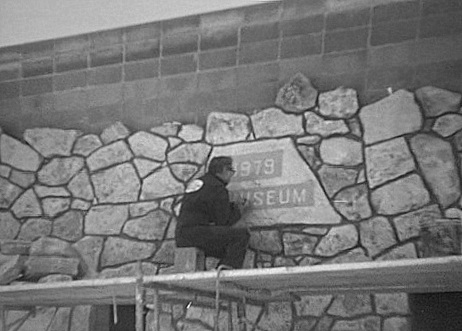
It was decided that we needed a “date stone” to dress up the stone front which was coming along quite nicely. Farmers Co-op loaned us Jack Pepper and the big tire repair truck with a hydraulic hoist to haul such a stone. Jack knew of one possibility located with a rock pile just to the south of the Kendall cemetery. Jack and I took off about 2:00 one afternoon to first measure and ‘eyeball’ that stone. We found that it would do the job well. But Jack and I both wanted to make sure we found the best slab of stone we could find. So, we headed south and west of Kendall to examine some areas we had been told had some possibilities. We found some nice stones, but nothing better than the one on Kendall hill. We went to a spot somewhere south of Syracuse! I remember telling Jack he sure had me lost and I was depending on him to get me back to Lakin! We were looking along a draw that had some fine rocks, when suddenly the truck went “whump” and stopped! Our left real dual had fallen into a hole, and the back of the truck was on the ground! There were plenty of rocks around. We decided to jack up the truck and fill the hole with rocks. No problem, just a slight delay. While Jack jacked I carried rocks, and we put them under the wheels. But much to our surprise when Jack released the jack, the truck settled right back down! Four times we jacked that truck up and filled the hole with rocks, and each time it would return to its original position! It was also getting farther to get rocks of any size. We decided we needed a tractor. Our first problem was that it was at least three miles to any road. I hadn’t seen a farmhouse in hours. Jack assured me there was a farm building with a telephone, but he didn’t admit how far away it was. Of course, it was getting dark. We finally made it to the road and began walking toward ‘this building’. We had walked quite a ways when a pickup came our way. Jack and I were not shy about making sure we were seen, waving like a couple of idiots who were beginning to feel just a little desperate. There were two young ladies and two kids in the pickup, but we all crowded in. We hadn’t gone a half mile when Jack began to admonish the driver about the dangers of picking up a couple of guys in the dark! I told him, “hush, she is a nice lady who has saved at least one life.” She assured Jack she had recognized him, in spite of all the jumping around. As I remember, it was at least five miles to the building Jack had told me “was just a ways!” The ladies waited while Jack called the owner of the building and arranged for him to come pull us out. We made it back to Lakin by 11:30 PM but without our stone! Jack brought it in a day or two later! I suppose that stone will always have a special meaning for me, and I hope it does for Jack!

One day a trucker called me. He was delivering supplies for the museum (the roof supports, I think) and wanted me to be present to show where they should be put and to sign his invoice. I drove to town, but he wasn’t there yet. So I decided to pass the time with the ladies working in the house. They didn’t approve of me leaning against the wall talking. “You might as well be taking 3-4 coats of paint off that door while you wait.” So, I went to work! I scraped for about an hour and a half before I realized I was getting a blister from the scraper! I wasn’t smart enough to keep still, but instead showed Ella how hard I’d been working. “You big baby” was her reply! She and Lucile really poured it on for my being so tender. I really began watching for the truck and was quite happy when it arrived. I still don’t think I was a whimp, although compared to those two gals, I perhaps was. They worked at least five days a week, and blisters had long ago given away to callouses! By the way, I believe we did get the state to pay for the supports!

Maybelle Gropp gave us Columbia schoolhouse if we wanted to move it. We were so involved with the house and museum that I, in all my wisdom, wanted to wait until we got some more done on those two projects before taking on another. At our next meeting, there wasn’t a question raised about moving it, just where it should be located. We did want the O’Loughlin house to be the focal point for anyone approaching from the north. It is a bit hard for a president’s vote to break a tie when it is unanimous. In their enthusiasm, I don’t even think they were aware I was dragging my feet! What a leader! There was already a crew ready to fix it up as soon as it arrived! When we did move it, we found the north wall was rotting and any delay would have caused problems. The wall was fixed as well as some siding, and it looks great! I had attended Columbia School the 4th through 8th grades and to have my old school become a history item was special. Shortly after the schoolhouse was moved, I took two granddaughters to see it. I tried to impress upon them how amazing it was for something that I was involved with as a child to become a special history item. They didn’t see the connection. “Well, you’re old too, Papa,” Crickett said.

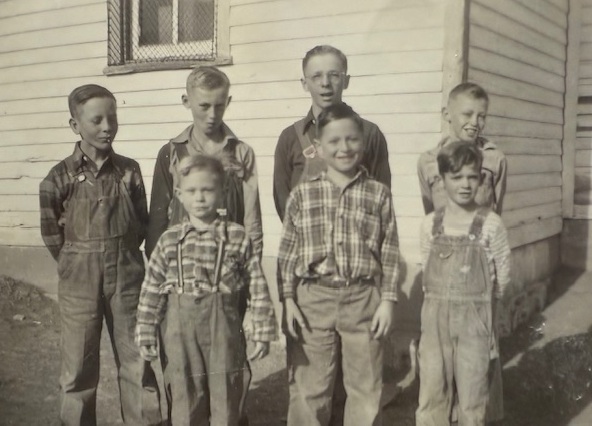
This photo taken at Columbia School house in the mid-40s shows Dick Crump with some of his classmates. Back row L-R: Dick Crump, Marvin Yakel, Robert Crump, Merle Yakel Front row: Don Bohl, Leon Michel, Charles Hilger

“Some day there will be a half block of history,” I promised at an annual meeting. I don’t’ believe we had the schoolhouse yet, and of course, I had no idea of an annex or Santa Fe depot, let alone all that is across the street! Even with Jennie Rose’s fantastic gift, I am not sure as much could be accomplished today. Can’t you see us sending Della with a bill for shingles to the state of Kansas today? Our timing was great, our cooperation greater! The state’s extra help was very valuable. Kearny County was also in great shape financially. As president, I tried to attend as many annual meetings of the counties around us as possible. They simply couldn’t make such use of the state’s rebate money, theirs went for repairs and salaries. I always came away from their meetings with a sense of gratitude for what we had. The cooperation we received from the county commissioners was fantastic, and we also had great support from the citizens of Kearny County. The historical society’s board was great – I just had to keep them legal and hang on for the ride!

I remember very well watching Jennie Rose, with Gary Hayzlett’s help, cutting the ribbon to open the museum. I am very grateful that Jennie Rose got to see the progress we had made. George Matthews had the lawn looking great! Not only had we built a museum, but we had done it in about half the time most of us expected! And, we had an office! We had left the office for last as we thought we could do it whenever we could scrape up the money. I will always marvel at the job Lucile and Ella did! They really changed that old house in a year. I am sure it was at least 30 miles in and 30 miles back home each day Ella worked. I don’t’ remember either one of them muttering a discouraged word. I still feel a huge sense of pride being a part of that group!

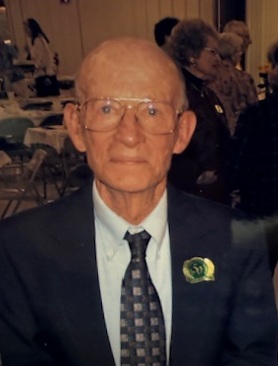
Dick Crump was one of the KCHS past presidents who addressed the crowd at the 2008 Annual Meeting which commemorated the historical society’s 50th anniversary.

Kearny County Historical Society Museum

As promised last week, we are continuing our story on the Kearny County Historical Society’s museum located on Buffalo Street here in Lakin, Kansas, USA!

The museum’s main building, dedicated in May of 1980, houses our lobby, library, early business displays and staff offices. The lobby includes a historical timeline of Kearny County, tributes to the O’Loughlin Family and charter members of the KCHS, and pictorial collages and information about both past and present communities of Kearny County. Visitors can view videos about our history in the Otis and Mary Lee Molz Theatre, and souvenirs and literature are also available here. In our town square display, visitors stroll back in time in through the general store, dentist and doctor’s offices, newspaper shop, drug store, clothing shops, barber shop and more. Researchers will find a wealth of information in our library which includes so much more than books! Extensive files are kept on local history and families and include original documents, publications, photographs and microfilm.

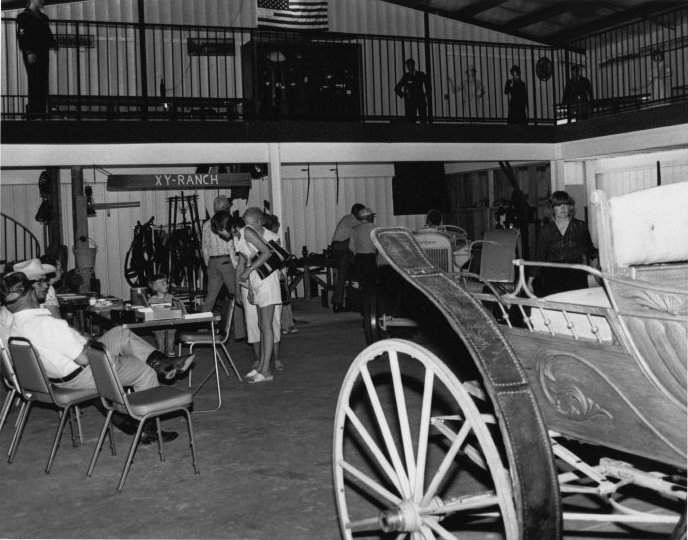
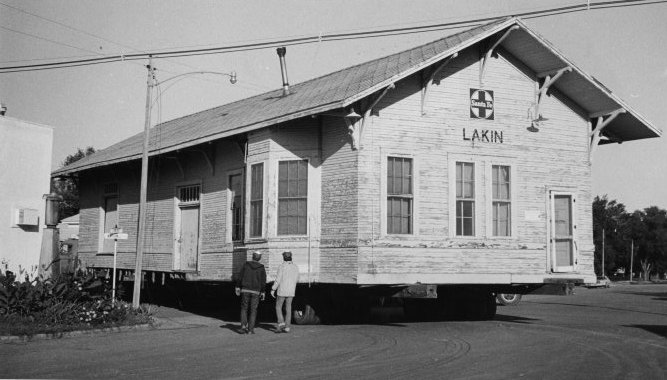
After the main museum building was completed, people started bringing in items to fill the museum, and by the end of 1981, the building was full and the KCHS began contemplating erecting another building to accommodate the overflow. In January of 1983, the go-ahead was given to begin ordering necessary supplies to build the 50×86-foot annex.  Once completed, the annex was used for fundraisers like garage sales and square dances with the proceeds used to help finish its interior. At the same time, work was going on to refurbish Lakin’s depot. Built in 1882 just off Main Street, the depot closed in 1982. It was purchased and refurbished by the historical society, some of the funds being raised through the “Save the Depot” campaign. Jim Thomas, the grandson of John O’Loughlin and a retired Santa Fe engineer, was instrumental in the restoration and in equipping the depot. An open house was held in June of 1984 for the depot and the annex. While an assortment of telegraphic equipment, train memorabilia, insulators and Santa Fe calendars are on display in the depot, the annex transports visitors further back in time. Mastodon tusks, fossils and Native American artifacts give visitors a glimpse into the lives of the earliest creatures and humans to call Kansas “home.” An 1831 Conestoga wagon, Santa Fe Trail exhibit, military display and much more can also be seen in the annex.

Also in 1984, Paul Bentrup donated to the KCHS 10 acres of land about four miles east of Lakin that contain Santa Fe Trail ruts. These ruts are known as “Charlie’s Ruts” in honor of Bentrup’s father who made it clear to Paul that he wanted the ruts to be kept open to the public for all time and for visitors to be able to walk in the ruts. In 2023, the KCHS received the Hathaway Gaines Memorial Heritage Preservation Award from the Santa Fe Trail Association for our efforts in preserving Charlie’s Ruts.

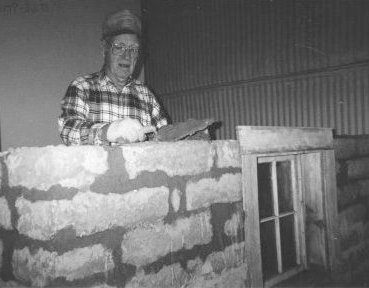
In 1994, the Farmer’s Cooperative offered to sell their fertilizer repair shop and old office/scale building along with four lots across the alley from these buildings to the historical society. Realizing the need for additional property to house and display articles, the KCHS sealed the deal in 1995. While the old Co-op office is utilized for storage, the shop houses a grain wagon, fuel wagon, several tractors, 1964 fire engine, and other assorted machinery. There is also a one-room soddie created by Norman Simshauser and Charles “Doc” Merz from adobe bricks saved from the Columbia Grange Hall which stood 10 miles north of Lakin. Miscellaneous collections of antique stoves, washing machines, barbed wire, etc. are also on display there.

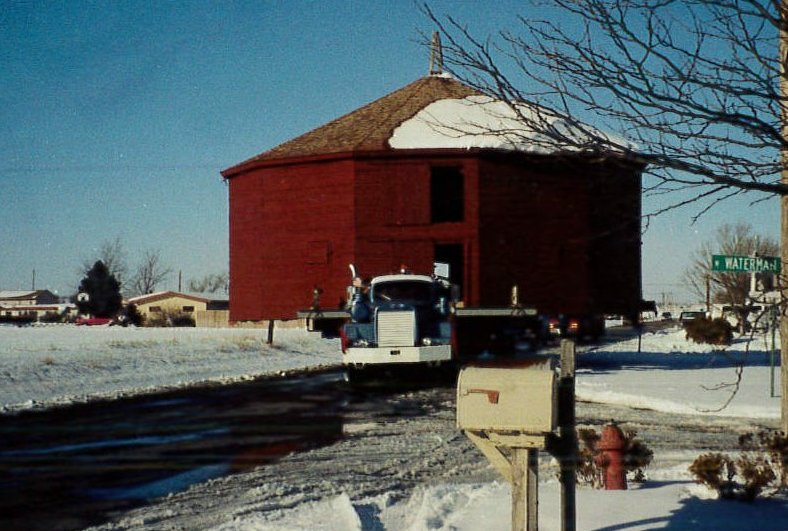
In June of 2000, the Kearny County Historical Society purchased the 12-sided round barn from the Robert Duncan family using donations and museum reserves. Built in 1909 by Robert Glass, a surveyor and superintendent of the Amazon Ditch Company, the barn contained stalls for four horses and six cows with a well in the center and a windmill on top to pump it. The barn changed hands a few times over the years before the Duncans acquired it. Other owners included William Carlile, Oliver Coder and Jack Kopfman. Russell Construction Company began restoration work in August of 2000, and the barn was moved to the Museum complex in January of 2001. Later that year, the Kearny County Museum received the Nyle H. Miller Award from the Kansas State Historical Society for preserving the unique structure.

Finally, the Deerfield Texaco Station was purchased by the KCHS in 2006. Harold Smith can be credited with the vast amount of paperwork that went into restoring the 1926 building and getting it placed on the National Register of Historic Places in 2007. The interior is decorated with miscellaneous gas and automotive memorabilia.

It would be next to impossible to name all the faithful volunteers, dedicated board members, and generous donors who contributed to the museum’s success. Currently serving on the KCHS board of directors are Linda Peters, Carol Bless, Bob Price, Marilyn Wolfe, Joe Eskelund, Karen Burden, Donna Neff, Judy Scott, Judy Moody, Brenda Rios, and Robbie McCombs. In the early years, volunteers kept the museum open for visitors, did repairs, curated collections and constructed displays. Then in 1983, Lucile Dienst was appointed as the first Executive Director. In 1986, Jill Johnson was hired as director followed by Nancy Gillock in 1989. Pat Heath took over the director role in 1991. Harold Smith joined the team as assistant director in 2004, but when Pat had health problems, he soon found himself in the role of director, a position he held until the end of 2013. Amy Baxley served as director until resigning in May of 2014, and Julie Grubbs McCombs has been at the helm ever since. Amy Fontenot, assistant director, recently completed her 11th year. In addition to greeting guests and giving tours, staff is kept busy with cataloging donations, researching and updating files, writing and producing social media posts, doing minor maintenance around the complex, coordinating special events, and fulfilling informational requests like those recently received from the Kansas State Historical Society, Kansas News Service and High Plains Public Radio.

Not many communities our size have a museum like ours. We hear it all the time when travelers stop in for a “quick” peek and then realize they should have carved out more time in their schedule to view all our buildings and artifacts., Please stop in and check out your local museum. If you haven’t been in in a while, you might just be surprised at what you find!

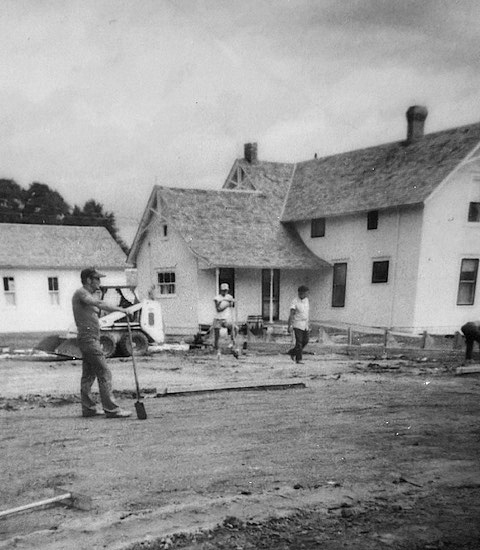
Workers doing preparatory work for the annex.
Open house for the annex in 1984.
The depot rounds the corner at Waterman Avenue and Lakin Street on its way to museum grounds.
Norman Simshauser works on the soddie in the farm machinery building.
Movers make their way down Bopp Blvd. in 2001, bringing the barn to its new home at the museum.

Kearny County Historical Society Museum … tooting our own horn!

We have decided it is time to toot our own horn! While we have been sharing stories about Kearny County history, we have neglected to write much about the Kearny County Museum. Our hometown museum is not only a wonderful tribute to the pioneers who built up our county but also an essential asset to this community and others who are seeking historical and genealogical information.

The Kearny County Historical Society was organized in November of 1957. Virginia Pierce Hicks was named to head the KCHS with Helen Rardon serving as vice president, Edith Clements as secretary, Foster Eskelund as treasurer and Margaret Hurst, historian. Other charter members of the society included Rudy and Maybelle Gropp, Olivia Ramsey, Leon Scott Davis, Mary Smith, Leonard and Della Enslow, Dorothy Jenks, Vivian Thomas, Mame Thomas, Naomi Burrows, Hazel Stullken and W.L. Mullins.

In February of 1958, the Lakin City Council gave approval for the historical society to use the police and courtroom quarters in the city building on East Waterman Avenue as a location for a city museum. The following year, the Old Settlers’ Association disbanded, and gave a $100 war bond along with the monies in the group’s bank account to the historical society. Association documents and other items of importance were also given to the KCHS. Up to that point, the Old Settlers had done much of the collecting and preservation of local history which ultimately helped the historical society to achieve its main goal of compiling a single volume of Kearny County’s historical facts. That dream came to fruition in 1964 when the “History of Kearny County Kansas” Volume I was printed. In the words of Mrs. Hicks, society members “worked and struggled long to make the dream come true.”

Volume I Editorial Staff
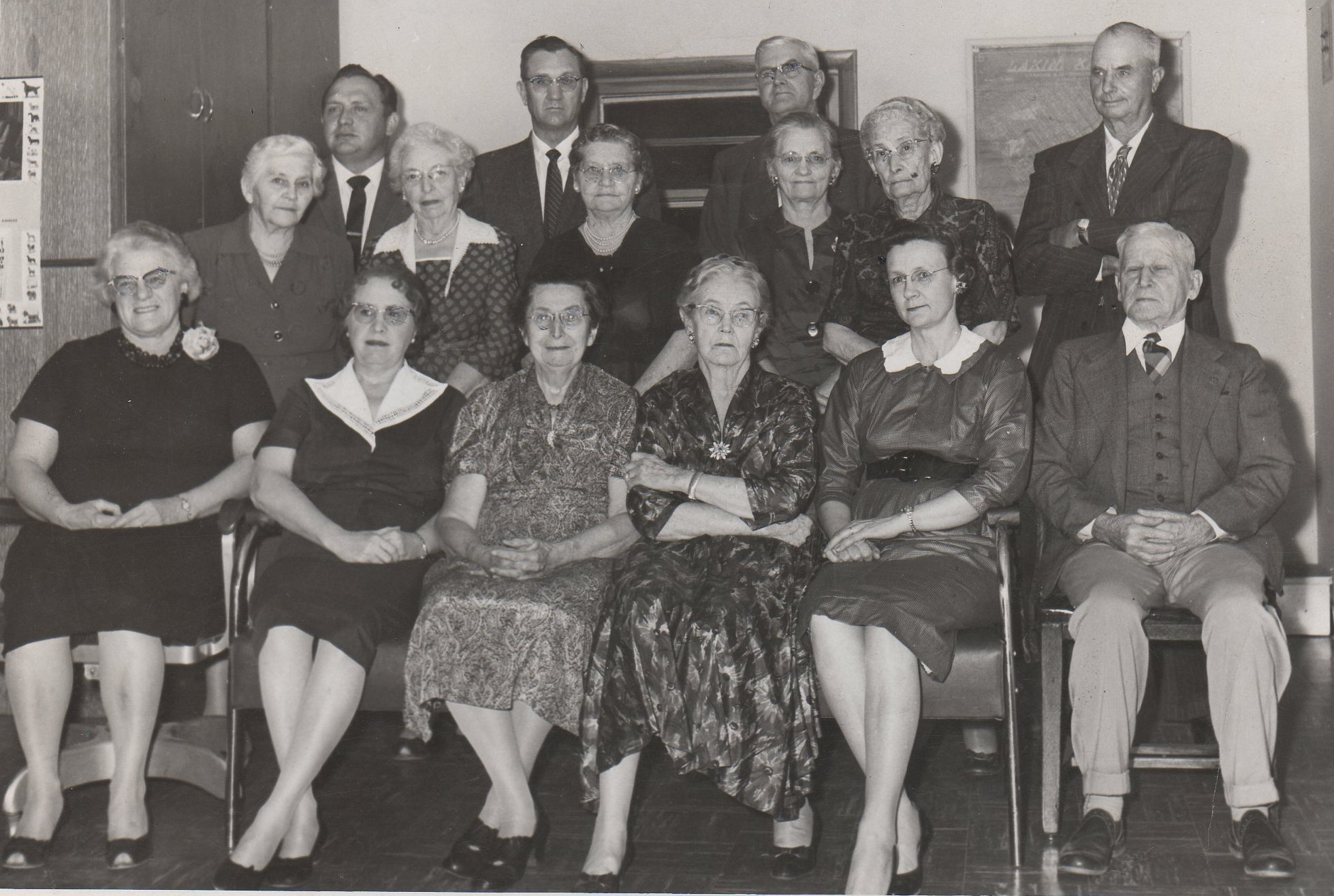
Bottom Row L-R: Rosamond Eves, Naomi Burrows, Mary Smith, Helen Rardon, Hazel Stullken, Sidney Tate. Second Row: Margaret Hurst, Virginia Hicks, Mame Thomas, Vivian Thomas, Lenora Tate. Top Row: Bob Coder, Iman Wiatt, Joe Eves, Foster Eskelund.

Also in 1964, a bond issue went up before the voters to build a new Kearny County library in Lakin. When the proposition failed, the library moved from its quarters in the court house to the building at 109 N. Main which now houses Golden Plains Credit Union.  In June of 1965, the Lakin Independent announced that a very small levy would be made by Kearny County which would afford the KCHS the ability to rent a small space in the rear of the library to store, preserve and exhibit articles of historical value. Then, in 1973, the second volume of “History of Kearny County Kansas” was released. Though the book was the culmination of work by many, the editorial staff was composed of a faithful few: Foster Eskelund, Naomi Burrows, Joan Shaw, Hazel Stullken, Barbara Beymer, Thelma Oakley, Shirley Henderson and Elaine West.

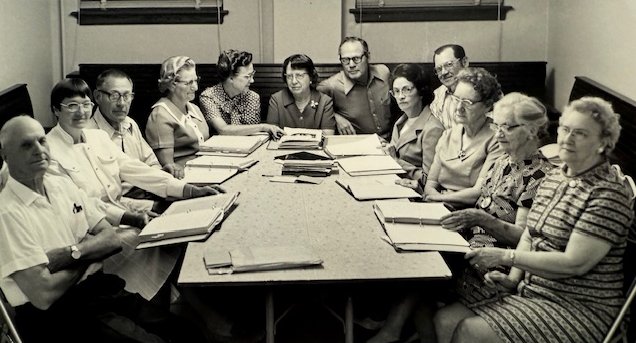
Members of the Kearny County Historical Society meet in the basement of the court house in 1973. L-R: Foster Eskelund, Joan Shaw, Don Shaw, Johanna Schibbelhut, Hazel Stullken, Naomi Burrows, Todd Vincent, Clyde Beymer, Barbara Beymer, Alma McConnaughey, Vivian Thomas, and Elizabeth White.

After the current library was completed in 1974, the museum took up the entire space in the 109 N. Main building. That same year, Jennie Rose O’Loughlin deeded the White House to the historical society along with the half block on South Buffalo that the museum complex occupies. The White House is the oldest house in town and was originally home to the Alonzo Boylan family. Boylan, an operator and telegrapher for the Atchison, Topeka, and Santa Fe Railroad, moved to Lakin in 1874. He was joined by his wife and two children in September 1875, and the house was completed shortly afterwards and stood on the railroad right-of-way near Garfield Street.

In 1916, the house was acquired by the O’Loughlin family and moved to its present location. It became the family home of William and Grace O’Loughlin but was later used as a rental property. Restoration of the White House began March 29, 1977, and was done by a number of volunteers led by Ella Maune and Lucile Dienst. They worked diligently to return the house to its original appearance, removing closets, hallways, particle board flooring, tile, etc., that had been added through the years. Thirty-two gallons of paint remover were used on the wood in the two-story structure—hardwood that had been freighted in from Wisconsin. In some areas as many as eight layers of paint were removed. All the woodwork was restored to its natural color. Wainscoating that had been taken out in years past was replaced in the kitchen and dining room. Wallpaper was hung, curtains sewn, and plaster repaired. An open house was held in 1978. The house is brimming with historical artifacts, most of which were graciously donated. A few of the items on display include a collection of horse hair furniture, John and Mary O’Loughlin’s bedroom suit along with many other pieces from the O’Loughlin Family, a fainting couch, hoosier cabinet, and a silver platter which belonged to the first occupants of the house and was donated recently by their great-granddaughter, Vivian Fletcher Fankhauser.

Columbia school house, originally constructed in 1893, was moved to the museum grounds from 15 miles north of Lakin in December 1977. Lynn Cannon and Harold P. Walker, both long-time Kearny County residents, donated considerable time and labor to restore the building both inside and out. Several others also helped with the repairs and with furnishing the one-room school, and many donated graciously to the project. Rudy and Maybelle Gropp had purchased the school back in 1952 when the building went up on the auction block. In August of 1978, Maybelle transferred ownership to the Kearny County Historical Society for the whole sum of $1.

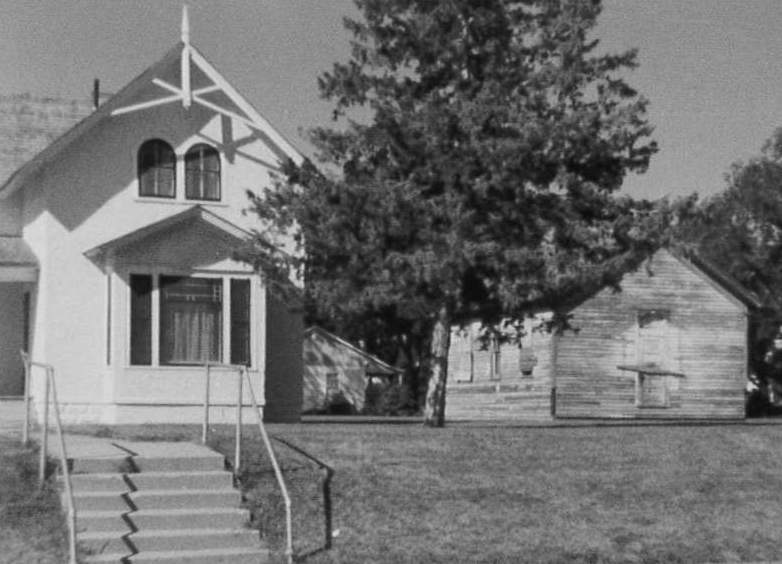
The Columbia School, prior to renovations, is shown beside the White House.

Groundbreaking for the museum’s 6,000 square foot main building was held in March of 1978, and a combined open house for the refurbished school and museum was held May 10, 1980. Long-time board member Foster Eskelund noted, “We of Kearny County and future posterity, are very much indebted to Lucile Dienst and her co-workers for the unassuming massive effort, love, care and hard work that went into the museum, house and school house to make a precious reality come to life.” After the Museum was completed, people started bringing in artifacts, and soon the Kearny County Museum was recognized as one of the best in the state. In 1983, the Kearny County Historical Society was awarded the Kansas State Historical Society’s very first “Award of Excellence” which recognized KCHS’s outstanding achievements.

We are just getting started! Check back next week for part II of our story on the Kearny County Museum! Toot toot!!

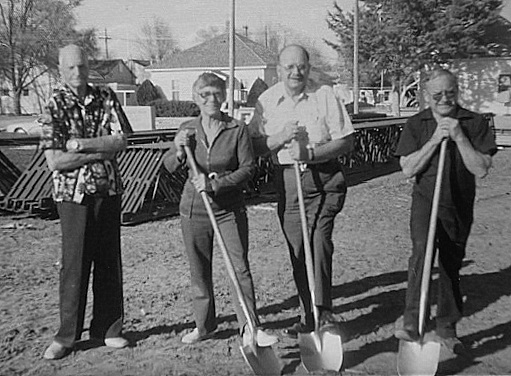
Pictured at the museum’s groundbreaking ceremony in March of 1978 are l-r: Foster Eskelund, Lucile Dienst, Leonard Enslow and Nolan Cole.
L.C. Sturdavant engraves a large piece of limestone in the museum’s front facade in 1979. The native limestone was quarried many years ago in the Kendall area and came from an old barn built there in 1901. Donated by William and Esther Sutherland, the barn was torn down by a volunteer group who reclaimed the stone. Five truckloads of the rock were brought to the museum.
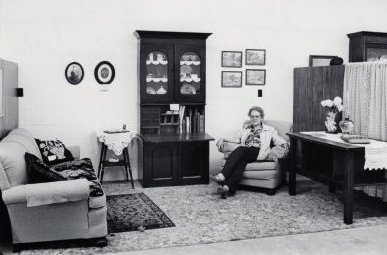
Long-time curator Alma McConaughey Barben sits in one of the displays in the main museum building shortly after its completion.
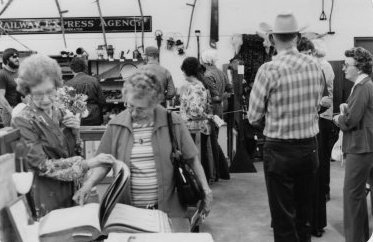
Visitors at the museum’s open house and dedication in 1980.