The popularity of June weddings dates back to early Roman times and a Roman festival which honored the goddess Juno. Wife of Jupiter, Juno was considered to be the protector of women in all aspects of life, but especially in marriage and childbearing. A June wedding was thought to bring good fortune and many offspring. June marriages often led to pregnancy with babies born the following spring when their chances of survival were much better than in the long and often very lean winters. Also, spring births would not interfere with harvest in the fall.
The history of June weddings is also connected with the Celtic calendar. Even the term “honeymoon” has an historical origin. The first moon after the summer solstice, June 21, was called the “honey moon.”
Another less popular belief was that most people got married in June because they took their yearly bath in May. The overall population smelled fairly fresh still in June, and the bride’s bouquet masked her body odor. Whether or not there is any truth to this notion, the good weather of June promised ample fresh flowers for the ceremony and celebrations.
According to The Old Farmer’s Almanac, June is still the most popular month to marry, but a list of early marriages performed in Kearny County indicates that June was no more favored than any other month for weddings. As far as days of the week, Sunday used to be the most popular wedding day as it was the one day most people were free from work. In early U.S. history, Wednesday was considered to be the luckiest day for weddings, and Fridays were avoided as they were known as “hangman’s day.” An old rhyme reads, “Monday for health, Tuesday for wealth, Wednesday best of all, Thursday for losses, Friday for crosses, Saturday for no luck at all.” Despite the rhyme, Saturdays are currently the most popular day for weddings (which might explain the high divorce rate).
The concept of weddings as a reflection of romantic love is a rather new one. The first weddings were more like a business transaction between the bride’s father and the family of the groom. The bride and groom had very little say in the matter. Women were considered their father’s property; hence, the tradition of being walked down the aisle and “given away” by their fathers. In some cultures, the father had to pay a dowry to the groom’s family; while in others, the groom had to give a “bridewealth” to the bride’s family. Often a bride with a handsome dowry was kidnapped on her way to the wedding and forced to marry her captor. The original purpose of bridesmaids and best men was to aid in capturing brides, getting them to the church, and keeping away anyone who might interfere with the wedding.
Bridesmaids were dressed in the exact same clothes as the bride so as to confuse any would-be captors. The groom stood on the right of the bride so he could wear a sword on his hip should anyone try to steal the bride during the ceremony. Standing on the right allowed him to draw his sword without beheading his bride.
In the 1800s and 1900s, many marriages were born out of necessity. During times of war, men were often obligated to marry their fallen brother’s widow. Widowers often took younger wives to help them raise their offspring, and children meant guaranteed help on the farm. Romance versus practicality was the topic of an entry in an 1892 Lakin Index, “The young man in search of a wife goes about looking for an ideal woman. The older man goes about looking for a practical woman when he wants to wed.”
The historical roots of mail-order brides can be traced back to the days of the Wild Wild West. Although many men found financial gain upon migrating West, they lacked the company of a wife. With few women to pick from, they attempted to attract women living back East by writing letters to churches and publishing personal ads in magazines and newspapers. Wanting to gain financial security and intrigued by what life on the frontier could offer them, women would write to the men and send photographs of themselves. Courtship was conducted by letter until a woman agreed to marry a man she had never met. In 1906, the Kearny County Advocate reprinted an article about an H.W. Flowers of McLean, Tex. who asked an employment agent to find him a young widow or old maid in Kansas who was matrimonally inclined. Flowers said he wanted a Kansas wife and that he had heard there were good crops of wheat, widows and old maids in our state. The employment agent replied that there was a good crop of wheat but there was a shortage in widows and old maids and “the latter crops never remain on the market.”
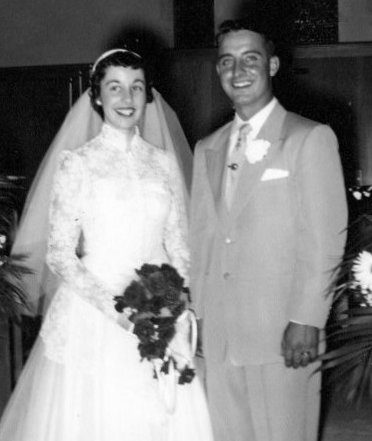
After Queen Victoria wore a white lace dress when she married Prince Albert in 1840, white wedding dresses became more popular. Prior to this time, brides often wore their best available dress or a new gown that could be worn again. White dresses were considered impractical; however, the color white had long been associated with purity, virginity and innocence in some cultures. Following World War II, white wedding dresses became increasingly popular in the U.S. as economic prosperity allowed more people to purchase a special dress for their wedding day.
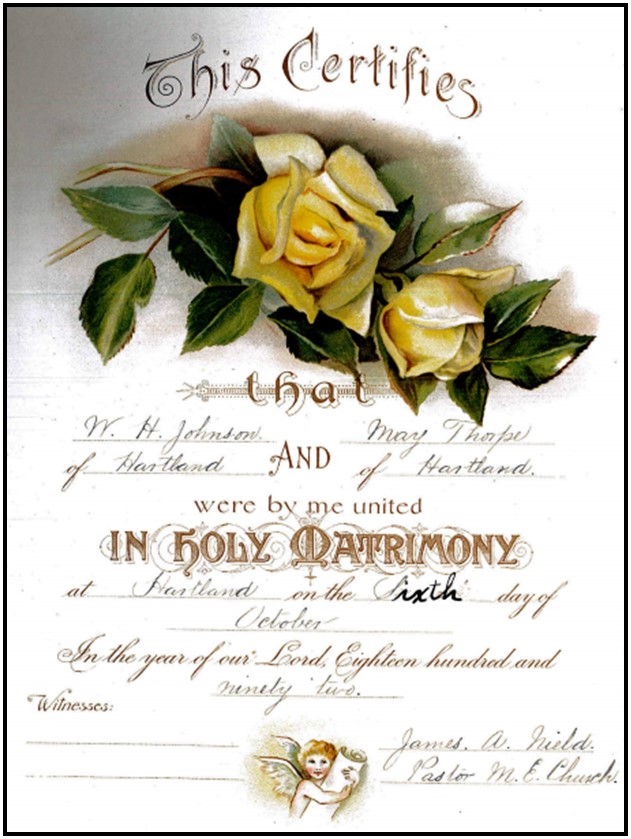
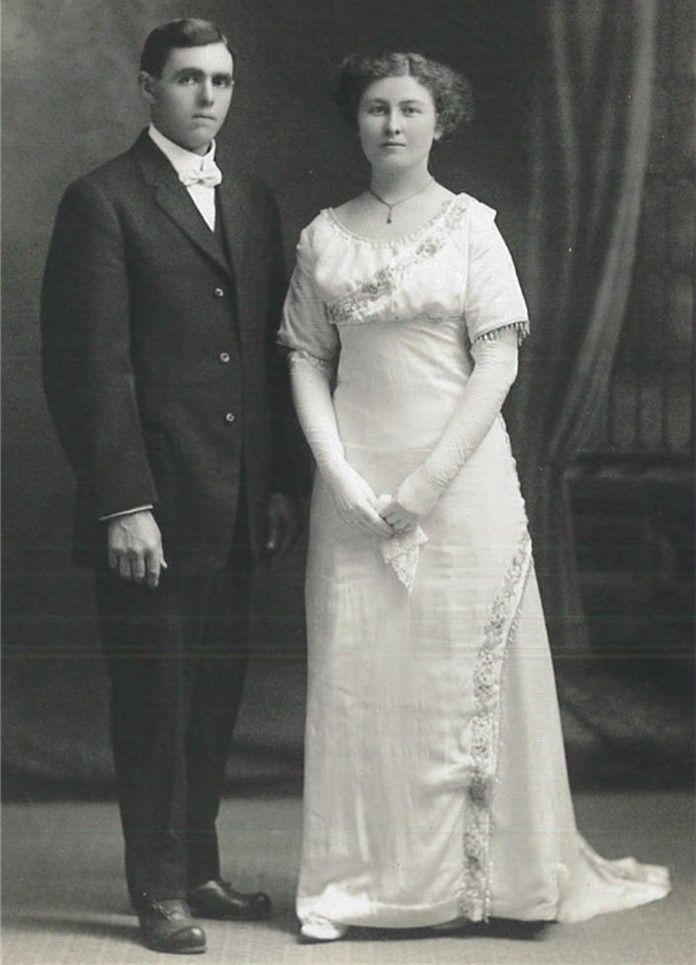
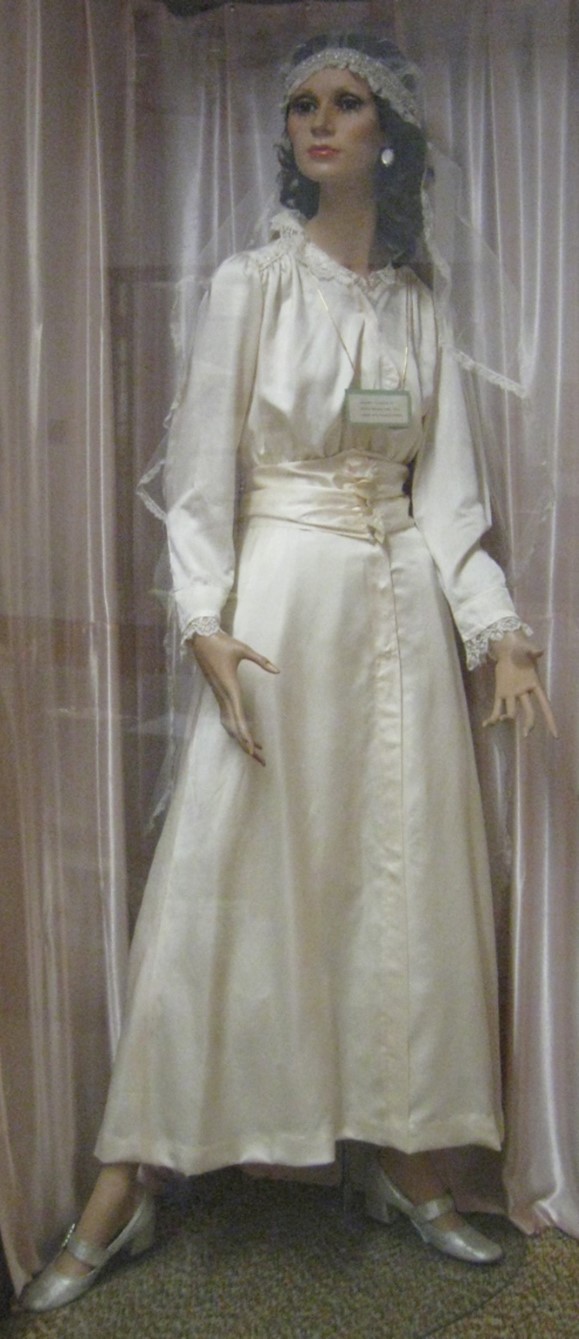
Kearny County Museum is home to many wedding artifacts including dresses, men’s attire, wedding certificates, invitations and more! Some of our items date back to the late 1800s with the oldest dress on display being that of Louise Sower worn in 1884. Dresses from June weddings in our display include those worn by Ethel Beymer in 1913, Barbara Kash in 1954, Ann Tate in 1956, Twila Smith in 1957, Diana Loeppke in 1966, Sheryl Bostrom in 1967, and the dress that Debby Yount made for her wedding in 1972. We also have the suit that she made for her husband, Dale. We encourage visitors to come in and check out our wedding exhibit as well as all the other fascinating displays and items we have in our hometown, home-grown museum! Hours are 9 a.m. to 4 p.m. Tuesday through Friday.
SOURCES: Lakin Index; Kearny County Advocate; Saturday Evening Post; Old Farmers Almanac; Museum artifacts; brombergs.com; and Wikipedia.