In July of 1920, a stranger driving a Dodge car with Texas tags arrived in Kearny County. The man was in his early 20s and went by the name of Walter Tunis. Jesse Craig, foreman of the Finnup Ranch, hired the man to work at the ranch, but Craig became suspicious when Tunis tried to sell him the car. Craig contacted Kearny County Sheriff Orla Hefner who learned that the vehicle had been stolen. According to some accounts, another man had accompanied Tunis but left the ranch by the time that Sheriff Hefner went there to bring in Tunis.
On the evening of Tuesday, August 3, Sheriff Hefner arrived at the Craig home which was two miles east of Lakin and south of the Arkansas River. It was suppertime, and Hefner was invited to join them for the meal. Then Tunis asked if he could go upstairs supposedly to get some of his personal effects. The suspect then accompanied Hefner to the sheriff’s car. It was at this time that Tunis shot Sheriff Hefner, but newspaper accounts are very inconsistent. While one report said that Tunis shot Hefner in the back when he bent down in front of his vehicle to hand crank it, another claimed that Tunis shot Hefner in the chest when the sheriff opened the car door for Tunis to get inside. Still another report claimed that Hefner was shot in the neck, and another claimed he was shot in the stomach while reaching for handcuffs. Regardless, nothing could be done to save the lawman, and he died before Doctor Johnston arrived on the scene.
Tunis escaped on one of Craig’s horses. Officers from surrounding counties were notified, and multiple posses were formed. Alerts regarding the fugitive were sent out by runners, phone and telegraph across the entire countryside. Some persons reported seeing a man get off a horse just south of the Deerfield bridge and stand on the opposite side of the horse as though he did not wish to be too closely observed. At this report, the Deerfield posse led by E. Vencil Morris, a deputy sheriff, sped to the area. Assuming that Tunis had fled south to the sandhills, they followed a road that went toward the hills and found a gate that had been opened and was left lying on the ground. They also found fresh horse tracks leading north. The officers patrolled the road all night.
When daylight came, Morris went back to Deerfield and gave orders to patrol both the Deerfield and Holcomb bridges; however, the guard on the Holcomb bridge either left his post or had not arrived. Tunis left his horse and gear at a vacant house south and west of the Holcomb bridge, walked across the bridge and on into Holcomb. He roused a woman who operated a restaurant to get his breakfast. The woman became suspicious so she told him she would have to go to the store for some groceries. Tunis continued on north across the railroad tracks to a house a mile or so north of Holcomb. He was given breakfast there then left the house and crossed a large cane field before coming out into open grassland.
A quarter of a mile north, Kearny Countians Fred Dye and Frank McAllister were hiding in an irrigation ditch. Finney County Sheriff Lee Richardson and his men were also on the scene. As Tunis came nearer, the men called for him to surrender, but Tunis still had the revolver he had used to kill Hefner and started shooting. Shots were returned, and Tunis was struck in the shoulder. According to the Garden City Telegram, Tunis then ran into a weed patch. “Being wounded and nearly exhausted, Tunis realized that escape was impossible and to escape being captured alive, he pointed the gun barrel to his own left breast and pulled the trigger.” He was located and taken to Garden City where he died soon after his arrival there. While riding into town, Tunis supposedly bragged to the officers that they didn’t take him but that he shot himself.
A large quantity of ammunition was found in Tunis’s trunk at the Finnup Ranch, and it was soon discovered that the young man was a deserter from Fort Bliss. The War Department refused to pay his funeral expenses. Tunis claimed he had a wife and child and that his mother lived at Mason City, Illinois, but no family members came forward to pay for the body to be returned. Kearny County Commissioners paid Finney County $75 towards having the murderer buried in a pauper’s grave at Valley View Cemetery. Tunis, who also went by the name of Ralph Latour, had previously been in trouble with the law over his “sticky fingers”.
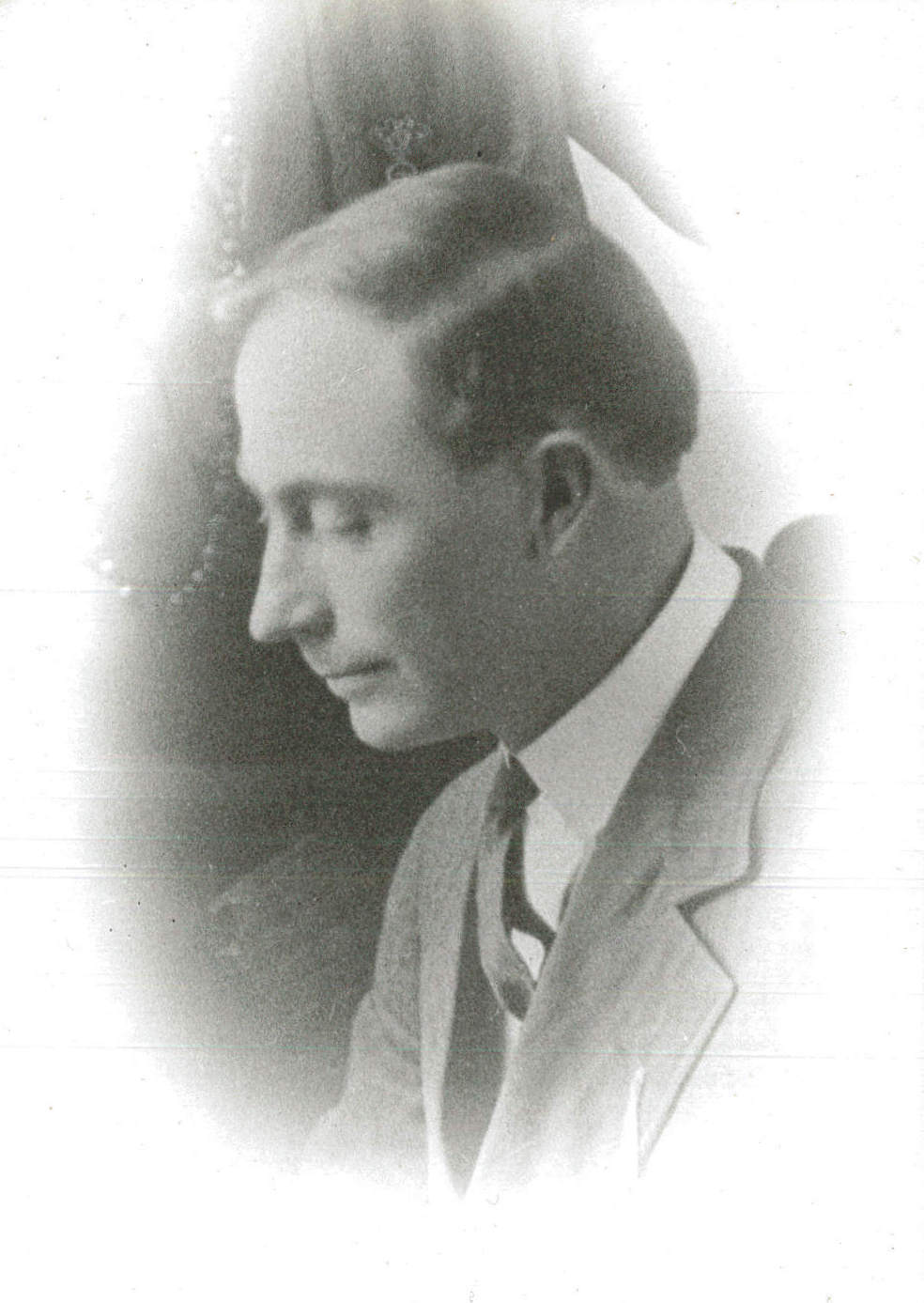
Sheriff Orla Francis Hefner was born at Harrison County, Missouri in 1881, one of William and Anna Kemp Hefner’s nine children. He was united in marriage to Miss Veva May Porter of Bethany, MO in 1903. In 1906, the young couple came to Kearny County, following Orla’s parents and siblings who had moved here the year prior and took up claims about six miles west of Lakin. Orla moved in 1914 into Lakin where he was proprietor of a livery barn, and he was appointed undersheriff in January of 1915. He was highly respected and known for his kind heart, and in 1918, Orla was rewarded for his competency when he was elected sheriff. He was up for re-election and was killed the same day as the 1920 primary election. According to the Garden City Herald, Lakin citizens were so deeply distraught over the sheriff’s murder that “there is no doubt the murderer would have been lynched if he had been taken alive.”
Orla Hefner left behind many relatives including two children who he and his wife had adopted, seven-year-old Ralph and three-year-old Dorothy Mae. Orla’s widow returned with the two children to Missouri where she re-married then later divorced. She died in 1972.
SOURCES: Diggin’ Up Bones by Betty Barnes; “The Tragedy of the Shooting of the Kearny County Sheriff” as told by E. Vencil Morris for Vol. I of the History of Kearny County; Archives of Kearny County Advocate, Lakin Independent, Garden City Telegram, Garden City Herald, and Decatur Daily Review; Ancestry.com; findagrave and Museum archives.