After Lakin won back the county seat from Hartland, not only did several Hartland residents move here, but several Hartland buildings were moved to Lakin as well. In November of 1894, the Kearny County Advocate reported that Captain J.H. Leeman had contracted with carpenters J.B. Harbolt & Adam Heiland to disassemble one of the businesses houses at Hartland and rebuild it for a hotel on two lots on the west corner of South Main Street and Railroad Avenue in Lakin. Leeman had previously been the proprietor of the Buffalo House at Hartland, but that hotel burned down in November of 1893, and Leeman was eager to get back into the hospitality business. The contractors pushed work on Leeman’s new hotel, and the Lakin House was opened that Christmas when Leeman treated a group of 25 to a turkey dinner. The Lakin House was advertised as one of the “most home-like and commodious Hotels in Western Kansas.” With the depot only a short distance away, the hotel’s location was perfect.
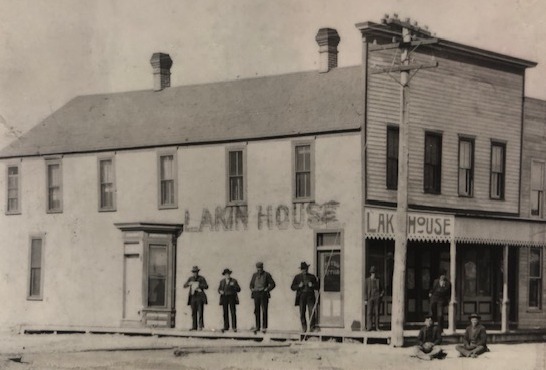
The Lakin House underwent changes in management several times and even housed the Kearny County Courthouse from 1895 to 1899. Then, in November 1901, James (Jim) Gibson purchased the property. Later that same month, Gibson also took a wife when he married Mary Ellen Nash, the eldest daughter of John and Mary Ann Nash. The English-born Gibson, a resident of Kearny County since 1894, was congenial and favorably known about town, and his new wife was quite the cook.
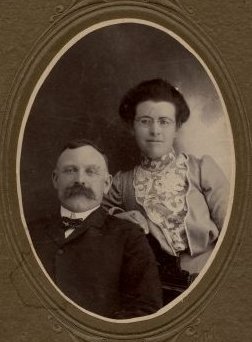
Jim Gibson thoroughly renovated the Lakin House. The enterprise was advertised as having the best food and prompt service with new carpets, furniture, bedding and “everything that goes to make its patrons a comfortable home.” In 1905, Gibson added a laundry room, and in April 1906, he changed the name of his enterprise to the Gibson House. Later that year, work began on a two-story concrete block addition to the north of the wooden structures. This addition opened in early 1907 and added “some ten rooms on the second floor for the accommodation of the traveling public” with the lower floor holding a billiard room and reading room. The culinary department of the hotel was located in a rear room, and there was even a barber shop in connection with the hotel.
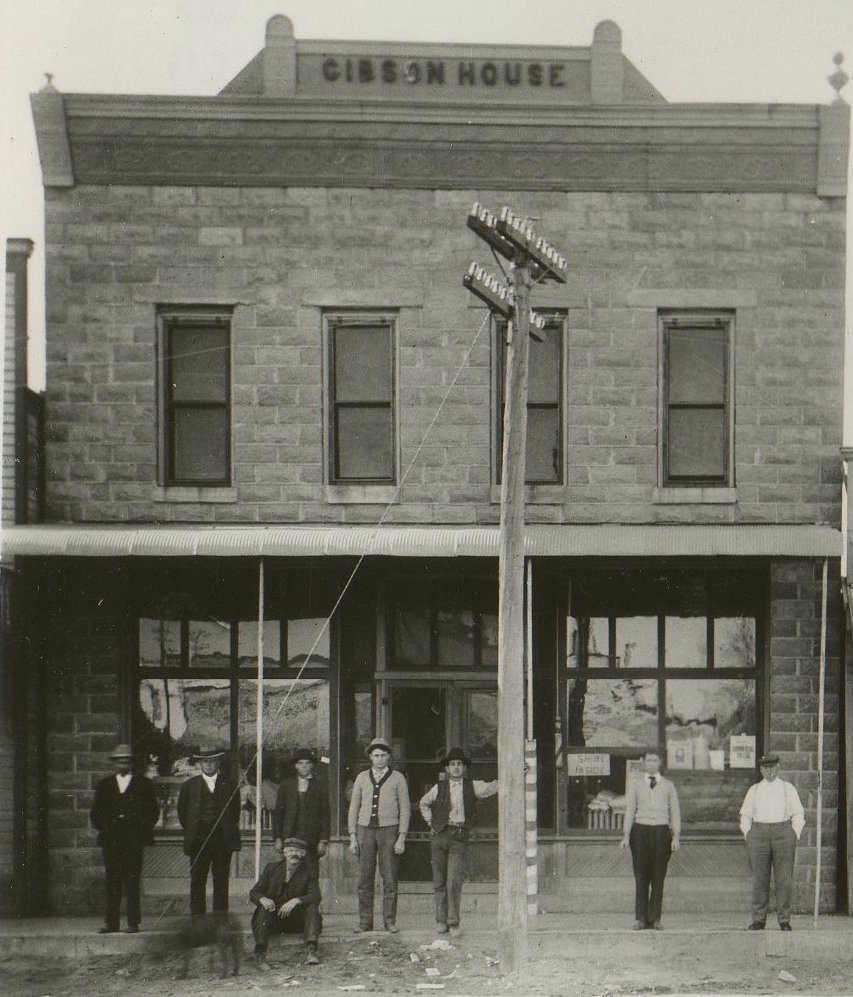
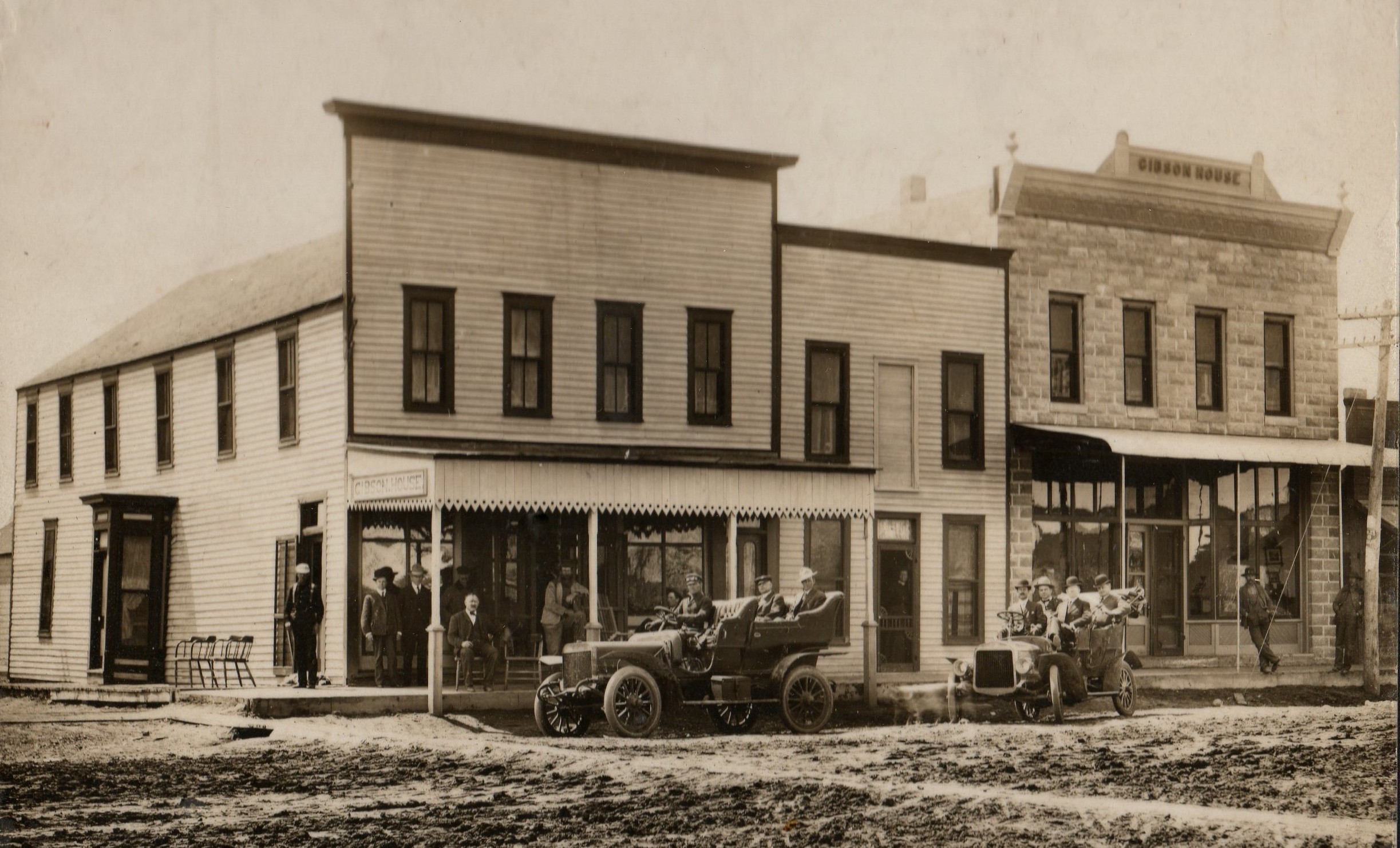
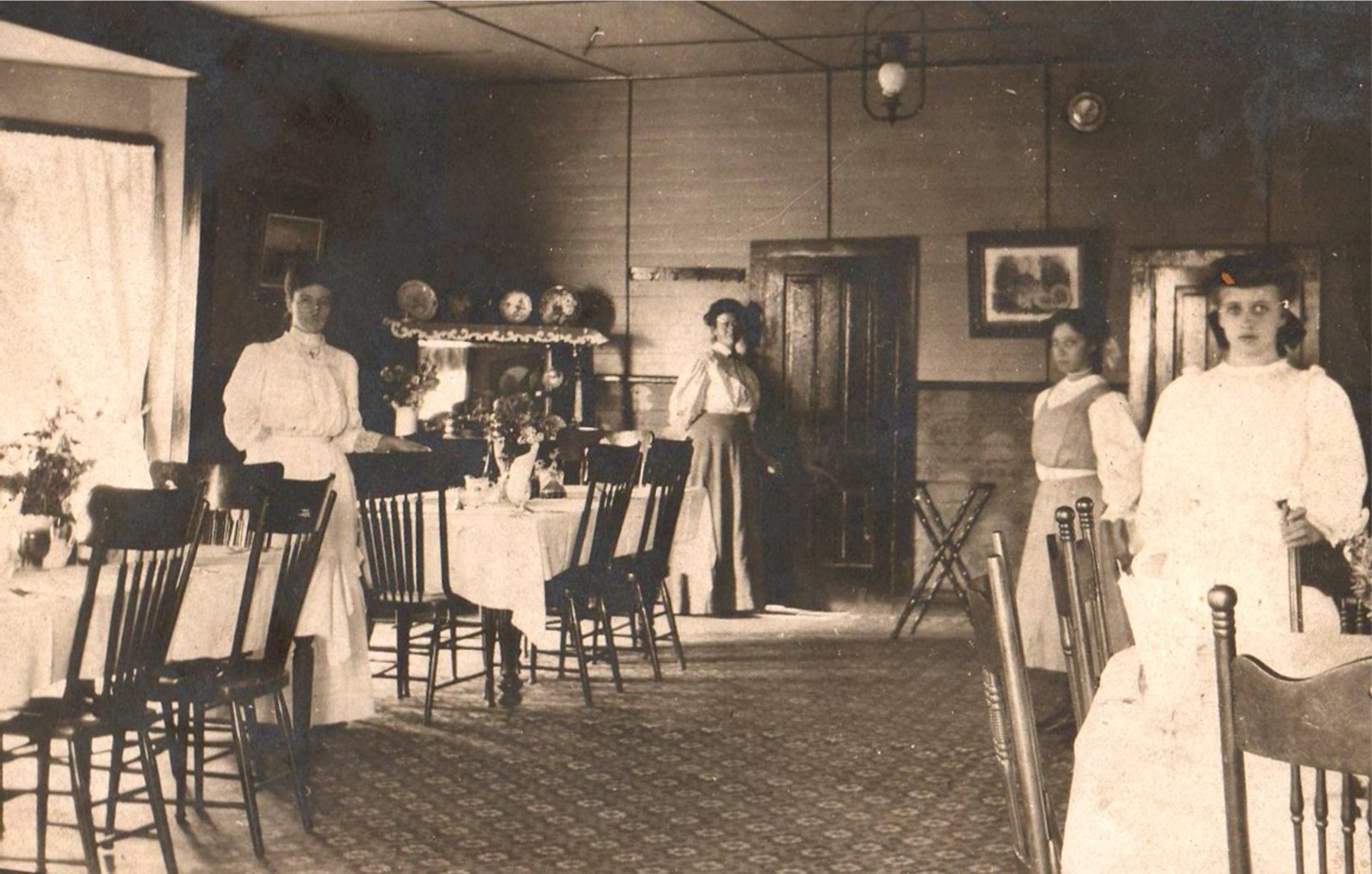
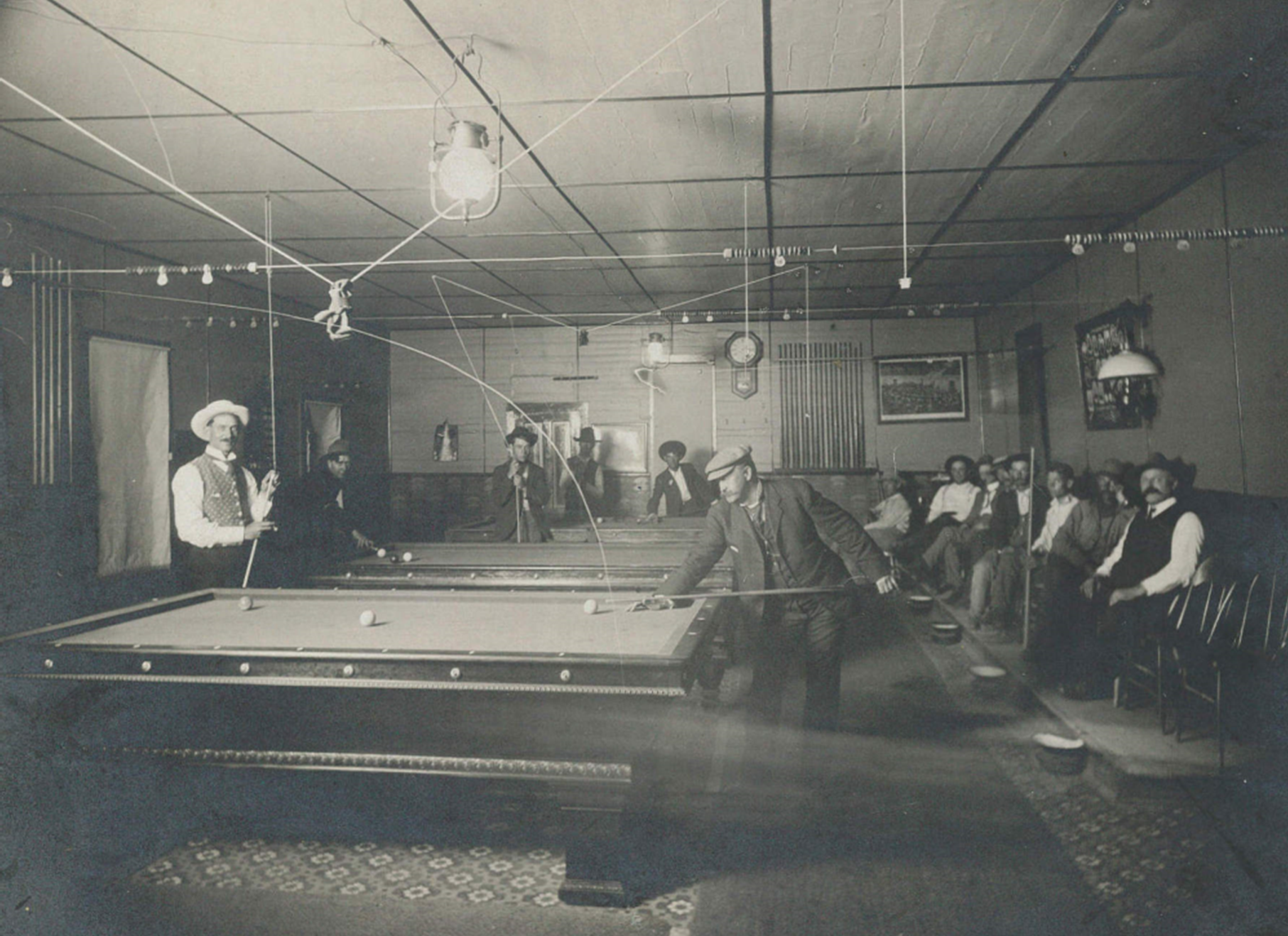 The Gibson was a popular resort for commercial travelers, and game dinners (when in season) were one of the Gibson’s special features. Jim was an ardent sportsman and usually attended to killing the game himself. The Gibson was also frequented by big land companies who liked to bring their eastern patrons there to be fed. “The Gibson House always fills the bill. The land agent knows what a good dinner will do for a prospective buyer and if he can work him through one of Lady Gibson’s meals just before showing him a fine quarter, he is sure of a sale,” The Advocate claimed in a January 1911 issue. “Everybody who comes to Lakin will remember the meals and tell easterners of the way they were served in that town of Lakin.”
According to The Advocate, James Gibson never tired of making improvements in and around his popular house. In 1907, The Investigator reported that Gibson was going to sink a soft water well, “and in case of fire his facilities for subduing the flames will be of the best.” At that time, the Gibson House advertised as the only modern equipped hotel in Kearny County with steam heat and soft water.
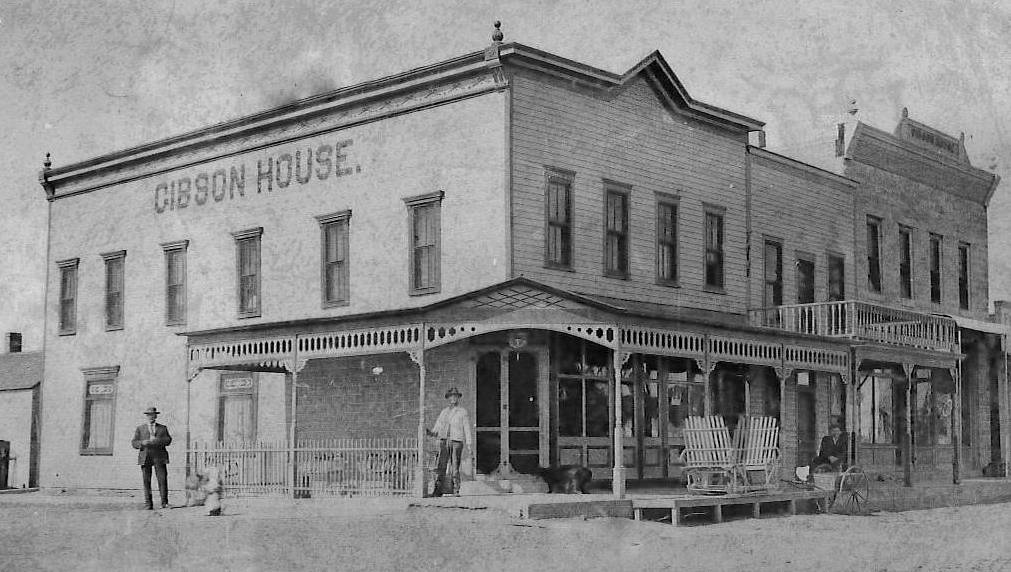
At least three fires occurred at the Gibson. In October of 1903, Mrs. Gibson’s hands were severely burned when she grabbed a lamp that had caught fire and exploded as she threw it outside. She was heralded for her quick action which was believed to have saved the hotel and possibly the town. In March of 1908, a small fire burned a hole through the roof of the Gibson. Then, on the evening of Saturday, September 27, 1913, Lakin’s fire bell rang out alerting residents that the Gibson House was ablaze. Lakin’s fire department responded promptly, and in a few minutes, citizens from all parts of town were helping fight the flames. All but one of the hotel guests were two blocks away attending a performance at Snow’s Opera House. When the alarm sounded, everyone left the opera house, including the actors, to help fight the fire and save what furniture they could. Still, in a very short time, the wooden frame part of the Gibson House was reduced to ashes, and the cement building was left a total wreck. For a while, it looked as if the Eyman store next door would also burn, but the fire department saved it. However, all the stock and fixtures were carried out into the street.
Almost all of the furniture that was on the hotel’s ground floor was saved, but everything in the upper rooms burned. The only clothing that Jim and Mary Ellen saved was what they were wearing. Pool tables, chairs, tables, dishes, and other assorted items were strewn from the depot to the Kearny County Bank on the opposite end of the block. According to the papers, a big rain which had preceded the fire Friday night and into Saturday, along with calm winds, was all that kept Lakin’s Main street from going down in flames. The origin of the fire was unknown, but the supposition was that it started from the explosion of a kerosene lamp.
On October 24, 1913, the Advocate reported that Gibson was repairing the cement block building, and in November, the paper reported that H.H. Tipton had purchased the property. Gibson re-opened his billiard and pool room in another location, but the following June, he and his wife moved to Lamar, Colo. where they reportedly had secured a billiard hall, barber shop and home. As for the old Gibson building, the structure still stands at 119 South Main. It has had a myriad of proprietors and businesses pass through it over the years, including hotels, eateries, and bars/recreation rooms. While many may recognize it as the former location of CJ’s Pawn Shop, long-time residents will remember it best as the Downtown Café. The building is currently owned by Kelly Ramos and undergoing repairs and renovations.
SOURCES: “Diggin’ Up Bones” by Betty Barnes; History of Kearny County Vols. I & II; archives of The Advocate, Investigator, Hartland Herald, Hartland Times, Dodge City Globe, Hutchinson News and Topeka Capital-Journal; and Museum archives.