Much has been written about the one-room school on the Museum grounds, but what about the man who gave the school its name? Willard Amos Miller, of Shelby, Ohio, came to Western Kansas in April of 1886. He filed on a quarter section of land in Kearny County on The Flats about 16 miles north of Lakin where he built a comfortable, cozy sod house. The two-room home was plastered inside and had a coat of white wash, and his older sister, Ida, sent him short curtains for the windows. The building was warm in winter and cool in summer. Beneath the house was a fruit cellar. Miller dug and cemented a cistern for drinking water, but water had to be hauled in barrels from his neighbors’ wells to replenish his supply. After building several cisterns for others on The Flats, he became known as “The Cistern Man.”
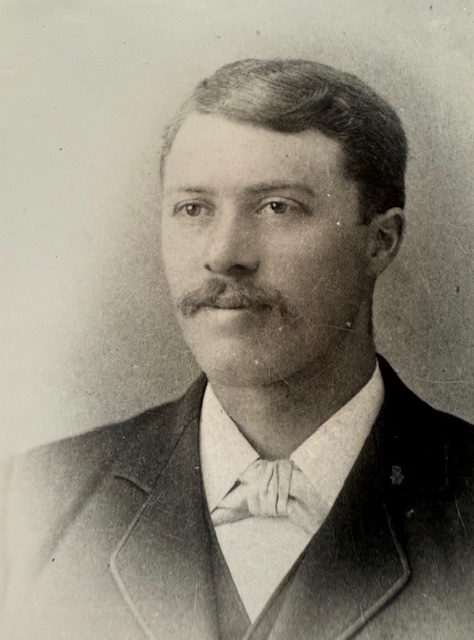
In November of 1886, Miller went to Wellington to engage in the broom industry for part of his winter’s work. He returned to the broom industry several times during the slack winter seasons on The Flats. In January of 1887, his broom factory work yielded him $11 per week which he considered to be a fair wage as jobs were scarce. Willard later returned to his claim and broke the virgin sod with an ox team which he had named Tom and Jerry. He paid $160 for a wagon, plow, and the team of oxen which plowed at the rate of one to one and a quarter acre per day. Miller often plowed for his pioneering neighbors, breaking up acres of the beautiful, virgin buffalo grass.
Miller wrote in his personal notes, “Imagine yourself in the center of a field which is nearly level and on which the grass is about two inches high with no fences to obstruct the view. You can look in all directions without trees or anything to hinder the view, and all around, the ground and sky seem to meet.”
One day he was plowing for a neighbor about three miles from his home. In the evening, Miller picketed the oxen close to where he had been plowing in a draw where there was good grass. “It was dry and hard plowing, so I walked home to let the oxen have more rest. A good rain came up during the night and when I returned to the oxen the following morning, there Jerry and Tom were standing in water waist-deep.” It was too wet to do any plowing so Willard picketed the oxen so they could just reach the water and walked home again, returning the next day when plowing was ideal.
The rains were bountiful on The Flats in the summer of 1887 so he began to build a new home on the south side of his claim. Miller dug a basement and put in a wood floor and used shingle roofing. He made two comfortable rooms finished with regular doors and windows and plastered the inside. “It was as comfortable a house as any we ever had.” He also dug a well and cemented the sides. “I think as Benjamin Franklin said, “A farmer is rich when he has a little farm well tilled, a little house well filled, and a wife well willed.” This statement was found in Willard’s notes and was written about eight months prior to him taking a wife.
Willard returned to Shelby and married Alice Malone on January 30, 1888. Both had been school teachers, and their romance started in a schoolroom where Professor Miller was the teacher and Alice, one of the older pupils. Alice’s family prepared a big turkey dinner for their wedding feast. About a month later, they started for Kansas. It was a cold day when they arrived at Lakin. A neighbor had driven Willard’s team to the railroad station to pick up the bride and groom, and it took most of the day to take the couple to their new home on the prairie. “W.A. Miller escaped a heavy shiverre by bringing a blizzard along with his bride,” was one of the tidbits in the “Oanica Jottings” section of the Kearny County Advocate on March 18, 1888.
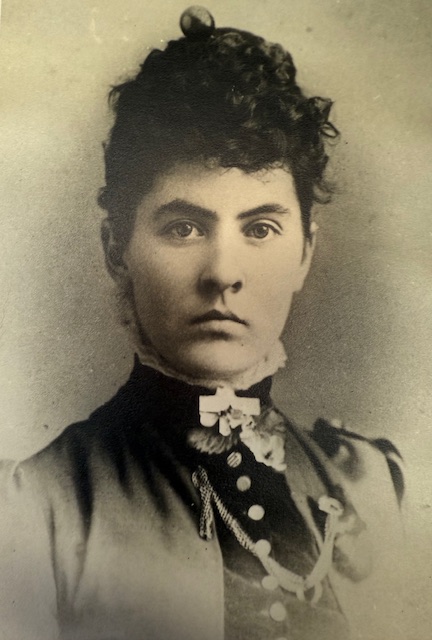
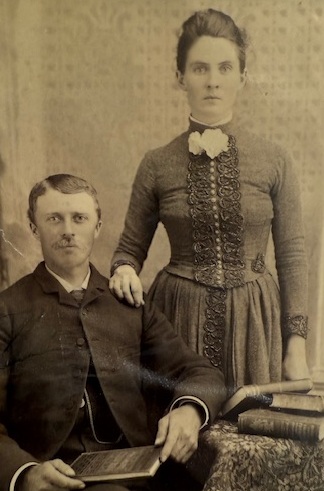
In addition to farming, Willard returned to teaching in order to make financial gains. Willard and Alice’s first child, Florence Miller Strauss, was born in April 1889 when her father was teaching at the Holloway School one mile north of their sod home. The Millers had an agreement that Alice was to place a white cloth on a pole in view of the school house if she thought the stork was coming. About 11 a.m., the expectant mother placed the white cloth, but Willard did not see Alice’s signal as it was a quiet day and there was no breeze to make the flag wave. As Willard came home from school, his bride was in the yard waving to him. He thought all was well so he took his time. When he arrived home, he found out otherwise and immediately got busy. He rode his pony to the Loy’s home about ¾ a mile away to have Mrs. Loy fetch the midwife; however, the stork arrived before the midwife could be retrieved. The young school master delivered his firstborn, severed the umbilical cord, and all went well. He had gained his knowledge about delivering babies from a book. The midwife, Septha Fulmer, offered to stay two weeks and assist with the new baby as she and her husband greatly needed feed for their stock. “Sep” was given fodder in exchange for her services. Alice hand sewed all the baby clothes, but they were too small, like doll clothes. “Sep” ripped them all out and remade them for her.
When a new school building was built on The Flats in 1893, Willard suggested that the school be named Columbian in recognition of the Columbian Exposition, the world’s fair held in Chicago that year. Miller was the first teacher in the new school, and patrons overwhelmingly approved his suggestion.
Willard not only taught in several of the one-room school houses in Kearny County but helped organize the school system here. He and Alice also organized a number of churches and Sunday schools. In 1896, The Advocate reported that the family had been taken with the eastern fever and left for Franklin County, Kansas. In 1909 at Thayer, they purchased property that had previously belonged to Kansas’s eighth Governor, John Pierce St. John. But the Millers were attached to Western Kansas and were back by 1914, making their home in Finney County where they lived out the remainder of their years. Willard Amos Miller died in 1940 at the age of 77, and his bride died in 1959 at the age of 88. In addition to daughter Florence, the couple had five more children: Lucy Miller Englund, Carl Miller, Pearl Miller Dell, Ralph Miller and Willard B. Miller. Several generations of Willard and Alice’s family have made Kearny County their home, and many descendants followed in their footsteps by entering into agriculture and/or education. All but one of Willard and Alice’s children became teachers with Florence and Ralph teaching at both Columbia School and in the Deerfield schools like their father had.
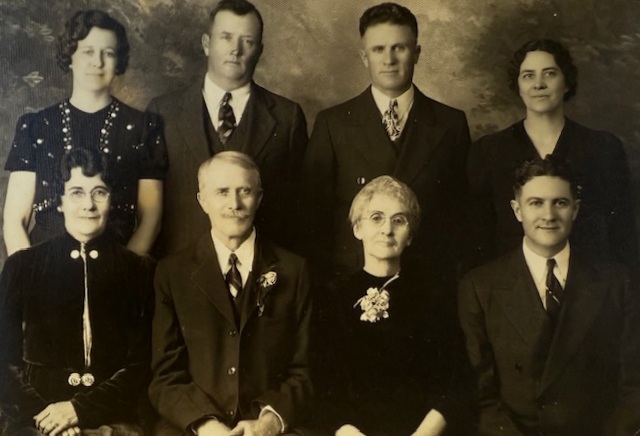
SOURCES: Information and pictures provided by the late Florence Miller Strauss and donated to Kearny County Museum by the late Max and Marianne Miller; and archives of The Garden City Daily Telegram, Kearny County Advocate, Thayer News and Garden City Herald.