The prospect of cheap land and owning something of their own led settlers to Kearny County in the 1800s. This area, once labeled as the Great American Desert, was promoted as the Garden of the West by land speculators and the Atchison, Topeka & Santa Fe Railroad. From 1883 to 1888, extensive advertising campaigns and the passing of the Homestead and Tree Claim Acts brought in settlers in ever-increasing numbers. Then a seven-year drought and nation-wide economic depression set in. This led to a large number of settlers leaving the area. Only the hardiest remained, trudging ahead with faith and fortitude.
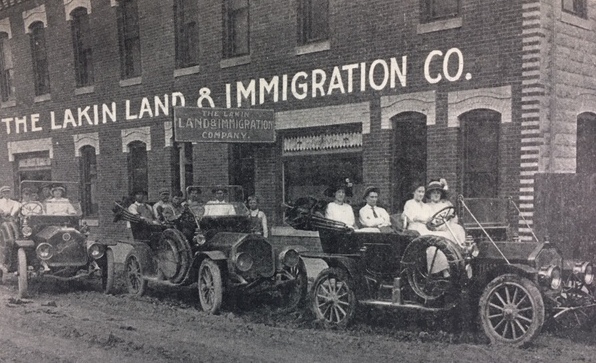
A new boom arrived in the early 1900s. Real estate companies like the Lakin Land & Immigration Company lured settlers to the area by touting the benefits of our county. In a large, multi-page brochure, the land company beckoned potential residents. “Kearny County wants people, thrifty, intelligent, law-abiding citizens to come and build homes, help develop our agricultural and industrial resources and share in the general prosperity . . . If you want to make an investment that will double in three years, come to Lakin and let us show you.”
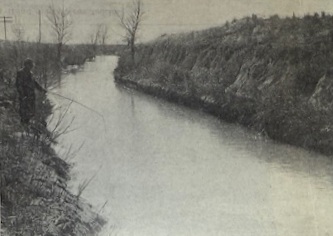
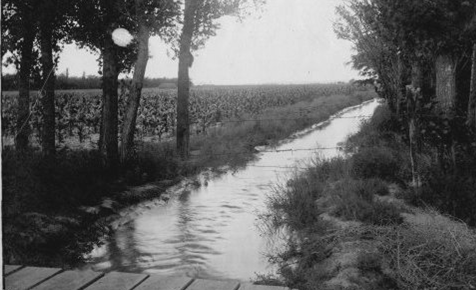
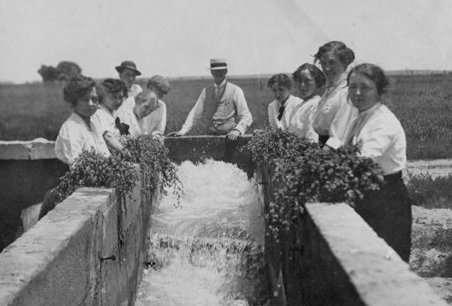
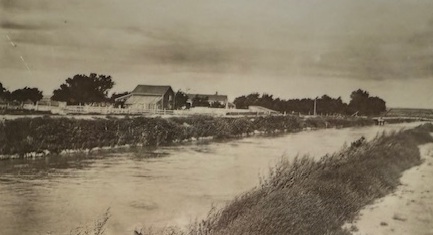
Irrigation was Lakin Land & Immigration Company’s main drawing point. “The underflow, as it is called, furnishes an unlimited supply of water at all seasons of the year. This remarkable underground flow has been the marvel of government engineers. They have never been able to determine its exact area, but they have tested it for years, and have pronounced the supply practically inexhaustible.” The underflow referred to was the Ogallala Aquifer, the largest underground store of freshwater in the nation.
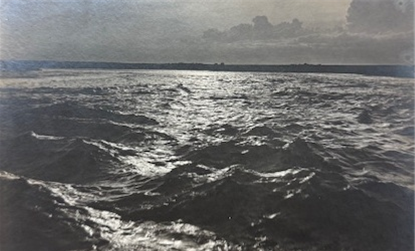
Our long-gone Lake McKinney was the largest body of water in the state at the time and also another benefit hailed by the company. Fed by the Arkansas River, it afforded the best fishing, duck and goose hunting, boating and swimming to be found within hundreds of miles.
“If you would share in the greatly increased prosperity, which this community is bound to enjoy, now is the time to come to Kearny County . . . Kearny County’s growth in the immediate future is assured.”
Things were looking pretty peachy here, but those real estate men had no idea that irrigation, their main talking point for moving to this region, could one day lead to the area’s downfall. They didn’t know how long the battles would go on between Kansas and Colorado over the waters of the Arkansas nor could they have predicted the Dirty 30s and the Great Depression that caused some to move away while others stayed and persevered.
The rains returned, the crops were bountiful once more, and the economy improved. Then the gas and oil industry arrived and changed our economic landscape even more. Although natural gas was discovered in the Hugoton gas field in 1922, very little was done in the way of development as there was no market for gas at that time. Lakin and Deerfield received their first gas for domestic use in 1936 when the Tri-County Gas Company laid lines here, and that fall we became a producer of natural gas. Then, on a Sunday morning in July of 1941, Stanolind hit pay dirt, striking oil on the G.O. Patterson farm northwest of Lakin.
Gas and oil brought prosperity to Kearny County, added greatly to our tax base, led to a leap in population and a frenzy of building activity. We have enjoyed amenities here for years that other small towns could only dream about. But now, gas and oil production is but a shadow of what it once was. According to the Kansas Geological Survey, Kearny County’s gas/oil production is at its lowest point in 30 years. The KGS also reported that the Ogallala fell more than a foot last year.
Without the monies that the gas and oil industry brought into our county, property owners are now shouldering a larger tax burden. Last year, members of the Historical Society’s board met with county commissioners and were told that funding may be affected for some of the quality of life programs/services that Kearny Countians benefit from. When we presented our budget to the commissioners in May this year, the forecast was even more bleak. Commissioners had tough decisions to make, and one of those decisions was to drastically reduce the historical society’s appropriation for 2026.
What will that mean for the Kearny County Museum? Fortunately, we have been good stewards of county appropriations and donations so there is some money in our reserves. However, those reserves are not endless nor are they likely to be replenished. Some of our donation money has also been earmarked to erect another building on museum grounds which means it cannot be used for other purposes. While the museum will continue to be conservative with our funds, we may need to start charging for programs and services that we have offered at no cost in the past. We have already started applying for grants, and the board is considering various fundraisers – like having a booth in the Finney County Museum’s Flea Market Festival this summer IF we have enough antiques donated specifically for this purpose. We will NOT get rid of nor sell any museum artifacts.
Our KCHS board and staff are thankful for all the support we have received and to all those who came before us. We are forever indebted to those 16 charter members who had the foresight, faith and fortitude to embark on this journey back in November of 1957. Nearly seven decades later, we have a fine museum, and with a little help, the Kearny County Museum can continue to grow, improve and give back to our community.
Photos from The Lakin Land & Immigration Co. flyer.