According to the Warfare History Network, approximately 93,941 American service members were held as prisoners of war in European camps primarily operated by Nazi Germany during World War II. This week we wrap up our month-long commemoration of Kearny County’s veterans with a look into the lives of POWS Edwin Kleeman and Norman Eatinger.
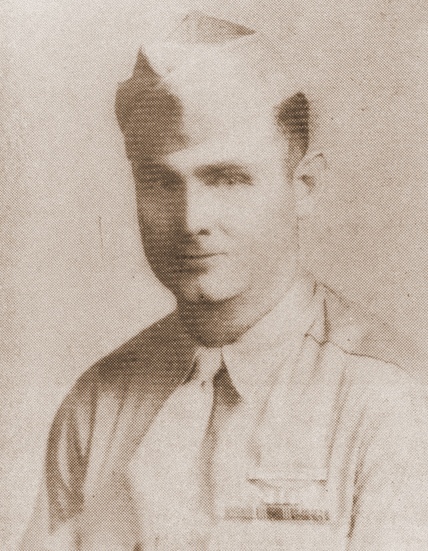
Kearny Countian Edwin H. Kleeman was among the soldiers who took part in the D-Day landing June 6, 1944 at Normandy, France. The largest seaborne invasion in history, nearly 160,000 Allied troops made up of major forces from the U.S., Canada, United Kingdom and 12 other Allied nations landed on the beaches of Normandy. By day’s end, the Allies had gained a foot-hold in Continental Europe and laid the foundation for the Allied victory on the Western Front.
On the fourth day on patrol after D-Day, six of the men in Edwin Kleeman’s patrol were killed while Kleeman and five others were captured by the Germans. Kleeman was wounded at that time by an exploding hand grenade. Kleeman’s father received word through the Red Cross that Edwin was being held prisoner in Germany.
Pfc. Kleeman escaped three times from the Germans and was recaptured. Then, in April of 1945, the First Division infantryman and a group of those working with him on a German farm overpowered the guard and escaped. They found refuge with a German farmer who knew that the Allies were just about to enter the territory. It was there that they were officially liberated by the 86th Division.
Kleeman returned and lived out the rest of his life in Kearny County, a lifetime farmer. He served as Commander of the Veterans of Foreign Wars and the Lakin American Legion Post and was a member of the Ex-POWs, the Disabled American Veterans and the Immanuel Lutheran Church.
Pfc. Kleeman was born at Plymouth, Nebraska in 1914. The son of German-born Ernst Kleeman and his wife, Maria Franzmeier Kleeman, Edwin came to Kearny County with his family in 1919. He died in 1991 at St. Catherine Hospital in Garden City. Edwin H. Kleeman never married.
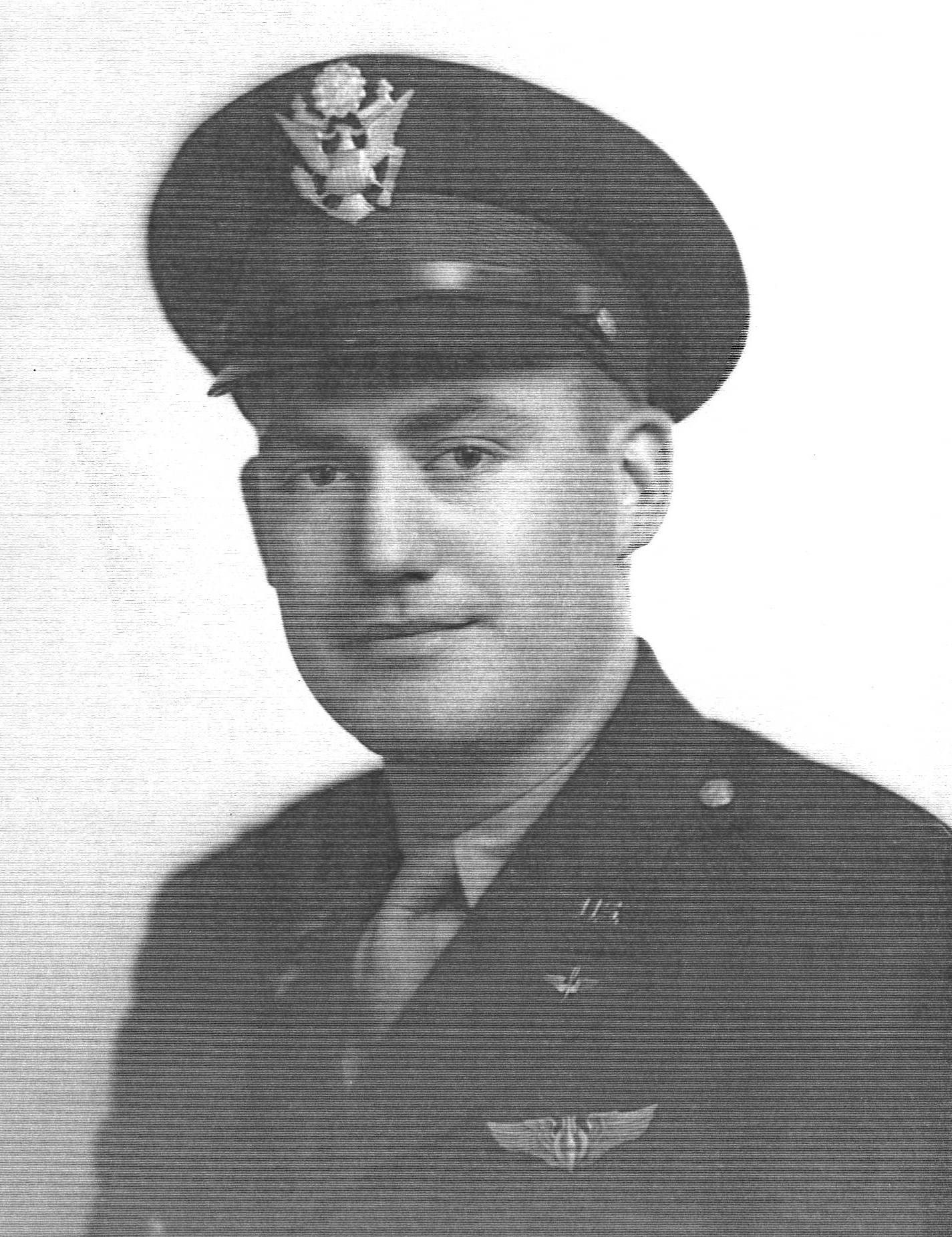
Thanksgiving 1943 held special meaning for the parents of Norman Eatinger. It was the first time that Mr. and Mrs. George Eatinger of Raymond, Kansas heard from their son since his plane was shot down off the coast of Germany in September that year. Lt. Eatinger, a bombardier on a Flying Fortress based in England, was only two weeks away from completing 30 daylight missions which would have made him eligible for relief from combat duty. He was looking forward to returning home, but fate intervened.
On September 27, Eatinger’s Fortress was in a large formation of bombers which raided a U-boat base off the coast of Germany when it was shot down. “Just as I dumped our bombs, we were hit. She spun straight down 4,000 or 5,000 feet before leveling off long enough for us to jump.” Eatinger and the navigator, whose position is in the nose of the plane, bailed out from the trap door that is located in this compartment. The plane exploded at the instant that Norman bailed out.
Eatinger landed in the freezing waters of the North Sea off the coast of Holland and was picked up by a Dutch fishing boat. German soldiers had spotted Norman’s parachute, and as the boat pulled up to shore, he was greeted by eight German soldiers. He was first thrown in a room with six Russian prisoners and then taken to an air raid shelter where he spent several days. Next, Eatinger spent several months in a prison camp near the Eastern front. First listed as Missing In Action, he wrote to his parents informing them of his imprisonment by the Germans in a letter that was received on Thanksgiving Day 1943. Eatinger was later moved to a second camp closer to Berlin, and he and his fellow prisoners were liberated from that POW camp in April 1945 by Patton’s 3rd Army. They were shipped back to U.S. soil and spent the remainder of the war at Miami Beach where the freed servicemen could recuperate. Norman was discharged in January 1946 with the rank of captain.
That same year, he married Rose Newell at Raymond and moved to Lakin where he farmed and ranched. A life member of the American Ex-Prisoners of War and an associate member of the Agua Fria, Arizona chapter, he and Rose organized the Western Kansas Ex-Prisoners of War Chapter serving the western half of Kansas. He was also a life member of the Disabled American Veterans, American Legion and VFW, and Norman served as a Kearny County commissioner and on many state and private boards. He died in 1996 leaving behind his wife of nearly 50 years and their son, Gene.
Before his death, Norman wrote about the day General Patton’s tanks knocked down the prison gates and liberated him and the other POWs. “The flag brought tears to our eyes. I had never realized before how wonderful this country of ours is. I had always taken it for granted – my complete liberty, freedom of speech and the many luxuries which I have. My nearly two years of prison camp taught me to appreciate our heritage. I am Glad to be an American.”
SOURCES: U.S. Department of Veteran Affairs; National World War II Museum; The Lakin Independent; History of Kearny County Vol. II; Wikipedia; and Museum archives.