Kearny County Historical Society Museum

As promised last week, we are continuing our story on the Kearny County Historical Society’s museum located on Buffalo Street here in Lakin, Kansas, USA!

The museum’s main building, dedicated in May of 1980, houses our lobby, library, early business displays and staff offices. The lobby includes a historical timeline of Kearny County, tributes to the O’Loughlin Family and charter members of the KCHS, and pictorial collages and information about both past and present communities of Kearny County. Visitors can view videos about our history in the Otis and Mary Lee Molz Theatre, and souvenirs and literature are also available here. In our town square display, visitors stroll back in time in through the general store, dentist and doctor’s offices, newspaper shop, drug store, clothing shops, barber shop and more. Researchers will find a wealth of information in our library which includes so much more than books! Extensive files are kept on local history and families and include original documents, publications, photographs and microfilm.

After the main museum building was completed, people started bringing in items to fill the museum, and by the end of 1981, the building was full and the KCHS began contemplating erecting another building to accommodate the overflow. In January of 1983, the go-ahead was given to begin ordering necessary supplies to build the 50×86-foot annex.  Once completed, the annex was used for fundraisers like garage sales and square dances with the proceeds used to help finish its interior. At the same time, work was going on to refurbish Lakin’s depot. Built in 1882 just off Main Street, the depot closed in 1982. It was purchased and refurbished by the historical society, some of the funds being raised through the “Save the Depot” campaign. Jim Thomas, the grandson of John O’Loughlin and a retired Santa Fe engineer, was instrumental in the restoration and in equipping the depot. An open house was held in June of 1984 for the depot and the annex. While an assortment of telegraphic equipment, train memorabilia, insulators and Santa Fe calendars are on display in the depot, the annex transports visitors further back in time. Mastodon tusks, fossils and Native American artifacts give visitors a glimpse into the lives of the earliest creatures and humans to call Kansas “home.” An 1831 Conestoga wagon, Santa Fe Trail exhibit, military display and much more can also be seen in the annex.

Also in 1984, Paul Bentrup donated to the KCHS 10 acres of land about four miles east of Lakin that contain Santa Fe Trail ruts. These ruts are known as “Charlie’s Ruts” in honor of Bentrup’s father who made it clear to Paul that he wanted the ruts to be kept open to the public for all time and for visitors to be able to walk in the ruts. In 2023, the KCHS received the Hathaway Gaines Memorial Heritage Preservation Award from the Santa Fe Trail Association for our efforts in preserving Charlie’s Ruts.

In 1994, the Farmer’s Cooperative offered to sell their fertilizer repair shop and old office/scale building along with four lots across the alley from these buildings to the historical society. Realizing the need for additional property to house and display articles, the KCHS sealed the deal in 1995. While the old Co-op office is utilized for storage, the shop houses a grain wagon, fuel wagon, several tractors, 1964 fire engine, and other assorted machinery. There is also a one-room soddie created by Norman Simshauser and Charles “Doc” Merz from adobe bricks saved from the Columbia Grange Hall which stood 10 miles north of Lakin. Miscellaneous collections of antique stoves, washing machines, barbed wire, etc. are also on display there.

In June of 2000, the Kearny County Historical Society purchased the 12-sided round barn from the Robert Duncan family using donations and museum reserves. Built in 1909 by Robert Glass, a surveyor and superintendent of the Amazon Ditch Company, the barn contained stalls for four horses and six cows with a well in the center and a windmill on top to pump it. The barn changed hands a few times over the years before the Duncans acquired it. Other owners included William Carlile, Oliver Coder and Jack Kopfman. Russell Construction Company began restoration work in August of 2000, and the barn was moved to the Museum complex in January of 2001. Later that year, the Kearny County Museum received the Nyle H. Miller Award from the Kansas State Historical Society for preserving the unique structure.

Finally, the Deerfield Texaco Station was purchased by the KCHS in 2006. Harold Smith can be credited with the vast amount of paperwork that went into restoring the 1926 building and getting it placed on the National Register of Historic Places in 2007. The interior is decorated with miscellaneous gas and automotive memorabilia.

It would be next to impossible to name all the faithful volunteers, dedicated board members, and generous donors who contributed to the museum’s success. Currently serving on the KCHS board of directors are Linda Peters, Carol Bless, Bob Price, Marilyn Wolfe, Joe Eskelund, Karen Burden, Donna Neff, Judy Scott, Judy Moody, Brenda Rios, and Robbie McCombs. In the early years, volunteers kept the museum open for visitors, did repairs, curated collections and constructed displays. Then in 1983, Lucile Dienst was appointed as the first Executive Director. In 1986, Jill Johnson was hired as director followed by Nancy Gillock in 1989. Pat Heath took over the director role in 1991. Harold Smith joined the team as assistant director in 2004, but when Pat had health problems, he soon found himself in the role of director, a position he held until the end of 2013. Amy Baxley served as director until resigning in May of 2014, and Julie Grubbs McCombs has been at the helm ever since. Amy Fontenot, assistant director, recently completed her 11th year. In addition to greeting guests and giving tours, staff is kept busy with cataloging donations, researching and updating files, writing and producing social media posts, doing minor maintenance around the complex, coordinating special events, and fulfilling informational requests like those recently received from the Kansas State Historical Society, Kansas News Service and High Plains Public Radio.

Not many communities our size have a museum like ours. We hear it all the time when travelers stop in for a “quick” peek and then realize they should have carved out more time in their schedule to view all our buildings and artifacts., Please stop in and check out your local museum. If you haven’t been in in a while, you might just be surprised at what you find!

Workers doing preparatory work for the annex.
Open house for the annex in 1984.
The depot rounds the corner at Waterman Avenue and Lakin Street on its way to museum grounds.
Norman Simshauser works on the soddie in the farm machinery building.
Movers make their way down Bopp Blvd. in 2001, bringing the barn to its new home at the museum.

Kearny County Historical Society Museum … tooting our own horn!

We have decided it is time to toot our own horn! While we have been sharing stories about Kearny County history, we have neglected to write much about the Kearny County Museum. Our hometown museum is not only a wonderful tribute to the pioneers who built up our county but also an essential asset to this community and others who are seeking historical and genealogical information.

The Kearny County Historical Society was organized in November of 1957. Virginia Pierce Hicks was named to head the KCHS with Helen Rardon serving as vice president, Edith Clements as secretary, Foster Eskelund as treasurer and Margaret Hurst, historian. Other charter members of the society included Rudy and Maybelle Gropp, Olivia Ramsey, Leon Scott Davis, Mary Smith, Leonard and Della Enslow, Dorothy Jenks, Vivian Thomas, Mame Thomas, Naomi Burrows, Hazel Stullken and W.L. Mullins.

In February of 1958, the Lakin City Council gave approval for the historical society to use the police and courtroom quarters in the city building on East Waterman Avenue as a location for a city museum. The following year, the Old Settlers’ Association disbanded, and gave a $100 war bond along with the monies in the group’s bank account to the historical society. Association documents and other items of importance were also given to the KCHS. Up to that point, the Old Settlers had done much of the collecting and preservation of local history which ultimately helped the historical society to achieve its main goal of compiling a single volume of Kearny County’s historical facts. That dream came to fruition in 1964 when the “History of Kearny County Kansas” Volume I was printed. In the words of Mrs. Hicks, society members “worked and struggled long to make the dream come true.”

Volume I Editorial Staff
Bottom Row L-R: Rosamond Eves, Naomi Burrows, Mary Smith, Helen Rardon, Hazel Stullken, Sidney Tate. Second Row: Margaret Hurst, Virginia Hicks, Mame Thomas, Vivian Thomas, Lenora Tate. Top Row: Bob Coder, Iman Wiatt, Joe Eves, Foster Eskelund.

Also in 1964, a bond issue went up before the voters to build a new Kearny County library in Lakin. When the proposition failed, the library moved from its quarters in the court house to the building at 109 N. Main which now houses Golden Plains Credit Union.  In June of 1965, the Lakin Independent announced that a very small levy would be made by Kearny County which would afford the KCHS the ability to rent a small space in the rear of the library to store, preserve and exhibit articles of historical value. Then, in 1973, the second volume of “History of Kearny County Kansas” was released. Though the book was the culmination of work by many, the editorial staff was composed of a faithful few: Foster Eskelund, Naomi Burrows, Joan Shaw, Hazel Stullken, Barbara Beymer, Thelma Oakley, Shirley Henderson and Elaine West.

Members of the Kearny County Historical Society meet in the basement of the court house in 1973. L-R: Foster Eskelund, Joan Shaw, Don Shaw, Johanna Schibbelhut, Hazel Stullken, Naomi Burrows, Todd Vincent, Clyde Beymer, Barbara Beymer, Alma McConnaughey, Vivian Thomas, and Elizabeth White.

After the current library was completed in 1974, the museum took up the entire space in the 109 N. Main building. That same year, Jennie Rose O’Loughlin deeded the White House to the historical society along with the half block on South Buffalo that the museum complex occupies. The White House is the oldest house in town and was originally home to the Alonzo Boylan family. Boylan, an operator and telegrapher for the Atchison, Topeka, and Santa Fe Railroad, moved to Lakin in 1874. He was joined by his wife and two children in September 1875, and the house was completed shortly afterwards and stood on the railroad right-of-way near Garfield Street.

In 1916, the house was acquired by the O’Loughlin family and moved to its present location. It became the family home of William and Grace O’Loughlin but was later used as a rental property. Restoration of the White House began March 29, 1977, and was done by a number of volunteers led by Ella Maune and Lucile Dienst. They worked diligently to return the house to its original appearance, removing closets, hallways, particle board flooring, tile, etc., that had been added through the years. Thirty-two gallons of paint remover were used on the wood in the two-story structure—hardwood that had been freighted in from Wisconsin. In some areas as many as eight layers of paint were removed. All the woodwork was restored to its natural color. Wainscoating that had been taken out in years past was replaced in the kitchen and dining room. Wallpaper was hung, curtains sewn, and plaster repaired. An open house was held in 1978. The house is brimming with historical artifacts, most of which were graciously donated. A few of the items on display include a collection of horse hair furniture, John and Mary O’Loughlin’s bedroom suit along with many other pieces from the O’Loughlin Family, a fainting couch, hoosier cabinet, and a silver platter which belonged to the first occupants of the house and was donated recently by their great-granddaughter, Vivian Fletcher Fankhauser.

Columbia school house, originally constructed in 1893, was moved to the museum grounds from 15 miles north of Lakin in December 1977. Lynn Cannon and Harold P. Walker, both long-time Kearny County residents, donated considerable time and labor to restore the building both inside and out. Several others also helped with the repairs and with furnishing the one-room school, and many donated graciously to the project. Rudy and Maybelle Gropp had purchased the school back in 1952 when the building went up on the auction block. In August of 1978, Maybelle transferred ownership to the Kearny County Historical Society for the whole sum of $1.

The Columbia School, prior to renovations, is shown beside the White House.

Groundbreaking for the museum’s 6,000 square foot main building was held in March of 1978, and a combined open house for the refurbished school and museum was held May 10, 1980. Long-time board member Foster Eskelund noted, “We of Kearny County and future posterity, are very much indebted to Lucile Dienst and her co-workers for the unassuming massive effort, love, care and hard work that went into the museum, house and school house to make a precious reality come to life.” After the Museum was completed, people started bringing in artifacts, and soon the Kearny County Museum was recognized as one of the best in the state. In 1983, the Kearny County Historical Society was awarded the Kansas State Historical Society’s very first “Award of Excellence” which recognized KCHS’s outstanding achievements.

We are just getting started! Check back next week for part II of our story on the Kearny County Museum! Toot toot!!

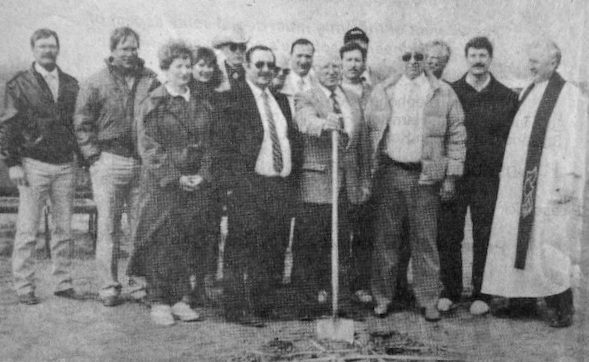
Pictured at the museum’s groundbreaking ceremony in March of 1978 are l-r: Foster Eskelund, Lucile Dienst, Leonard Enslow and Nolan Cole.
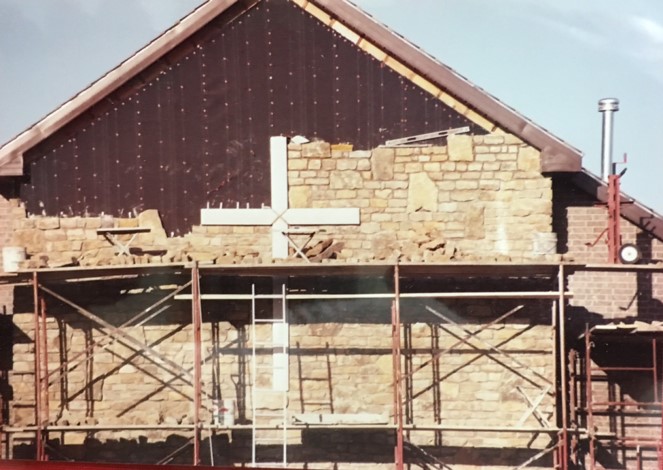
L.C. Sturdavant engraves a large piece of limestone in the museum’s front facade in 1979. The native limestone was quarried many years ago in the Kendall area and came from an old barn built there in 1901. Donated by William and Esther Sutherland, the barn was torn down by a volunteer group who reclaimed the stone. Five truckloads of the rock were brought to the museum.
Long-time curator Alma McConaughey Barben sits in one of the displays in the main museum building shortly after its completion.
Visitors at the museum’s open house and dedication in 1980.


Jack Nash, businessman and good samaritan

While some folks may have thought his profession to be somewhat eerie, there was nothing scary about John James Nash, better known to the community as Jack or J.J. A long-time undertaker and Kearny County coroner, Jack and his twin sister, Maggie were born October 6, 1874 in Pittsfield, Illinois to John Keating and Mary O’Connor Nash. The family came to Kearny County in February of 1888. He attended Kearny County schools but would later make the move to Colorado where he engaged in farming and raising stock.

On Valentine’s Day in 1904, Jack married Evelyn Kearny in the beautiful home her father had built in 1900 on the northwest corner of Waterman Avenue and Kansas Street. Born in 1876 at Kenosha, Wisconsin, Evelyn came to Kansas with her parents and two brothers in 1887. After her mother passed away in 1889, her father moved the family from their claim north of Syracuse to Hartland and then to Lakin in 1893. Evelyn was a member of the class of 1897 at Lakin, and she taught in the rural schools after completing her education. Both she and Jack were Catholic. Two days following their wedding, the couple left Lakin for Las Animas, CO., where Jack had prepared a cozy home for his bride. In October of 1906, their daughter, Margaret Frances, was born.

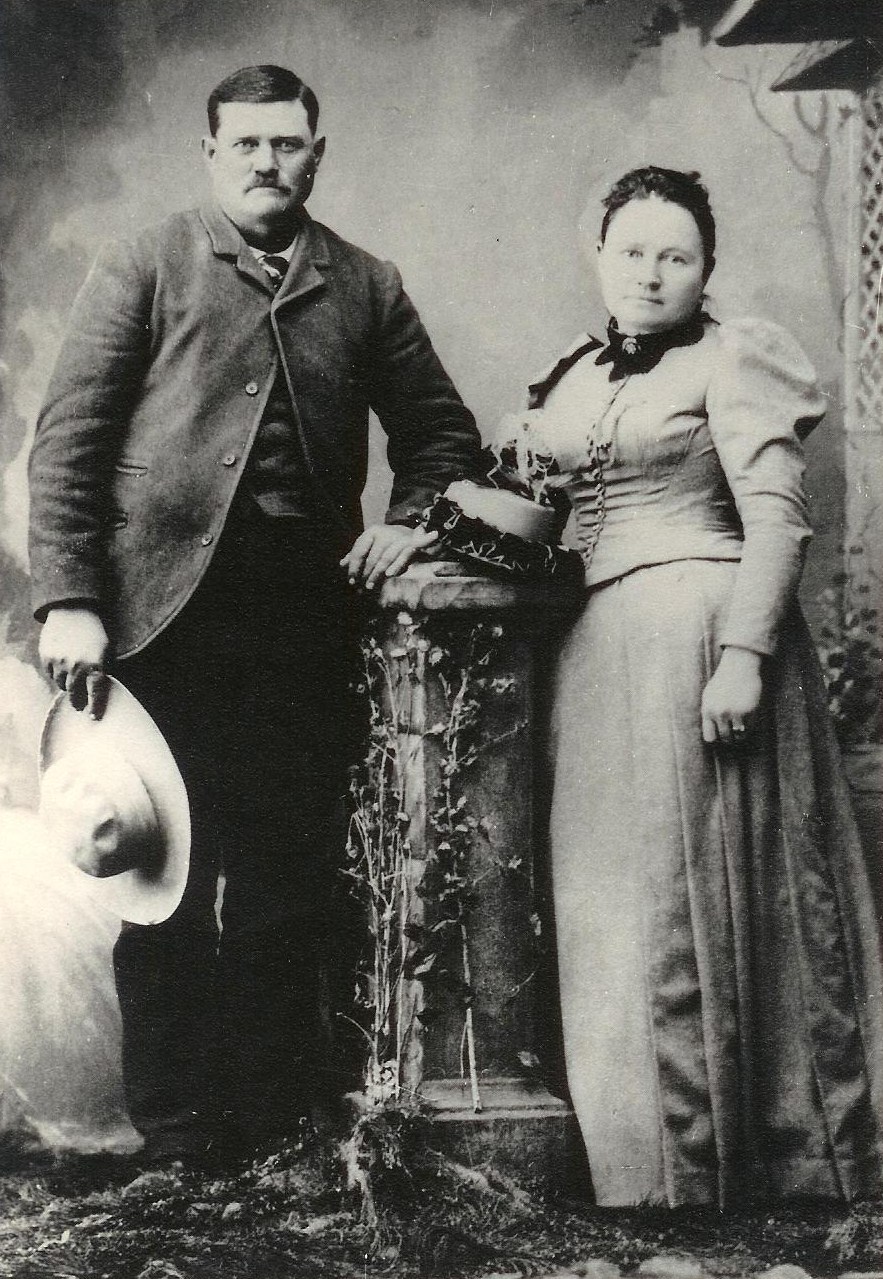
Mr. and Mrs. Jack Nash (Evelyn Kearny)
Margaret Frances Nash

When Evelyn’s father died in 1910, Jack and Evelyn returned to Lakin. Jack took charge of his father-in-law’s business, D.P. Kearny & Co., and Evelyn assisted in the management. The store carried a line of farm machinery, wagons, windmills, pumps, pipe, etc., and a complete stock of hardware and housekeeping supplies. Within a few months, Jack’s younger brother, Bern, joined him in the business, and the name of the store was changed to Nash Brothers. The two brothers made large additions of implements and other lines to their stock at the old established stand located on the north side of Waterman Avenue, just east of the alley between Main and Kansas streets. They advertised as, “Good goods for less money. More goods for more money. Quality is king.”

Brother Bern moved from Lakin in 1914 and died in 1918, but the firm name remained Nash Brothers for several years. In 1914, Nash Brothers purchased the undertaking business and stock of B.B. Sefton. The Nash Funeral Parlor was in the back of the furniture and hardware store initially, and Jack attended school in Kansas City in 1917 to become a licensed embalmer. By 1920, he was serving as the Kearny County Coroner, a position he held for many years, and Jack eventually went into the mortuary business at Syracuse and Ulysses too.

Nash & Davis Funeral Home on East Waterman Avenue.
From the January 23, 1920 Lakin Independent: “J.J. Nash has been overseeing the work of making an auto hearse, for his Undertaking establishment, this week, and bids fair to have a hearse second to none.” Here the hearse is parked in front of his home on Kansas Street.

In July of 1922, the Advocate announced that Jack was putting the finishing touches on his new undertaking parlor located across the street from the hardware store and behind his home. After Jack’s nephew, Leon Davis, attended the Williams Institute of Embalming in Kansas City, the two went into business together. The announcement came in the September 2, 1932 Independent that the funeral home name was being changed to Nash & Davis. According to the Independent, Leon had been working with his uncle “since he was big enough to look over the counter.” Leon also went into the furniture and hardware business with Jack, and the name of that store was also changed to Nash and Davis about 1939. After Leon acquired the Weber building at 109 N. Main in a sheriff’s sale in 1940, Jack and Leon moved their furniture and hardware business there for a few years. In 1953, the Independent announced that Nash & Davis had opened the doors of a new furniture store one door south of the Kansas-Nebraska office at 117 South Main Street.

With so many businesses to juggle, one would think that Jack Nash had more than enough to do, but he wasn’t one to let the grass grow beneath his feet. He headed the Lakin Cemetery Board for many years, and much credit was due him and J.O. Parker, Jr. for their untiring efforts in caring for and improving the cemetery. Nash also served on the Lakin City Council from 1913 to 1925 and again from 1935 to 1939. He served as assistant fire chief on the volunteer fire department, retiring in December of 1945 after 36 years of service. Jack was also an active member of the Commercial Club, Chautauqua Committee, Kearny County Fair committee, Rotary Club, World War I Fund Committee, served as president of the Kearny County Old Settlers’ Association and as an officer in the Lakin Dance Club.

Jack Nash worked as a funeral director up until a few months before his death on July 29, 1955. He was the last remaining Nash sibling and left behind several nieces and nephews to mourn his passing. Evelyn had preceded her husband in death in 1947 after an illness of several weeks, and their daughter died in 1952 of a heart attack.


SOURCES: Diggin’ Up Bones by Betty Barnes; History of Kearny County Vols. I & II; archives of The Advocate and Lakin Independent and Museum archives.

A huge thank you to everyone who attended Night at the Museum 2025 and to our volunteers and board members who helped to make the event a success!

Seniors benefit from Center’s services and activities

Come rain or shine, Kearny County’s senior population knows that they can count on the girls at the Kearny County Senior Center to provide them with much appreciated services, tasty food and fun activities. According to information compiled by the late Cleone Neff, the roots of the organization can be traced to 1964 when the “Kearny County Senior Citizens Recreation Group” was begun by Rose Eatinger White. Rose met with the Memorial Building Board to secure time for senior citizens to use the Memorial Building on a regular basis for fellowship and recreation when other community activities were not scheduled. Senior citizen get-togethers had been every two weeks prior to this. Rose hosted the first such meeting. Women played cards while men played dominoes. Refreshments were furnished by members of the Presbyterian Church Women’s Society, county extension units and senior volunteers. Several from Deerfield participated in these activities.

In 1968, the Lakin Young Women’s Club, a federated service organization, initiated a long-range program of service to the senior citizens of Kearny County. Surveys were conducted to determine the number of seniors in the county, the prevailing needs of this group, existing programs in the community targeted toward the elderly and identifying organizations interested in meeting the special needs of this group. At Rose’s request, the Lakin Young Women’s Club agreed to incorporate the bi-weekly get-togethers into their program projections. A two-year community service program was set into action by a committee composed of Joan Wiley, Thelma White and Cleone Neff. This culminated into the organization of the Kearny County Council on Aging on Feb. 2, 1973. Bylaws were adopted Oct. 4, 1974, and Cleone Neff became the first chairman of the board, a position she held until 2000. The KCCA became financially operative with $2,550 received from county revenue sharing funds in 1975. In April 1975, voters approved a petition to permit the use of county mill levy funds for senior citizen programs thus giving the KCCA the distinction of being the first aging program in the 28 Southwest Kansas counties to receive county mill levy support.

On January 9, 1976, the KCCA received its first installment of mill levy funding. These funds were used to conduct ceramic classes and special events for seniors, to purchase Meals-On-Wheels supplies and office supplies, to fuel busses borrowed from the school for various senior citizen outings, and to operate a once-a-week mealsite with meals being made at the Lakin Grade School kitchen. All activities were planned and carried out by volunteer coordinators at this time.

The January 11, 1978 Lakin Independent announced that renovation work had begun to convert the old Kearny County hospital building on Kansas Street into a center for senior citizen activities and offices for the Kearny County health nurse. Although many items at the new Senior Center were donated, the KCCA used much of its mill levy funding to furnish and transform the center from its original use as a hospital. The Kearny County Senior Center was unveiled in 1979, and Bea Myers was employed as full-time director while Paul Jantz was hired as part-time custodian. County funding was put to use as regularly scheduled craft classes, shopping trips, shuffleboard, quilting, snooker, and other activities and services were offered free of charge to participants. The center became the administrative headquarters for Meals-On-Wheels, a joint effort of the Council on Aging and Kearny County Hospital. A volunteer force was heavily relied upon to deliver meals, carry out programming, and drive busses.

Eventually, the Council on Aging purchased its own busses. Not only did tours and day trips flourish, but transportation was also offered to area events like community concerts and the Grant County Home Products Dinner. In the 1990s, transportation services expanded as staff began offering local transportation not only to the Senior Center but also to doctor appointments and for shopping and errands. At one time, the KCCA had a fleet of four busses, housing one at Deerfield to serve the community’s needs there.

Activities and services offered have been numerous and varied and have included morning coffees, Bible Studies, dances, cooking classes, arts and crafts, country line dancing, holiday parties and special events, brunches, snooker tournaments, exercise classes, educational programs, commodity and Kansas Food Bank distribution, dinner-outs and lunch dates, insurance counseling, technology classes, intergenerational programs and much, much more. In 1998, center staff began cooking and serving a hot, well-balanced meal on Wednesdays at a minimal charge. This program continues to thrive and is now available for dining in-person or pick-up on Wednesdays.

Like many other organizations and businesses, the Senior Center had to adapt to the era of Covid by thinking out of the box. When in-person activities couldn’t be conducted, several events were done through the center’s drive thru such as mealsite pick-up, handing out special foods like funnel cake, and an ugly sweater contest. Activities like bingo and trivia were started over Zoom. Calls were made to the homes of elderly to check on them and see if they needed any errands or shopping done. The staff even worked in conjunction with the county treasurer’s office to assist seniors in getting their tags and taxes taken care of. The employees went over and above to ensure that Kearny County’s seniors were taken care of and safe.

The success of the Senior Center can be attributed to the unwavering dedication of hard-working staff members, volunteers, board members, county commissioners, and various individuals and organizations who have partnered with the KCCA to offer programs for the elderly through the years. Together they have worked tirelessly to make sure the needs of Kearny County’s seniors are met.

Leonard Enslow gets his palm read by Viola Kash, AKA Gypsy Lady, during a special “circus” event at the Senior Center in the 80s.
Viola Kash, Della Enslow and Beulah Harsha at the 1980s “circus” event.
In 1981, students in Karen Burden’s home economics class donned period clothing from the Kearny County Museum’s collection and presented a fashion show for a Senior Center gathering. Left to right are Julie Perez (Kaps), Nora Tallant (Richter), and Kim Hosford (Hilger).
Contestants in the Ms. Senior Citizen Pageant during the 90s pose with the event’s emcee: L-R: Velma Cox, Hugh Cowan, Curtis Young, Joe Coyne, Frank Thomas and John “Hoy” Skipton.


Myrtle Keuker, Joe Gosch, Josephine Coerber, Edith Spencer at a Golden Agers meeting during the 1990s.
Quilters at the Senior Center in the 1990s. L-R: Hazel Stullken, Bertha Johnson, Glenda Meisel, Armella Gosch, Ethel Mae Harris, Dorothy Truskett
Sue and Bernarr Penick and Ethel Mae Harris during a Senior Center visit to the Museum in the fall of 2019.
Senior Center Director Peggy Calkins serves Julia Rosales and her son, Tino, through the mealsite drive-thru during Covid in June 2020. Julia, the Senior Center’s longest serving employee, began working at the Center in 1981 as custodian, and by the time she retired in 2018, her job responsibilities had expanded to include assisting with programs and services.


SOURCES: Lakin Independent, Museum archives, and Kearny County Senior Center’s Facebook page.

Hospital was a long time in the making

In August of 1950, an open house was held at the new Kearny County Hospital located at 305 Kansas Street in Lakin, but it would be several months before the doors were opened to patients. About 1947, local Jaycee President B.C. Nash began talking up the idea of building a community hospital. He had plans, estimates and letters suggesting ways of financing the project. According to Monte Canfield, publisher of the Lakin Independent, Nash kept pestering everyone in town with his idea until they finally took notice. “He kept at it and finally got The Independent to launch a publicity drive which eventually culminated in a mass meeting to talk over the possibility of a Kearny county hospital.”

That meeting was held in February of 1948, and a large group of interested citizens took the ball from Nash and ran with it. They circulated petitions among registered voters, and the question of whether to issue $100,000 in bonds was placed on the ballot in November of 1948. The issue carried by a vote of more than four to one.

Soon after the bonds were voted, the county commissioners appointed a board of hospital trustees as provided by law to go ahead with plans to build a hospital. The board consisted of E.L. White, Madison Downing, Glenn Steward, J.R. Hutton and Canfield. When estimates were made, it was discovered the bond funds were insufficient, but county commissioners agreed to proceed and figure out how to come up with the necessary additional funds. These were raised in 1949, and construction began that October.

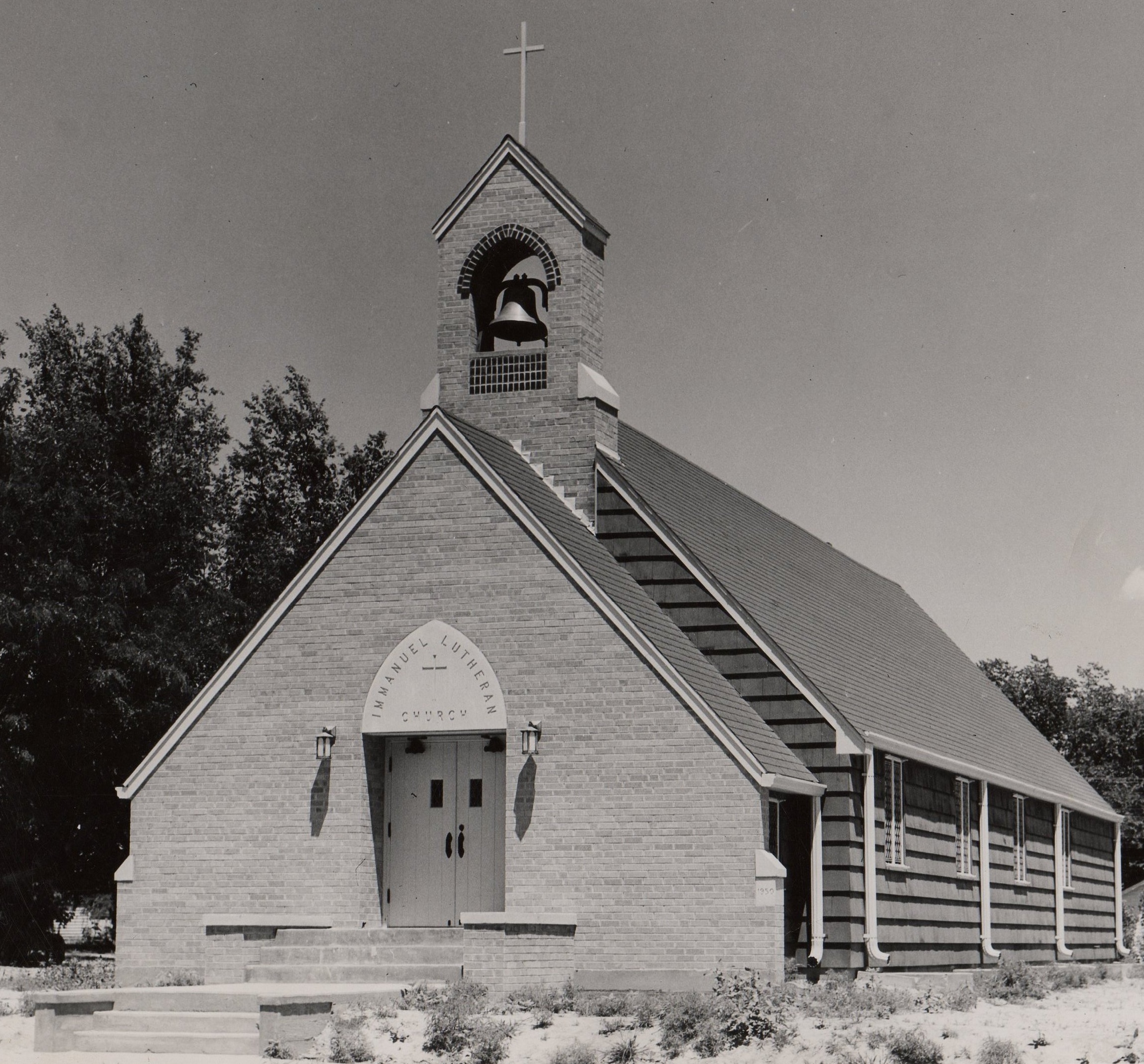
When the facility was finished in the summer of 1950, the hospital board was anxious to have as many people as possible see the inside of the new building. At the time, equipment was being ordered and hospital groups were being contacted with the hope that by the time the hospital began operations, a professional hospital organization would be secured to manage the facility. As funds were still needed to finance the furnishing of the rooms, donations were sought. More than $7,500 was received from individuals, business firms and organizations, and a small tax levy was made available which helped make it possible to finally get enough money together to equip the hospital as it should be. The facility featured the most modern equipment for caring for the ill. The technical equipment was the best that money could buy and plentiful while the patient rooms were cheerful. A contract was entered into with the Lutheran Hospital Association of Kearny County to operate the facility. The association was composed of members of the Immanuel Lutheran Church at Deerfield which elected a five-man hospital board. They worked without pay and often without recognition for the time and talent they contributed to the hospital.

An open house on January 11, 1952, gave everyone a chance to inspect the fully equipped facility before it began receiving patents the following week. According to Canfield, the fine institution was not just the work of a few but “rather the accomplishment of many. It took not only the members of the board, whose responsibility became the supervision of the actual building, but also the thousands of citizens of the county who voted to finance and build this hospital. Without their unqualified support there never would have been a Kearny County hospital.” Canfield called the feat “a dream of many years come true.”

The Lakin Chamber of Commerce and business firms announced that gifts totaling several hundred dollars would go to the first babies born in the new hospital and their parents. The first baby born there was Gary Neil Moreland of Deerfield, on February 5, 1952.

Nash was paid the recognition due him by being asked by the board of trustees to preside at the dedication program held January 20, 1952, in the Lakin Grade School auditorium. Nash gave a short history entitled, “Building A Hospital.” The impressive dedication ceremony included a concert by the Lakin High School and Lakin Grade School bands, musical numbers by the Lakin Quartette, and the recognition of members of the Lutheran Hospital Association board, hospital administrative staff, members of the hospital board of trustees and distinguished guests.

In April 1956, the hospital board received the first half of a Ford Foundation Grant of $10,000. That November, a bond issue of $115,000 to expand the facilities was overwhelmingly approved by voters. The Ford Foundation Grant Fund was used for equipment, and the approval of the bond issue meant that a much-needed addition and upgrades were made to the hospital including more bathrooms, patient rooms, a new nurses’ station, larger waiting room and kitchen, and much more.

In April of 1975, the Lutheran Hospital Association ended their 23-year lease and transferred the control and operation of the hospital to a county board of trustees. All assets owned by the association were given to the county. President of the Lutheran group, Otis Molz, pointed out that his association had felt for some time that the move should be made, and the proper time had come since Lakin had fine doctors and medical staff using the facilities and the occupancy rate was at a peak. Representing the new county board were Carl Bentrup, chairman; Ann Tate, Bob Glunt and Elmer Branine. Ted Morgan was the hospital board attorney, and Jerry Horton was named as new administrator. In January of that year, doctors J.R. Zimmerman and Jon S. Wheat had expressed interest in construction of new hospital facilities. The Kansas Street building was used as a hospital until 1978 when a new Kearny County Hospital was opened in the White addition.

Kearny County Hospital in the 1950s.
Kearny County Hospital Staff when it opened in 1952. Left to right: Herman Huner, custodian; Mrs. Morton Zerby, R.N.; Mrs. Ivan Duvall, R.N.; Miss Delora Oelke, hospital supervisor; Mrs. Pete Marx, nurse aide; Mabel Meadows, R.N. superintendent of nurses; Mrs. Francis Skipton, nurse aide; Mrs. James Matthews, cook; Mrs. Gertrude Linninger, nurse aide; Norma Jean Hubbard, receptionist; Mrs. W.O. Coerber, assistant cook.
The seven persons directly charged with the operation of the Kearny County Hospital in 1952. Back row are members of the local board of directors for the Lutheran Hospital Association. Left to right: Leland C. Waechter, secretary; Rev. Henry Knoke, member; Donald Neff, member; Armin Kettler, treasurer; Udell Kueker, president. In the foreground are Miss Delora Oelka, supervisor, and R.L. Erhman, administrator.
Nurse Ethel Mae Harris stands beside the hospital’s crash cart in the early 1970s.
The hospital’s well equipped operating room in the early 70s.


SOURCES: Archives of the Lakin Independent, History of Kearny County Vols. I and II, and Museum archives.


Museum selected to receive Mariah Funds

The Mariah Fund has been receiving a percentage of the Boot Hill Casino and Resort’s revenue since it opened in Dodge City. The organization has promoted Kansas tourism by funding non-profit cultural, heritage and tourism projects in 22 communities. With the 15-year agreement ending, The Mariah Fund will be no more, and board members were asked to provide three grantee choices for the final distribution of funds.
Ross Miller, a former Deerfield resident and board member for The Mariah Fund, recommended the Lakin Men’s Golf Association, Kearny County Economic Development and the Kearny County Museum as benefactors. On September 29, Miller presented the organizations with a substantial check. Both the Museum and Golf Association received $5,000 while Economic Development received $1,250.
The Kearny County Historical Society is genuinely grateful for this very generous gift, and we appreciate that Ross thought our organization worthy to receive such a blessing. Pictured from left to right are Lakin Men’s Golf Association Representative Steve Sullivan, Kearny County Museum Director Julie McCombs, Kearny County Economic Development Director Ralph Goodnight, and Ross Miller.

Willard and Alice Miller, Pioneers on The Flats of Kearny County

Much has been written about the one-room school on the Museum grounds, but what about the man who gave the school its name? Willard Amos Miller, of Shelby, Ohio, came to Western Kansas in April of 1886. He filed on a quarter section of land in Kearny County on The Flats about 16 miles north of Lakin where he built a comfortable, cozy sod house. The two-room home was plastered inside and had a coat of white wash, and his older sister, Ida, sent him short curtains for the windows. The building was warm in winter and cool in summer. Beneath the house was a fruit cellar. Miller dug and cemented a cistern for drinking water, but water had to be hauled in barrels from his neighbors’ wells to replenish his supply. After building several cisterns for others on The Flats, he became known as “The Cistern Man.”

Willard Amos Miller

In November of 1886, Miller went to Wellington to engage in the broom industry for part of his winter’s work. He returned to the broom industry several times during the slack winter seasons on The Flats. In January of 1887, his broom factory work yielded him $11 per week which he considered to be a fair wage as jobs were scarce. Willard later returned to his claim and broke the virgin sod with an ox team which he had named Tom and Jerry. He paid $160 for a wagon, plow, and the team of oxen which plowed at the rate of one to one and a quarter acre per day. Miller often plowed for his pioneering neighbors, breaking up acres of the beautiful, virgin buffalo grass.

Miller wrote in his personal notes, “Imagine yourself in the center of a field which is nearly level and on which the grass is about two inches high with no fences to obstruct the view. You can look in all directions without trees or anything to hinder the view, and all around, the ground and sky seem to meet.”

One day he was plowing for a neighbor about three miles from his home. In the evening, Miller picketed the oxen close to where he had been plowing in a draw where there was good grass. “It was dry and hard plowing, so I walked home to let the oxen have more rest. A good rain came up during the night and when I returned to the oxen the following morning, there Jerry and Tom were standing in water waist-deep.” It was too wet to do any plowing so Willard picketed the oxen so they could just reach the water and walked home again, returning the next day when plowing was ideal.

The rains were bountiful on The Flats in the summer of 1887 so he began to build a new home on the south side of his claim. Miller dug a basement and put in a wood floor and used shingle roofing. He made two comfortable rooms finished with regular doors and windows and plastered the inside. “It was as comfortable a house as any we ever had.” He also dug a well and cemented the sides. “I think as Benjamin Franklin said, “A farmer is rich when he has a little farm well tilled, a little house well filled, and a wife well willed.” This statement was found in Willard’s notes and was written about eight months prior to him taking a wife.

Willard returned to Shelby and married Alice Malone on January 30, 1888. Both had been school teachers, and their romance started in a schoolroom where Professor Miller was the teacher and Alice, one of the older pupils. Alice’s family prepared a big turkey dinner for their wedding feast. About a month later, they started for Kansas. It was a cold day when they arrived at Lakin. A neighbor had driven Willard’s team to the railroad station to pick up the bride and groom, and it took most of the day to take the couple to their new home on the prairie. “W.A. Miller escaped a heavy shiverre by bringing a blizzard along with his bride,” was one of the tidbits in the “Oanica Jottings” section of the Kearny County Advocate on March 18, 1888.

Alice Malone Miller had this picture taken about 1887 for her fiance after accepting his engagement ring. The ring was placed in a conspicuous place on the chain so Willard could see it when she sent him the picture.
Willard Miller and his bride, Alice, in the traditional wedding dress of 1888.


In addition to farming, Willard returned to teaching in order to make financial gains. Willard and Alice’s first child, Florence Miller Strauss, was born in April 1889 when her father was teaching at the Holloway School one mile north of their sod home. The Millers had an agreement that Alice was to place a white cloth on a pole in view of the school house if she thought the stork was coming. About 11 a.m., the expectant mother placed the white cloth, but Willard did not see Alice’s signal as it was a quiet day and there was no breeze to make the flag wave. As Willard came home from school, his bride was in the yard waving to him. He thought all was well so he took his time. When he arrived home, he found out otherwise and immediately got busy. He rode his pony to the Loy’s home about ¾ a mile away to have Mrs. Loy fetch the midwife; however, the stork arrived before the midwife could be retrieved. The young school master delivered his firstborn, severed the umbilical cord, and all went well. He had gained his knowledge about delivering babies from a book. The midwife, Septha Fulmer, offered to stay two weeks and assist with the new baby as she and her husband greatly needed feed for their stock. “Sep” was given fodder in exchange for her services. Alice hand sewed all the baby clothes, but they were too small, like doll clothes. “Sep” ripped them all out and remade them for her.

When a new school building was built on The Flats in 1893, Willard suggested that the school be named Columbian in recognition of the Columbian Exposition, the world’s fair held in Chicago that year. Miller was the first teacher in the new school, and patrons overwhelmingly approved his suggestion.

Willard not only taught in several of the one-room school houses in Kearny County but helped organize the school system here. He and Alice also organized a number of churches and Sunday schools. In 1896, The Advocate reported that the family had been taken with the eastern fever and left for Franklin County, Kansas. In 1909 at Thayer, they purchased property that had previously belonged to Kansas’s eighth Governor, John Pierce St. John. But the Millers were attached to Western Kansas and were back by 1914, making their home in Finney County where they lived out the remainder of their years. Willard Amos Miller died in 1940 at the age of 77, and his bride died in 1959 at the age of 88. In addition to daughter Florence, the couple had five more children: Lucy Miller Englund, Carl Miller, Pearl Miller Dell, Ralph Miller and Willard B. Miller. Several generations of Willard and Alice’s family have made Kearny County their home, and many descendants followed in their footsteps by entering into agriculture and/or education. All but one of Willard and Alice’s children became teachers with Florence and Ralph teaching at both Columbia School and in the Deerfield schools like their father had.

Photo of the Miller family taken in 1938. Front row L-R: Florence, Willard, Alice and Carl. Back row: Pearl, Willard B., Ralph and Lucy.

SOURCES: Information and pictures provided by the late Florence Miller Strauss and donated to Kearny County Museum by the late Max and Marianne Miller; and archives of The Garden City Daily Telegram, Kearny County Advocate, Thayer News and Garden City Herald.

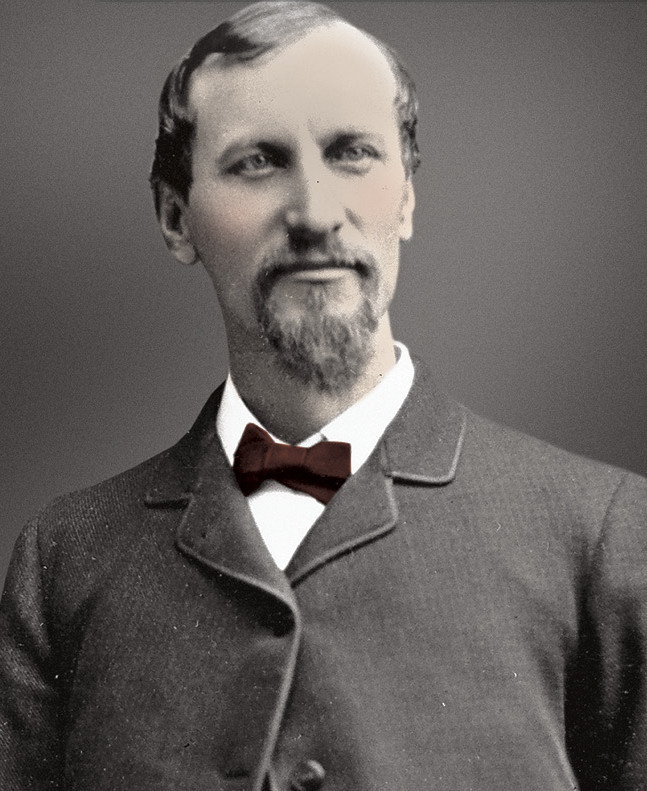
Former Educator was beloved by his students and community

Horace Adelbert Kersey retired from teaching in 1962, but his former students remember him well. Kersey taught industrial arts in Kansas for 38 years, advising amateur carpenters about everything from drawing up house plans to building cabinets.
He was born in December of 1896 at Quenemo, Kansas. After high school, Kersey qualified for a teaching position with a two-year certificate from Kansas State Teachers College of Emporia, but World War I delayed the start of his teaching career. Private Kersey served in the Spruce Production Division at Vancouver, Washington. This division was responsible for carrying out logging operations in the Pacific Northwest to provide raw wood necessary to build airplanes for the Army’s burgeoning air force.
Kersey returned to Kansas after his Army stint and started his teaching career at Severy. There he taught high school industrial arts from 1919 to 1922. He then taught at Chase for one year. Next, he moved to Herington where he spent 20 years teaching industrial arts. He also coached football for 10 years, and was the superintendent and a teacher in the vocational education night classes.
During the depression years, Kersey returned to summer school and earned his Bachelor of Science degree. From 1943 to 1948, he joined the millions of other Americans who were called upon by the government to serve their country. He was employed for two years at the Herington Army Air Field as a civilian training coordinator and sheet metal work. As Chief Air Raid Warden of the Herington Civilian Defense Council, he was responsible for educating and supervising other air raid wardens, auxiliary police and firemen, and for ensuring the civilian population followed safety procedures during air raids and blackouts. He then went to Camp Crowder, Missouri where he supervised civilian training for one year. He returned to Kansas and was a training specialist for the Veterans Administration for two more years before resuming teaching at Portis.
In 1949, Kersey moved to Lakin where he taught industrial arts until his retirement in 1962. He was beloved by his students who, along with his friends, affectionately called him “Pop,” and the 1961 Lakin High School yearbook was dedicated to him. During his tenure at LHS, Pop and his students helped to build and set up the manger scene and other decorations in the City Park.
After his retirement, “Pop” Kersey continued to give of himself in service to his community. He was appointed to the Lakin City Council in 1962 to fill an unexpired term and then was elected mayor in 1963, a position he held until 1969. During his term of service as mayor, many city streets were paved, a new swimming pool was constructed, and several city parks were developed. Kersey received a Certificate of Meritorious Service from the League of Municipalities for his work in city government. He also was appointed to the Kearny County Library Board in 1965 and served as chairman during the building of the Kearny County Library. He served as clerk of the Lakin Township board as well.
Kersey received many awards, but most notably, he was inducted into the Kansas Teachers’ Hall of Fame in 1979. Although Kersey himself could not pinpoint any specific thing that led to the honor, his wife said, “He got along mighty well with his students for one thing.” So well, in fact, that Pop kept in touch with many of his former students at both Lakin and Herington, and a number of his students went into the woodworking, building and contracting trades. Throughout his teaching career, Kersey taught such industrial arts subjects as sheet metal, mechanical drawing and woodworking/furniture making. “It seems to me we tried to keep in touch more with furniture styles then. As the furniture changed, we changed with it. We studied different styles, like Queen Anne, etc., so we’d know what they were. Students started out on small pieces and progressed to larger ones.” Kersey said his beginners “tried out all the woodworking tools” such as the cutoff saw, rip saw, back saw, miter saw, and band saw. The power saw was experimented with towards the end of the year “so they wouldn’t lose any fingers.” Pop was a Master Builder himself, and the Kersey home was filled with wood furnishings he had made. This included a lathe-turned plantstand made from an old post that was once part of a rotunda at Emporia State University.
Kersey was a life member of the Kansas State Teachers Association and the KSTA Alumni Association. He was also a member of the National Education Association, joining KNEA when it was known as the Kansas Industrial Arts Association. He was secretary of that organization for three years. While at Herington, Kersey served as commander and chaplain of the American Legion Post #12 and also as president of the Herington Lions Club. He was a member of the Quenemo Masonic Lodge for 61 years. He served on church boards for the Presbyterian Church at Lakin and at Herington and was a member of the First Christian Church while at Liberal.
Horace and first wife, Janet Allan, had two daughters, Betty and Patricia. Janet passed while Kersey was teaching at Herington, and he remarried in 1950 at Lakin. His second wife, Ruby Mull Dorsey, had also been widowed. She had three adult children – Gene, Wayne and Margie. In 1979, the Kerseys moved to a new home in Liberal where they were closer to Horace’s daughter Patricia and Ruby’s son Gene. Horace “Pop” Kersey was 89 years of age when he died at Liberal in 1986. He is buried at Oak Hill Cemetery in the town of his birth, Quenemo.

Horace and Ruby Kersey
SOURCES: National Archives; Lakin Bronc Yearbook; The Kearny County Kernels by Monte Canfield, Sr.; History of Kearny County Vol. II; findagrave.com; Museum archives, and archives of The Lakin Independent, Herington Times, Herington Advertiser, Southwest Daily Times and Wichita Eagle.