Carl Alonzo Miller left Oneida, Illinois, the place where he was born in 1882, and came to Deerfield in the spring of 1907. The real estate agent’s arrival was perfectly timed. Fueled by the sugar beet industry and all the amenities that came with it, the little village of Deerfield was soon to experience an explosion of growth.
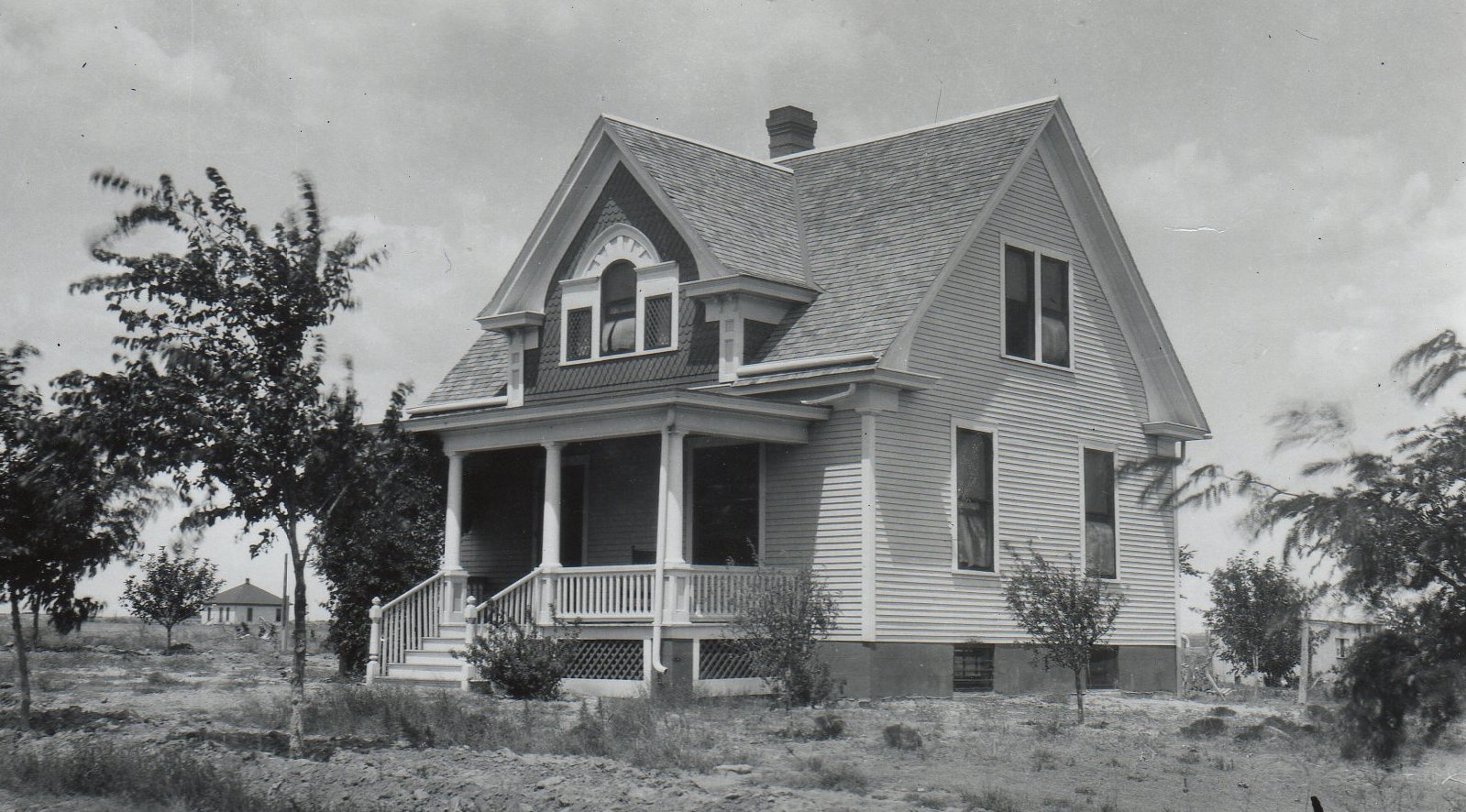
In April of 1907, the Garden City Telegram reported that C.A. had bought a block of ground on Olive Street in Deerfield to erect his residence. Two years later, Miller’s beautifully built and spacious home was pictured in the Hutchinson Gazette as part of a PR pitch to beckon newcomers to the blossoming little burg of Deerfield. A picture of the Deerfield State Bank and write-ups on businesses and businessmen were also included in the campaign. As a partner in The Deerfield Land Co., Miller chauffeured would-be residents around to show them the properties that were for sale and those that had been sold and improved upon. But Miller wasn’t just a real estate agent. He also sold insurance, and crop insurance could be a profitable business in this agricultural community where an overabundance of irrigation water held at nearby Lake McKinney practically ensured the farmers’ success.
Deerfield was in the heart of the United States Sugar and Land Company holdings, and by 1909, papers referred to it as the fastest growing town along the Santa Fe Railroad. That same year, the Deerfield Land company bought two new touring cars as their business had grown to such dimensions that they were “compelled to get machines to show the many land buyers the property which they have for sale.” At least one of the vehicles could usually be found at the railroad station “to meet prospective land buyers and others interested in the Deerfield country.”
Deerfield residents were proud of their community and all the progress that had been made. “The people who live in a town, are, afterall, the town,” proclaimed the Deerfield News. “Alive, wideawake, resourceful and anxious to improve themselves, the people of Deerfield have the capabilities which will enable them to take hold of the advantages that surely are opening before their town.”
And taking hold of the advantages is just what Miller did. In 1908, he became the president of the newly formed Deerfield Telephone Company. C.A. served as vice-president of the Deerfield State Bank, he was elected to the Deerfield City Council, and by 1910, he was selling and renting new and second-hand automobiles as the local Ford agent. He also served as secretary for Deerfield’s Commercial Club and treasurer of the Arkansas Valley Commercial Association of Western Kansas.
In 1912, Miller moved to Garden City with his wife, son and daughter, but C.A. did not severe his ties to Deerfield. He started a land office at Garden City, and The Garden City Telegram reported that nearly every day his car could be seen “spinning between here and Deerfield, where he formerly lived and where much of his real estate and insurance business is still done. But he prefers more metropolitan existence.” Although Miller may have preferred city life, he didn’t forget the friendships he had forged along the way. Both the Garden City and Lakin papers frequently reported on social gatherings between Miller and his Kearny County pals. C.A. also retained his position on the board of directors for the Deerfield State Bank until health caused him to step down. His wife, Mary, then took his place and remained on the board until 1935 when the bank merged with Kearny County Bank. Mr. Miller died in 1936 at his 909 N. Sixth home in Garden City, and his wife passed there in 1947.
According to Museum archives, Dr. J.B. Watson, his wife and son moved into the Olive Street house after the Millers moved to Garden City. The good doctor built up a very extensive practice in Kearny, Finney and surrounding counties and was considered one of the best surgeons in western Kansas. Marjorie Futhey Streiff recalled that Dr. Watson took her on rounds with him in his horse and buggy when she was a young child recuperating from a bad bout of pneumonia. Watson became very involved in the Deerfield community, headed up the town baseball team and was a generous contributor to the Methodist Church. According to the Kearny County Advocate, “Every man, boy and child really loved him.”
But in March of 1916, the citizens of Deerfield were terribly shocked and grief stricken when they learned that the 39-year-old physician had died after being struck by a car in Chicago. The Rockford Daily Republic reported that heavy gales of wind, accompanied by driving cold rains, were sweeping across Chicago at the time of the accident. Watson, his head lowered, did not see the oncoming vehicle as he crossed the street. The doctor had gone to the Midwest to visit to his only son who was attending school there.
In October of 1917, the widow Watson packed up her belongings and left for Kentucky where she and the doctor had previously lived and where he was buried. Since then, various families have lived in the Olive Street home at Deerfield, a humble abode that was once used as an advertising tool to beckon newcomers to southwest Kansas.
SOURCES: Findagrave; ancestry.com; History of Kearny County Vol. I; Museum archives; and archives of the Hutchinson Gazette, Garden City Herald, Garden City Telegram, Deerfield News, Owensboro Kentucky Messenger, Rockford Daily Republic, Advocate and Lakin Independent.