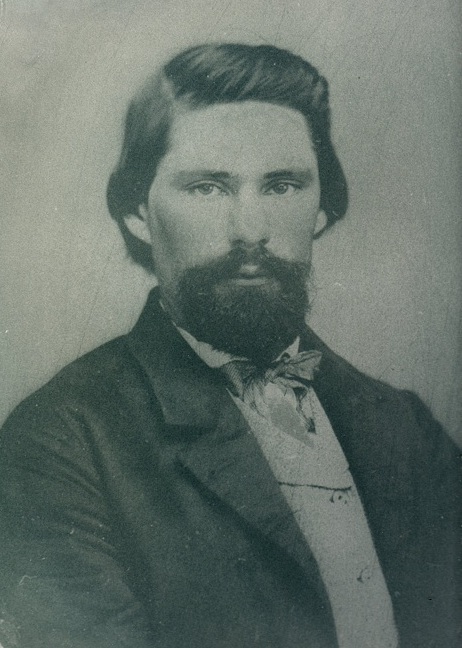
 We would be remiss if we let this week pass by without a little write-up about Lakin’s most famous Irishman, John O’Loughlin. Those familiar with his story know that O’Loughlin was the first permanent settler of Lakin, but he had already made a name for himself prior to his arrival here in the spring of 1873.
O’Loughlin was born in 1842 at Ennistymon, County Clare, Ireland. He was one of five children born to Peter and Margaret (Considine) O’Loughlin. John lost his father and two of his siblings during Ireland’s great potato famine. His mother re-married, and the family moved to America when John was six years old. He attended Catholic Parochial school in Dubuque, Iowa. John’s stepfather, Andrew White, began a freighting business but was killed by lightning shortly afterwards.
When John was big enough to harness up the horses, he went to work, and he was out on his own by the age of 17. When the Civil War began, O’Loughlin freighted for the Army as a government teamster in the department of quartermaster at Fort Leavenworth. After the war, he continued with the Army, driving wagons to all the western outposts. John was along on several expeditions against the Plains Indians serving beside Generals Hancock, Sheridan and Custer. The experiences were certainly dark spots in his life, and he never spoke about them. John left government service in 1869.
After years of traveling the trails, O’Loughlin knew that both Army and civilian wagons on the military road had trouble crossing Pawnee Creek about 40 miles north of Dodge City. After he left government service, O’Loughlin built a toll bridge from poles cut along the creek. The crossing was an important part of history before the Santa Fe Trail became the artery to the Southwest. In O’Loughlin’s stockade, he had a well and a collection of dugouts which were used for a store, bedrooms and eating rooms. John sold a range of groceries and served meals at all hours, night and day. The first white settler in what was later named Hodgeman County, John thrived by doing business with the Army, buffalo hunters and trail travelers. Well-known names such as President Hayes, “Wild Bill” Hickock, “Buffalo Bill” Cody and Jesse James were recorded in his register.
O’Loughlin sold his lucrative little business to George Duncan after the railroad reached Dodge City in 1872, and the site on Pawnee Creek became known as “Duncan’s Crossing.” With the arrival of a new proprietor, the trading post took on a new look. Log buildings replaced dugouts, and a 10’ high stockade was built to enclose the buildings. A secret tunnel to a dugout some distance away provided a last stand should the stockade be overtaken by the Indians. Eventually Duncan was appointed postmaster for the crossing, and the toll bridge continued in operation until a flood washed the structure away. Duncan increased the acreage of his homestead to completely encompass the stockade, but by 1879, he had abandoned the homestead. The Duncan family moved to Topeka, and workers from the Mudge Ranch west of Hanston hauled away the stockade for firewood. So went the rest of the buildings in time.
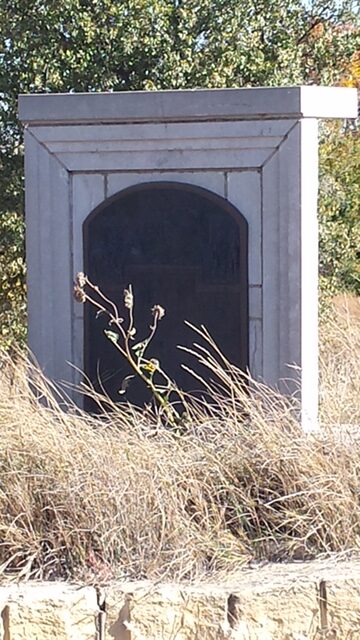
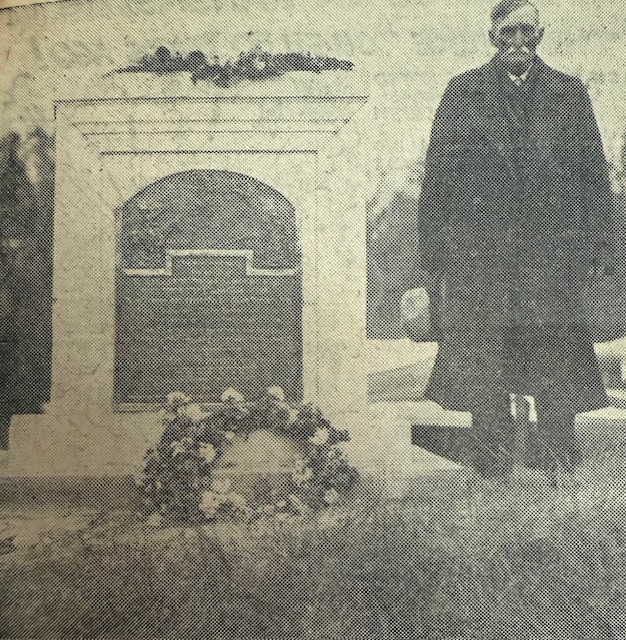
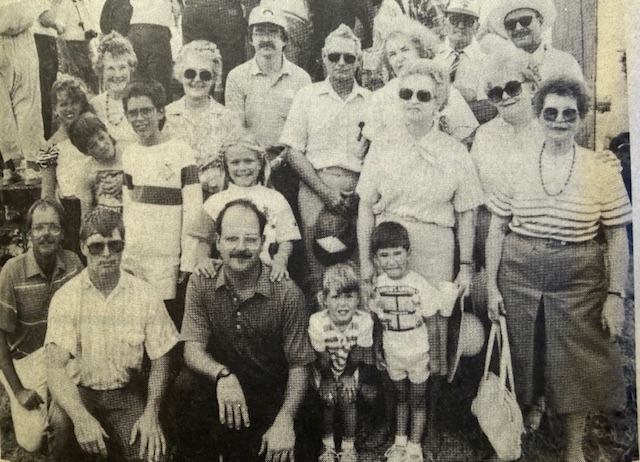
In October of 1929, a granite marker was placed at the site by the Hodgeman Community Ladies Aide Society. George Duncan was the featured speaker, and several members of the O’Loughlin family including John’s wife, Mary, and four of their children were present at the dedication. In 1989, a group of volunteers repaired and restored the marker, and in August of that year, a group of 250 to 300 people assembled at the site for a re-dedication of the monument. Third, fourth and fifth generations of the O’Loughlins attended as did descendants of the Duncan family. Both families were recognized.
SOURCES: Archives of the High Plains Journal, Jetmore Republican, and Lakin Independent; santafetrailresearch.com, and Museum archives.