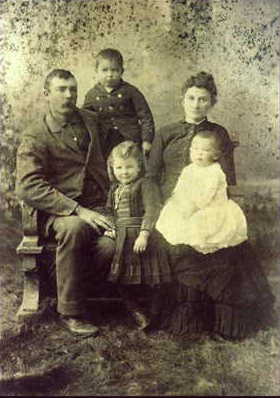
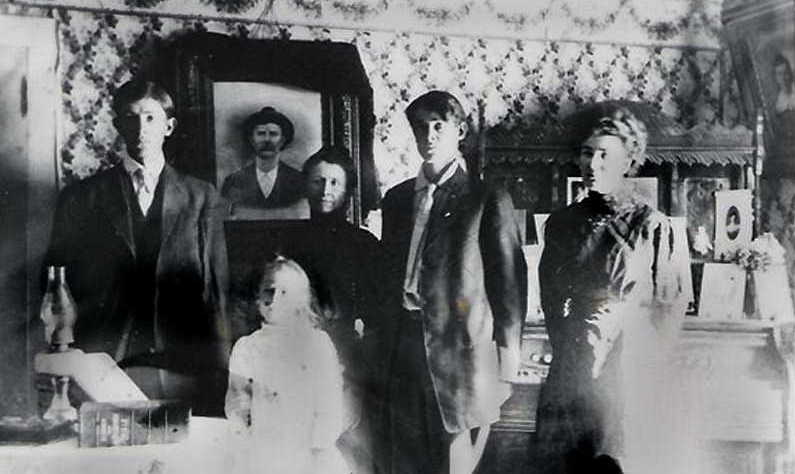
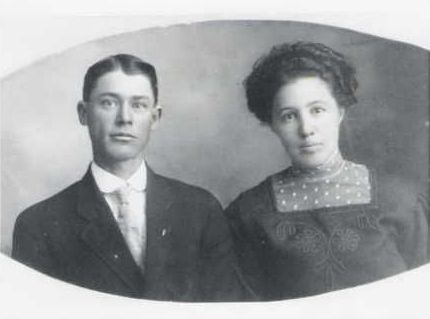
When widow Sara Searle Madison learned that the Hartland, Kansas town company was offering free lots to anyone who would locate there and build a hotel, she accepted the offer. Ahead of her arrival in 1885, she shipped a train car load of lumber and hardware along with household goods to the town site which was just north of the Arkansas River about a 20-minute train ride west of Lakin. Accompanying Mrs. Madison to Kearny County were two daughters, Lena June Madison and Jessie Cochran, and the Cochran children. Sarah’s son-in-law, Henry Cochran, was already working at Hartland for the town company and had been the one to inform Sarah of the opportunity that awaited her in the up-and-coming community.

“The train slowed down right in the midst of the open prairie – an immense cattle pasture it looked like, with some lank, long-horned cows grazing on the buffalo grass or following the narrow trails down to the river. Not even a shack to be seen, not a human being. Just cows!” Sarah recalled years later. “You can imagine the look of consternation and disappointment that spread over our faces when the conductor stopped by my seat and said, ‘Lady, this is Hartland.’”
There was no depot there yet, and the train slowly chugged about a mile further west before stopping in the middle of a large patch of sand burrs. There stood Henry with some of the town company men who were ready to welcome the new arrivals and help them from the train with their baggage.
“I’ll never forget when the night came on that first time. It seemed just a vast expanse of loneliness and desolation with us at the center. But as we sat and talked, and the men told of the plans and projects, and a cool, refreshing Kansas breeze came up, we sort of caught the spirit of the west, and soon were enthusiastically planning our little part in the big development.”
The town lot that Sarah had been given was not nearly large enough for a hotel so she had to purchase another lot. The family lived in a large tent for a couple of months while the Madison House was under construction, and the lodge was finished none too soon as the people began coming to the small burg in droves, beckoned there through glamorous and alluring circulars and pamphlets advertising the benefits of settling at the “Rose of the Valley.” By February of 1886, the boom was on at Hartland.

“From every train alighted 100 or more passengers, eager and excited, anxious to see a real estate man and get located,” wrote Sarah. Some came on the daily stagecoach, and others made their way in wagons loaded down with their belongings. In a few months, Hartland’s population reached 1,000, businesses sprung up left and right, and a school and depot were erected. A large number of the arrivals went across the free bridge that had been built across the Arkansas there and took up homesteads in the sandhills and further south in the new town of Ulysses.
Sarah’s business boomed too as claim holders, travelers, cowboys, ministers and teachers found more than shelter at the Madison House. The atmosphere there was made as homey as possible as so many of the boarders were young men and women whose own homes and families were in some distant state. Musicians often provided entertainment to the guests, and visiting ministers delivered inspiring messages. Many young women who were proving up claims were glad to help cook for their board, and Sarah’s family worked hard to provide plenty of good wholesome food.
According to the Hartland Times, the Madison House was one of the best conducted hotels in this part of the state. Sarah was a hospitable and motherly hostess who formed lifelong friendships with many of her guests and acquaintances. Among those who stayed at the Madison House were Buffalo Jones, the irrigation king of this region and one of the founders of Garden City, and Logan Garten who later became a well-known newspaper man and was secretary of the park board and public utilities commission in St. Joseph, Missouri at the time of his death.

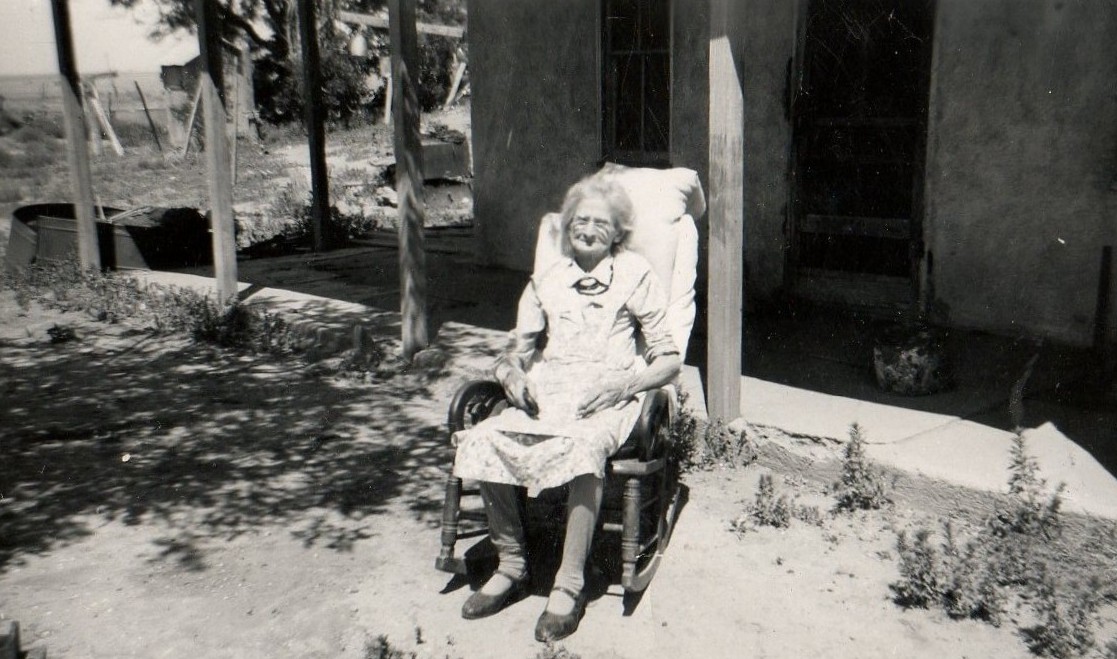
Just as she had witnessed Hartland’s growth, Sarah Madison was there to see the city fall. The town company abandoned its interests there when the salt industry drew attention back to Hutchinson where the company had been organized. Then the court house burned in 1894, and Lakin regained the county seat in the special election that followed. Hartland’s residents scattered in various directions. Sarah’s two lots were traded off for a sack of flour, and the Madison House was taken down and rebuilt in Lakin on the northwest corner of Garfield and Lincoln as a dwelling for the Cochrans and “Grandma Madison” as her friends called her. It was there that Sarah quietly passed away in her sleep in 1936 at the age of 97. Since then, the hotel that once offered respite to many a weary settler has sheltered various families. Many of the older residents of Lakin still refer to the structure as the Lucas house as it was occupied by the Dick and Mildred Lucas family for many years, but since August of 2008, the Jarrod and Jennifer Groth family have called it home.
SOURCES: Diggin’ Up Bones by Betty Barnes; History of Kearny County Vol. 1; “Looking Back 50 Years” by S.E. Madison and India H. Simmons; findagrave.com; archives of the Hartland Times and Hartland Herald; and Museum archives, with special thanks to Jennifer Groth.
Lumber and hardware have been sold at the store front located at 110 S. Main in Lakin since 1916, but the roots of the store can be traced even further back. In March of 1906, the Mosher & Armstrong lumber business was transferred to Joseph C. Hart. Joining Hart in the venture were Thornton N. Thorpe, E.R. Thorpe, George H. Tate Jr. (Harry), John Tate and Charles Loucks. The company began operations as Hart & Thorpe with Joe Hart and Thornton Thorpe as managers.
By August that year, the firm was advertising as Hart, Thorpe & Co. The business sold coal and farm implements in addition to carrying a full line of building materials including lumber, shingles, lathe, doors, paint, cement, windows, stoves and more. Hart, Thorpe & Co. operated out of a small frame building on the east side of Main Street near the railroad tracks, and everything was sold “at prices as low as honest trade principles” permitted.
The 110 S. Main location was completed in December of 1916, and the company celebrated with a grand opening on December 20. The event was largely attended and included refreshments and dancing with music furnished by the Bon Ton Orchestra. The new, larger building allowed Hart, Thorpe & Co. to expand its stock, and customers could buy anything from fine china to guns and ammunition.
When John Tate died in 1922, his interest was acquired by Cecil Tate. In December of 1923, the local papers announced that the Thorpes had sold their interest in the store to the partnership of J.C. Hart & Company; thus, the business name was changed to J.C. Hart & Co. Hart and J.R. (Ralph) Hutton managed the firm. Hutton had been working there since 1919 when he returned from serving during World War I. When Joe Hart died in 1933, his share went to his wife, Mabel, and two children, Bert and Thelma, and Hutton took over as sole manager. Under his leadership, the firm became one of the largest retail businesses in volume in the area and was one of the larger area distributors of oil and gas well drilling additives from about 1939 to 1959.
Harry Tate’s share was retained by his heirs after his death in 1944, and Hutton bought out Bert Hart’s share of the firm in 1949. When Mr. Loucks died in 1960, his interest was retained by his wife, Rhoda.
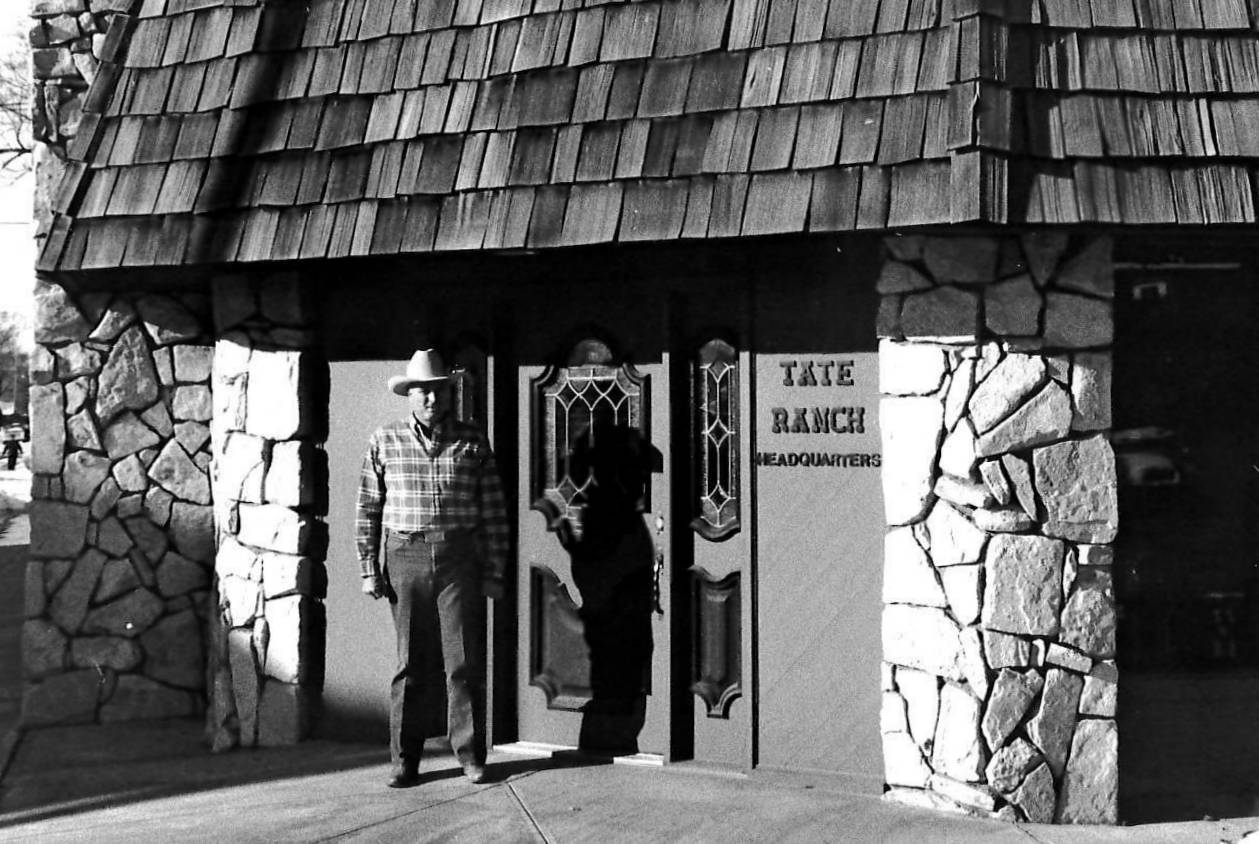
On February 1, 1965, the Tate family purchased the interests of all the other partners, and the name of the lumber, hardware, and appliance firm was changed to Tate and Company. According to the April 15, 1976 Independent, members of the Tate family who owned interests in Tate & Co. included Lakinites Brad Tate, Maude Tate, Peggy Davis, and Florence Fletcher; Violet Tate and her son, George Tate, both of Garden City; and Victor Tate, Missoula, Montana.
In November 1974, Don Hammons moved from Denver with his family to manage the firm, and in April 1976, he bought the business which continued under the name of Tate and Co. until January of 1977. Then it was given the name of Hammons Lumber and Hardware, Inc.
The building has gone by the name of Main Street Supply since 2001 when Shannon and Kelley McCormick purchased the enterprise along with Kelley’s parents, Les and Wilma Adams. Shannon said he and Kelley have been the sole owners since 2018 when Les and Wilma retired, and he has no immediate plans to sell or retire. Shannon thoroughly enjoys the work and his customers; plus, the business holds fond memories for him. His grandfather, Pete McCormick, was one of the managers for Tate & Co., and Shannon used to meander around the store on a Flying Turtle scooter as a kid in the 1970s. Tate & Co. sold the popular riding toy.
Shannon and Kelley’s daughter Brooke was three years old when they bought the business. She rode around the shop on her trike, and Shannon said they also sometimes pulled her around in the mop bucket to entertain her. Those rides were a rite of passage that their son, Bode, later enjoyed. Now a senior in high school, he works at Main Street Supply for his parents while Shannon and Kelley’s grandchildren venture about the store on the trike or in the mop bucket.


SOURCES: Diggin’ Up Bones by Betty Barnes; History of Kearny County Vol. I, and archives of The Advocate, Investigator and Lakin Independent with special thanks to Shannon McCormick.


A spell of sadness came over the Lakin community in August of 1939 when news spread that the youngest child of John and Mary V. O’Loughlin had taken his own life. Thomas Joseph O’Loughlin was born in Lakin on April 12, 1900. He attended Lakin Grade School and graduated from the eighth grade in 1915. In January of 1916, one month after his father’s death, young Tom left Lakin to attend St. Mary’s College at St. Mary’s, KS, just as his older brothers had. On Oct. 14, 1918, while still at St. Mary’s, he enlisted in the student army training corps. Having completed his term of service, he was honorably discharged on Dec. 20, 1918 and returned to Lakin. His excellent character was noted on his military record.
Tom attended to the ranch and farm work of the family enterprise and worked in his brothers’ store as well. He also worked harvest in eastern Kansas. For a time, he ran a successful restaurant venture, but his love of the outdoors lured him back into farming and stock raising.
Tom O’Loughlin was a much-loved, good-natured friend to all. He always remembered those he met, always spoke to all of high and low degree, and was willing and ready to help in times of trouble. He was known for his Irish humor and often participated in community and school events including skits and fairs. He particularly enjoyed dances.
Tom was a charter member of the American Legion Shepherd-Moore Post No. 208. He also held membership in the Old Settlers.
It was said that Tom spread sunshine wherever he went. Why then would a successful young man of good health take his own life? On June 28, 1933, Tom and his 10-year-old nephew, Billie O’Loughlin, were standing in the barn at the O’Loughlin property just southeast of the city limits. A bolt of lightning struck the barn and coming to the ground struck both Billie and Tom. Tom’s sister Helen saw both victims fall and ran to the barn. Although he had burns on his body, Tom quickly recovered from the shock, but Billie was killed instantly. Speculation is that Tom never quite recovered from the incident. It was in the same barn that Thomas Joseph O’Loughlin hung himself six years later.

Diggin’ Up Bones by Betty Barnes; History of Kearny County Vols. I & II; archives of The Advocate and Independent; and museum archives.
Helen O’Loughlin’s students benefited greatly from her love of learning. They were drawn to her warm and friendly nature, and many were better prepared for successful futures because of her guidance. Following her graduation from Lakin High School in 1915, Helen took the local Normal Training Course and received her third-grade teaching certificate. That fall, she left for Dodge City to attend college at St. Mary of the Plains.

She began substituting in the schools here in Kearny County the following year, and in 1917, she was contracted to teach at the Dodge rural school in western Kearny County. Helen began teaching third and fourth grades at Lakin in 1918 for the going rate of $65 a month, and in addition to teaching and keeping daily attendance, she also was required to do janitorial duties and help maintain the order of the schoolhouse, grounds, furniture and other district property. Helen held this teaching position until the 1922-1923 school term when she taught fifth and sixth grades. She frequently gave parties in her home for her pupils.
Helen furthered her education, receiving degrees in education and business administration from Kansas State Teachers College in Emporia and advanced degrees from Colorado State Teachers College, Greeley, Co.; Denver University, Denver, Co.; and Syracuse University, Syracuse, NY. She was hired to teach commerce at Pana Township’s high school in Pana, Illinois where she also served as the Dean of Girls, girls’ counselor, sponsor of the Future Teachers of America and coordinator of the commerce department. A competent and understanding adviser, Helen rendered unending services to the school and endeared herself to all who knew her. Also highly respected by her peers, Helen was appointed to the state chairmanship of the membership committee of the Illinois Association of Deans of Women in 1941. In 1947, she was elected secretary of the organization. She was selected in 1961 to chair the Illinois Guidance and Personnel Association of Schools of Area 12 which included six counties of Central Illinois.

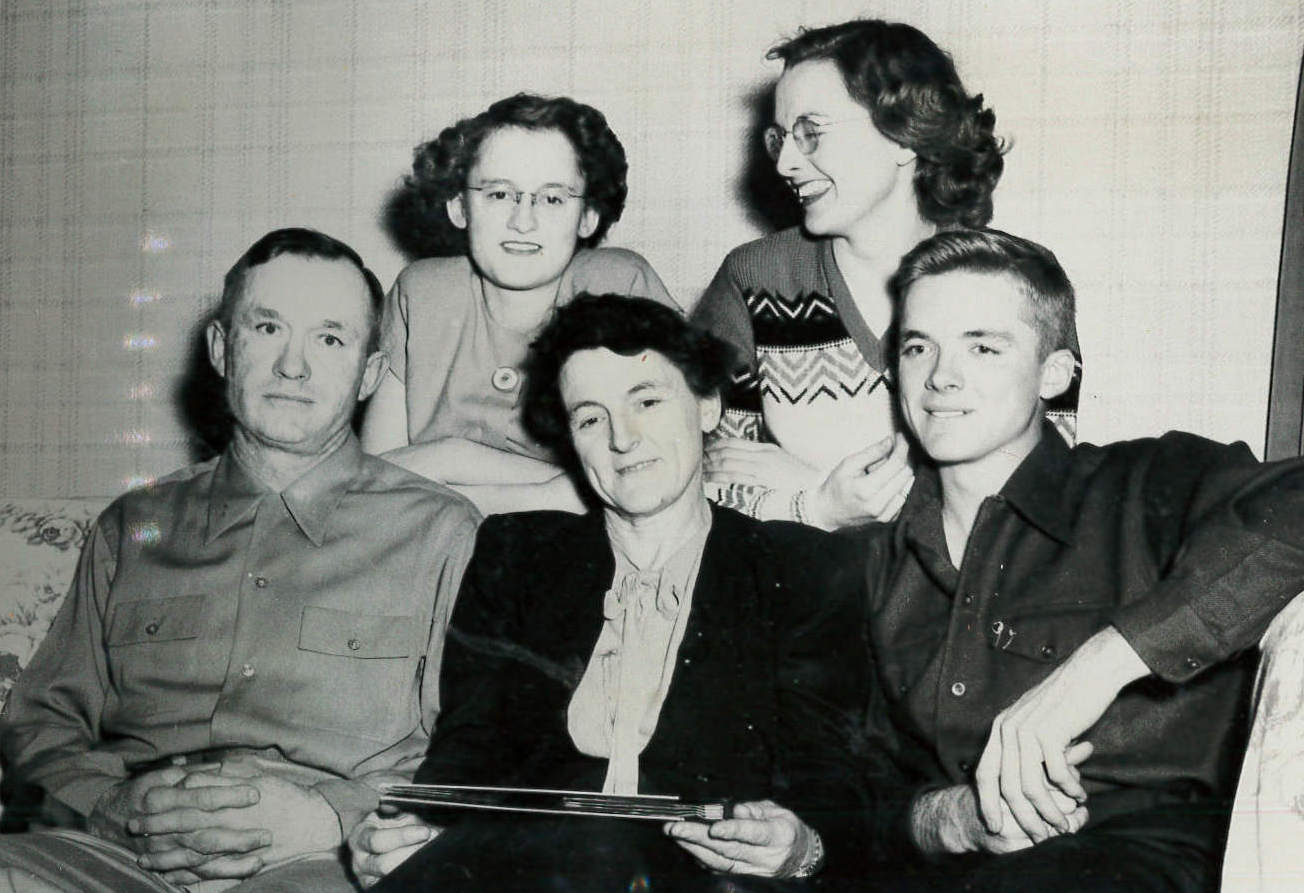
Helen retired in 1965 after 36 years at Pana, and she returned to Lakin where she made her home with Margaret Hurst and Jennie Rose O’Loughlin in the O’Loughlin family home on the southeast outskirts of Lakin. The three sisters enjoyed entertaining friends and relatives and were well liked by those who knew them.
At Lakin, Helen was involved with the Kearny County Old Settlers Association, Lakin Womans Club and the Kearny County Historical Society. She was a past president of the Lakin Alumni Association, was on the junior planning committee for the Chautauqua, and was a charter member of the American Legion Auxiliary of Shepherd-Moore Post No. 208. She was also a member of St. Anthony’s Catholic Church.
The youngest of John and Mary O’Loughlin’s four daughters, Helen Genevieve O’Loughlin was born at the family home in Lakin on August 21, 1897, and she died there at the age of 79 on July 22, 1977.

SOURCES: 1950 Pana Township High School Yearbook; Kearny County Kernels by Monte Canfield, Sr.; Diggin’ Up Bones by Betty Barnes; History of Kearny County Vols. I and II; archives of the Chicago Tribune, Decatur Daily Review, Dodge City Kansas Journal, Advocate and Independent; and Museum archives.


Jennie Rose helped organize and became a charter member of the Lakin Veterans of Foreign Wars Auxiliary serving as the organization’s historian. When the local chapter disbanded, she transferred her membership to the Garden City post. She was also a charter member of the Book Club and held membership in Kearny County Old Settlers, Lakin Woman’s Club, St. Anthony’s Catholic Church, the Ladies Altar Society, and the Retired Teachers Association.
Charming, outgoing, talented and happy are all words used to describe the third child of John and Mary O’Loughlin. Mary Catherine O’Loughlin, better known as Mame, was born July 3, 1886, above the O’Loughlin mercantile on Main Street, and she lived to the ripe old age of 103. Mame attended Lakin schools until the fall of 1902 when she went to Wichita with her older sister, Margaret, to attend Mount Carmel. She became proficient in Latin while there, and as a member of the Class of 1906, Mame received a gold cross in catechism and music during June commencement exercises. She returned to Lakin and to the high school when it became a four-year institution, graduating with the class of 1912.

After working in several county offices and clerking in her father’s store, Mame moved to Dodge City where she worked as a saleslady for Locke Mercantile. On February 19, 1916, she wed Frank Fleetwood Thomas at the residence of the Reverend John Handly in Dodge City. Fleet was the son of Rev. Franklin F. and Ella Thomas who had moved to Lakin in 1907 when Rev. Thomas became pastor of Lakin’s Presbyterian Church.
Fleet and Mame returned to Lakin to make their home, and they welcomed a son, Frank Forrester, to their family in 1917. Two years later, they were blessed with another son they named James Edward. Two daughters were also born to the couple, Mary Catherine (Mrs. P.D. Phillips) in 1922 and Marcella Claire (Mrs. Marvin McVey) in 1924.


Mame devoted most of her life to homemaking and rearing her children. She raised chickens, gardened and canned. She also enjoyed club work, flower gardening, crafts and visiting, and her unique personality touched all those who knew her. Mame was not given to worry nor did she ever meet a stranger. Always ready to lend a hand or do whatever she could do to help, Mame loved holidays, birthday gatherings and after-school tea parties with her grandchildren who delighted in her expert story-telling skills.
Mame’s faith was steadfast; she simply trusted God. While Fleet continued his membership with the Presbyterian Church, Mame remained an active member of St. Anthony’s Catholic Church and the Altar Society. She devoted much time and labor to help build the first church and was the first organist of the parish. She was a charter member of the Kearny County Historical Society and assisted with the Kearny County History volumes by verifying biographies and genealogy and doing research. Mame was also a charter member of the Lakin Women’s Club which established county welfare, sponsored a public library, promoted health drives and helped with other activities and charities.
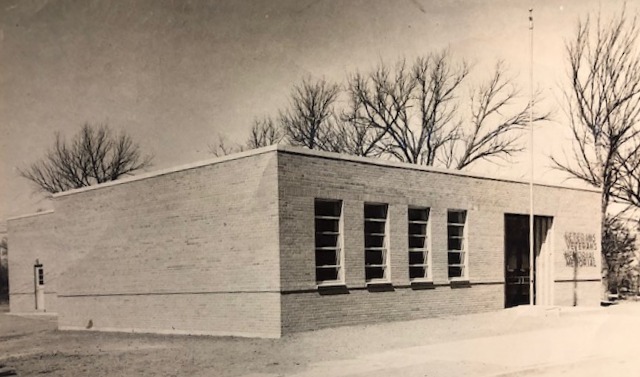
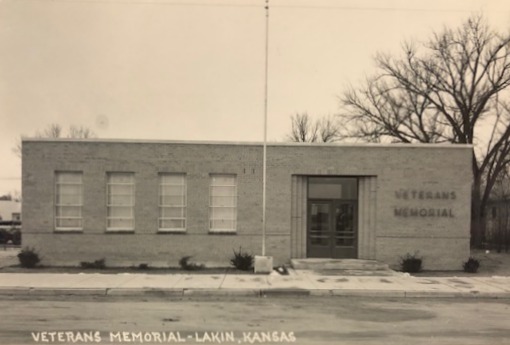
She served as the first president of the Veterans of Foreign Wars Auxiliary and also belonged to the American Legion Auxiliary. During World War II, women gathered in the Red Cross room of the courthouse to knit and sew blouses, hospital gowns, sweaters and other articles. Later the sewing was let out to organizations and individuals. As she was the production chairman, all work had to pass Mame’s inspection. This work was very important to her as both sons were serving their country. Mame was the first president of the Lakin Home Demonstration Unit which was the first organization to provide upkeep for the Veterans’ Memorial Building. In 1972, she was one of nine Lakin Extension Homemaker members who were 80 years of age or older. She also belonged to the Blossom Club and Kearny County Old Settlers.

Fleet suffered a fatal heart attack in July 1953 while working near Scott City. Mame remained in their family home until October of 1984 when she entered High Plains Retirement Village. She had witnessed many changes and advancements in her long life, but Mame dearly missed her parents and siblings who had all gone before her. She died April 28, 1990, at Lakin. Her grandson, Joe McVey, is the lone O’Loughlin descendant who still resides here.
SOURCES: Diggin’ Up Bones by Betty Barnes; History of Kearny County Vols. I & II; archives of Catholic Advocate, Dodge City Daily Globe, Investigator, Advocate and Lakin Independent; and Museum archives
Margaret Bridget O’Loughlin Hurst took to heart the lessons taught to her by her mother. She was a faithful Catholic who was devoted to her family and to her community. Known as Maggie in her younger years, she was the eldest child of John and Mary O’Loughlin’s seven children and was born September 27, 1883, 10 years after her father established his trading post and became the first permanent resident of Lakin.

Maggie attended school in Lakin until leaving for Wichita where she received her high school education from the Sisters of Mount Carmel. She graduated with high honors and received a gold medal for Christian doctrine in June of 1903. The popular and well-known young lady returned to Lakin where she eventually became deputy clerk in the District Court. On February 12, 1916, at the Catholic Church in Garden City, Maggie married former Southside farmer Bertchard Hurst who had recently moved to Ingalls where he was engaged in the hardware business. The two made their home in Ingalls until 1920 when they moved to Dodge City. Bert became a highly successful salesman for J.I. Case. He contracted pneumonia after assisting motorists through snow drifts during a severe storm in February 1927 and died on March 5 at the age of 39. Margaret was left to raise their two children, eight-year-old Betty Hurst (Williams) and three-year-old Frederick. Eventually the threesome moved to Lakin and into Margaret’s childhood home to care for her mother, Mary.

During the Great Depression, there were almost no employment opportunities for teenagers, and many young people had nothing to occupy their time. To combat this situation, the National Youth Administration was created, and Margaret was appointed to head the program in Kearny County. She inspired many young people to take an interest in projects for the betterment of the community. The NYA sponsored programs for vocational guidance and recreation, and under Mrs. Hurst’s direction, the local group made many useful things such as road and bridge signs, chairs and tables for schools, and birdhouses for Preston Osborn’s biological survey,
Margaret began researching history in 1942 and became an authority on the history of Southwest Kansas and Kearny County. She was elected as the first historian of the Kearny County Historical Society when it was organized in 1957, and she was an indispensable guide through the tangle of history of the early years of the county. Margaret lived through a great deal of the history herself, remembered stories told to her by the old-timers, conducted many personal interviews, and saved historical articles. She spent a great deal of time corresponding with handwritten letters to those who had moved away from the community to gather information for the History of Kearny County volume books.
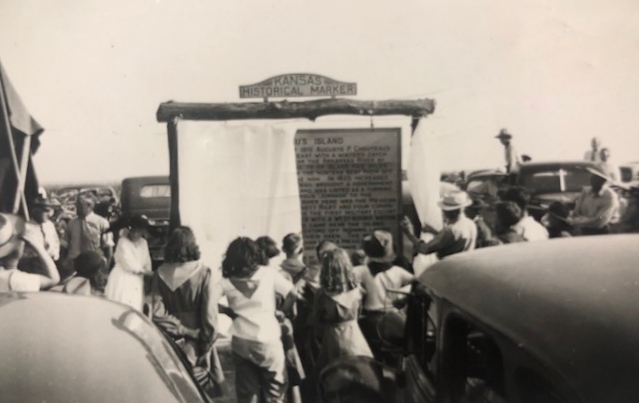
In a note addressed to Naomi Burrows, chief of the editorial staff of the second volume, Margaret wrote, “I have sent more than 60 envelopes to the museum, but I am afraid time will run out for me before I get this work completed.” Margaret lived to see the second volume published and tendered her resignation as historian at the age of 92. She died November 3, 1977, less than a month after attending ceremonies for the unveiling of the O’Loughlin monument and dedication of the Kearny County Historical Society site which was donated by the O’Loughlin family.
Margaret O’Loughlin Hurst was a member of St. Anthony’s Catholic Church and the Altar Society, Veterans of Foreign Wars Auxiliary, and Kearny County Old Settlers where she served terms as president and secretary/treasurer. She was a kind and true pioneer of the western plains who was always eager to share her knowledge and help others.

SOURCES: Diggin’ Up Bones by Betty Barnes; History of Kearny County Vols. I & II; archives of the Wichita Daily Eagle, Catholic Advance, Advocate and Independent, and Museum archives.
Much has been written about Lakin’s founding father, John O’Loughlin. He was already highly successful and well-known prior to his marriage, but what would John’s life and the community of Lakin have been like without Mary Veronica O’Loughlin? The matriarch of the O’Loughlin family, Mary’s life was the epitome of living for God, family and community.

Born in May of 1861 at Xenia, OH, Mary was the eldest daughter of five girls and one son born to Dennis and Bridget Farrell who had migrated to America from Ireland. The Farrell family came to the Sunflower State in the 1870s, moving in with an uncle at Brookville. Mary was tasked with looking after the younger children. When she was left in charge of several younger cousins, a sudden flood came down the stream near where the house was built. Mary took the children to the second story where she kept them safe for several hours before help arrived. When the house caught fire, she took the children to safety and ran back into the burning building when she discovered that a small baby had been left sleeping inside. Mary reached the open air with the infant in her arms just as the entire structure collapsed. Her courage, resourcefulness and protective nature were just some of her endearing qualities.
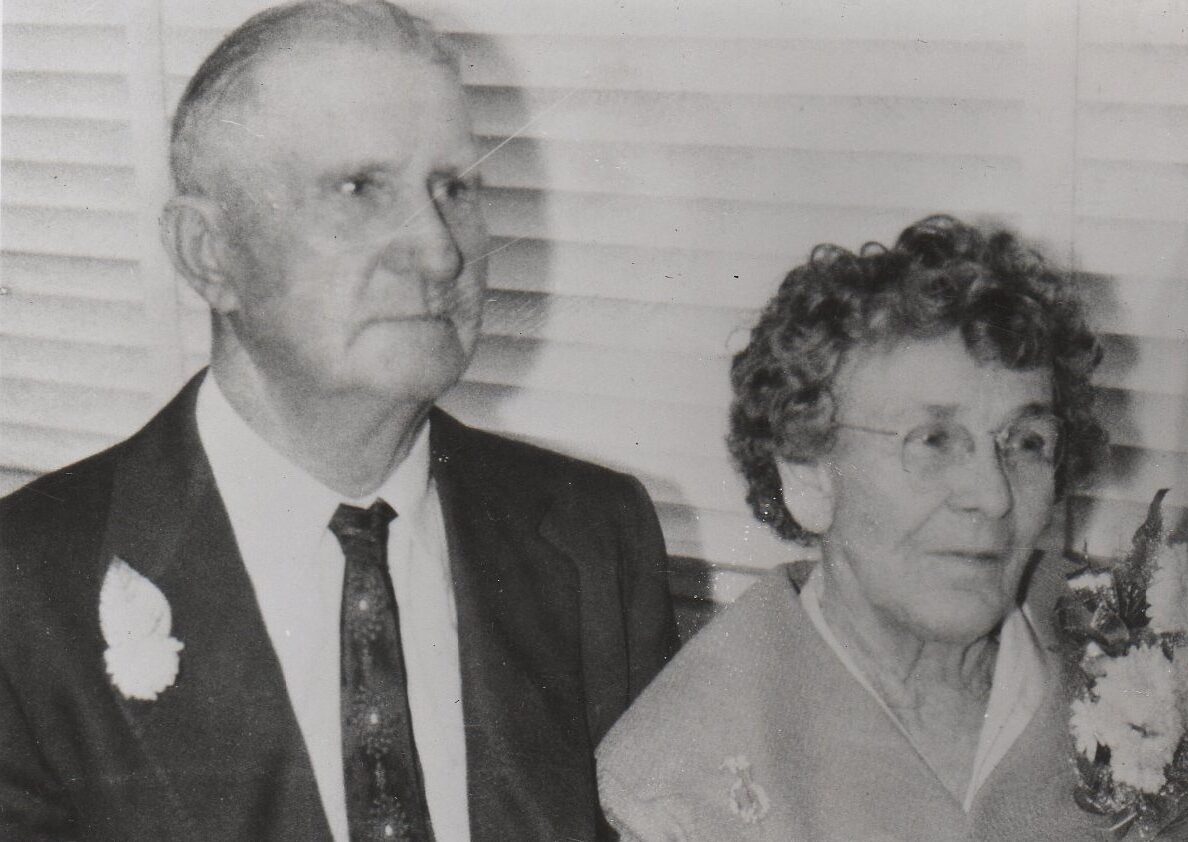
In April of 1874, the Farrells moved further west to Wilson where Mary attended public school. She had earlier attended parochial school at Junction City for one year. In her parents’ home on February 5, 1882, Mary married John O’Loughlin who was 19 years older than her. A fine supper was served to the large crowd in attendance, and because Mary was well and favorably known in the community, she and John received some very fine and costly gifts. The reception lasted late into the night with musical entertainment being provided by some of the locals. John then brought his bride back to Lakin, and they were given a reception in the Boylan’s White House. The late Carrie Davies remembered that Mary was very shy and amazed that so many people showed up to wish them well. Perhaps Mary was unaware that her Irish husband was such a hero in these parts. The newlyweds made their home upstairs in John’s mercantile store building that had been moved from near the railroad to the corner of Main and Waterman. It was there that Mary gave birth to their first child, Margaret, in 1883. Six more children would follow: William, Mary Catherine, Jack, Jennie Rose, Helen and Thomas.
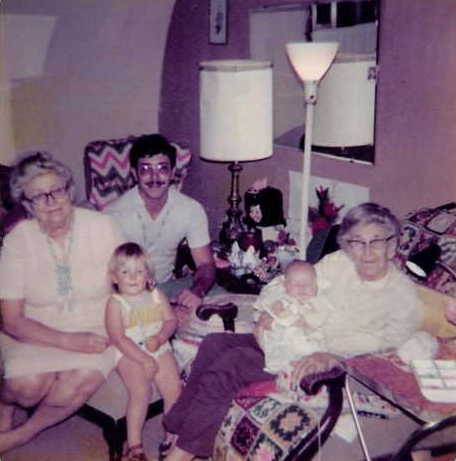
In 1888, the O’Loughlin family moved to their new home located on the southeast outskirts of Lakin. Education for her own children and those of the community was important to Mary, and a large number of men and women spent time in the O’Loughlin home where they were taken into the family and encouraged to attend school and prepare themselves for lives of usefulness. A devout Catholic, Mary offered her home for services prior to the church being erected. She was a gracious hostess and entertained often.

A kind friend and neighbor, Mary walked several miles many times to “sit up” and care for the sick and prepare the dead for burial. “No night was too dark nor a day too stormy to prevent her from going to the aid of a family in need at a time of sickness, injury or death.” When a floral club was organized in 1909 to improve and beautify the grounds of the Lakin Cemetery, Mary was elected president. She had a green thumb when it came to flowers but especially rare and unique ones. She also served a stint as president of the Old Settlers’ Association, was the first vice-president of the American Legion Auxiliary, a member of the Lakin Woman’s Club, and was one of a group of Lakin pioneer women who made garments and gave them to little children and other needy persons of the community.
As the O’loughlins had ranches on the Canadian and Cimarron rivers, Mary went several times to the Cimarron, a distance of 50 miles, driving a horse and buggy. Most of her time; however, was spent in her home taking care of her seven children and raising them with the same priorities and values of which she lived by. The devoted wife and mother died in October of 1936. An unusually large number of old-time friends were among those who came to extend their sympathies to her family and show their respects for Mary, a true pioneer woman who had influenced and helped the community in so many ways.

SOURCES: Diggin’ Up Bones by Betty Barnes; History of Kearny County Vols. I & II; Museum archives; and archives of Wilson World, Dodge City Daily Globe, Lakin Investigator and Advocate.