During the first decade of the 1900s, tens of thousands of Czech and Slovak immigrants came to the United States in search of the American dream. They hailed from the Czech lands of Bohemia, Moravia and Slovakia which were all part of the Austro-Hungarian Empire before 1918 and World War I. From 1900 to 1910, official U.S. immigration records did not list “Czechoslovakia.” Instead, these immigrants were categorized by their language or broader empire of origin and were often listed under Austria or Hungary. Many had been encouraged by fellow immigrants who sent glowing letters home about American jobs and land availability. Hoping to escape poverty, religious discrimination, the military draft and political and cultural repression, they arrived on American soil ready to roll up their sleeves and get to work.
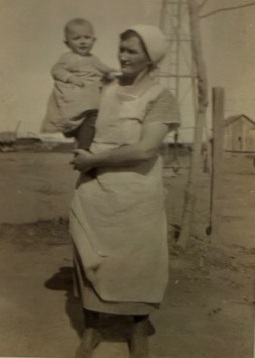
Josephine Horcik was born in Prague, the daughter of a railroad worker. She had learned about the glowing prospects in the U.S. from rich Americans passing through her European country. At the tender age of 17, she sailed to America and landed at Baltimore where she was to meet a family who had paid her passage and for whom she was to work as a maid. Josephine spoke both Bohemian and German but not English. She was not able to communicate and became bewildered and lost in the city. A friendly German police officer guided her to an American family who hired her to do household work. The year was 1905.
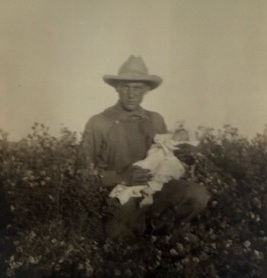
Two years earlier, Joseph Zoubkova had immigrated to America aboard the Koenig Albert to the port of New York. Joe, as he was familiarly known, was a native of Moravia. He Americanized his surname to Zubeck, and according to the 1910 census, he did speak English.
As fate would have it, the two met at a party of Bohemian immigrants and were soon married. Son Frank was born in Michigan. Thomas was born in Pennsylvania, and Joe Jr. in Ohio. Another son died soon after birth. In 1911, the Zubeck family came to Southwest Kansas, answering the call of the U.S. Sugar and Land Company (later Garden City Company) for people to work in the sugar beet industry. Both Joe and Josephine had worked similar fields in their home country. Joe was hired and placed in charge of maintaining irrigation pumps in addition to farming.
When they arrived at the Deerfield train depot, they were greeted by the sugar company’s people who took them first to eat and then to the house near Deerfield where the family would live. Josephine was amazed that not only was the house furnished but even the beds were made up with sheets and blankets. Sons Jimmy, John and Bob were added to the fold, but another son and two daughters died in infancy. In 1912, Joe applied for his naturalized citizenship.
Joe excelled at farming. In June of 1926, the Garden City Telegram gave the following report on his beet crop, “A PROGRESSIVE FARMER: Finney County residents who have taken a trip up the valley along the trail have remarked frequently about a field of beets on the hill just beyond Deerfield. These beets are fully a month in advance and most beet fields, are a good stand, well cultivated, and in fine condition – the kind that makes the big yield when the digger digs.” According to the article, factory people said that Joe did that kind of farming with all his crops. He also grew alfalfa, wheat and sorghum and raised cattle too.
Joe’s successful farming was also mentioned In Conquest of Southwest Kansas. He reportedly had 10 acres of beets that averaged 18 tons an acre and 10 that averaged 15 tons per acre in 1930, exceeding the overall average in the area of 12 tons per acre. Then came the Great Depression. According to granddaughter Pam Zubeck Cunningham, the family went to Ohio to work and had been there less than a year when they returned to gather the rest of their possessions in 1937. They never made it back to Ohio. Instead, Joseph met an untimely demise that October when he was killed almost instantly in a head-on collision on HWY 50 east of Deerfield. He was only 52.
Josephine and her sons stayed and continued to work the farm. The rains returned, and in a 1944 letter written in her native tongue to a Chicago Bohemian newspaper called, “Hlasatel,” Josephine wrote about their abundant crops. “Yields were good: barley yield was from 25 to 60 bushels and wheat from 30 to 50 bushels so that there will be plenty of bread.” But she also talked about hunger. “Here is how my son writes to me from Italy: “Mommy, you have already seen enough, but you have not yet seen so many hungry people like here. As soon as we sit down somewhere, we have children around us, they beg for food, we give them what we have, including potatoe peelings, what we throw away from the kitchen. The children eat everything. May the wheat or flower be shipped to them.” John was serving during World War II and was injured twice in battle as an infantry soldier but was treated in field hospitals and remained in the service. He received the Purple Heart with one bronze oak leaf cluster, bronze arrowhead, the Good Conduct Medal and American Defense Service Ribbon. After his tour of duty, John returned to Deerfield and worked for Harley Rector and the Santa Fe Motor Co. before moving to Garden City where he was a welder for East Side Iron.
In addition to farming, Frank worked for Santa Fe Motors as a mechanic. Jimmy was a lifetime farmer and also a Lynx corn seed dealer. Joe, Jr. farmed and was a carpenter. Thomas never married but lived with his mother until her death. He and Bob farmed together, and Bob also raised hogs and cattle on a small farm a half mile south of Deerfield. That operation was moved to their farm north of Deerfield in 1965 when the great flood came roaring down the Arkansas River and covered the valley with flood waters. Bob later worked for Central Power Inc. and a John Deere dealership in Garden City.
Although Josephine Zubeck never became a US citizen, she did teach herself English. She was shy and reserved and kept mostly to home where she cooked with vegetables grown from her garden and baked fresh bread. The simple pleasures brought her joy, and she relished long walks in the country, referring to the trees and skies as her church. She died in 1963 a few months before her 77th birthday.
SOURCES: Diggin’ Up Bones by Betty Barnes; Harvest of Memories by Pam Zubeck Cunningham; Czech Immigration to America by Magda Jurčíková; Conquest of Southwest Kansas by Leola Howard Blanchard; museum archives; newspapers.com; Ancestry.com, and steveszabados.com. Special thanks to Pam Cunningham and Ann Zubeck Brink.