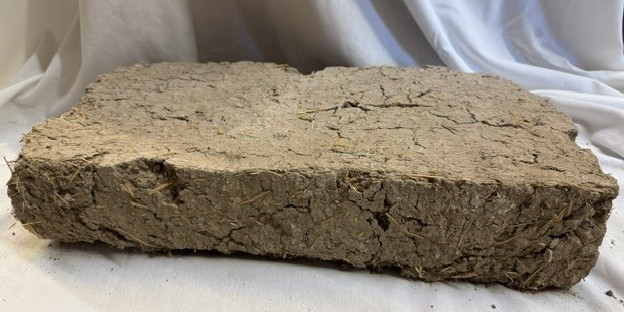
One of the oldest building techniques known to man is adobe construction where raw materials like soil, water, clay, and small rocks are molded into blocks. Finely chopped-up straw or other fiber such as pine needles or cow dung is added to these raw earth materials which helps the adobe dry more uniformly and prevents blocks from curling or cracking. Then the blocks are stacked to build a structure in much the same way as bricks are.
Adobe was one of the construction techniques used by pioneers on the plains of Kansas where timber was hard to come by. Over the years, the rudimentary technique was improved upon, and by the time that Harry Armstrong was building homes of adobe blocks, the finished products were far more stylish than the mud huts that originally dotted the Kansas prairie.
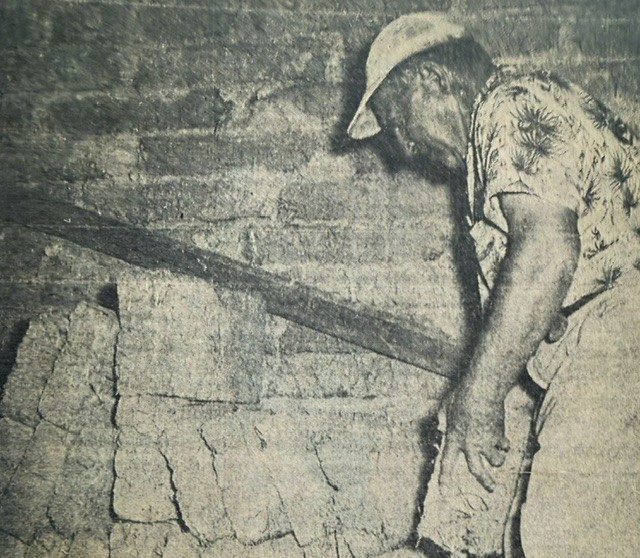
In 1934, Armstrong began work on a well-known Highway 50 roadhouse in Lakin. The Tumbleweed was constructed with 4-inch thick, 10×14 inch adobe bricks that were first stirred together in a mixing machine. The conglomeration of mud and straw was placed into molds on the ground and required roughly six weeks to dry.
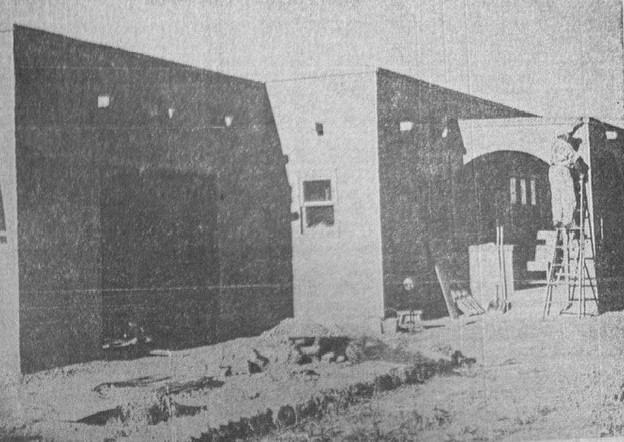
Armstrong started his first adobe house in 1937 and by 1955, he was hard at work on his third adobe home, a five-room structure with a garage and attached carport. The house had a touch of New Mexico and Texas in it as well as a hint of Navajo. Dubbed “Spanish Ranch” by Harry, the house required approximately 3,000 adobe bricks, all mixed and molded by Armstrong and his part-time help. Each brick was 10 inches by 20 inches, and the soil for the bricks was taken from the ground beneath the structure. Even the partitions of the individual rooms were constructed of mud bricks placed on end and laid with a mixture of sand, gyp and water.
Armstrong was a firm believer in the natural insulation of adobe homes both in winter and summer. Building with adobe provides exceptional natural energy efficiency with walls absorbing heat from the sun during the day and slowly releasing it inward at night which keeps interiors cooler when it is hot and warmer when it is cold. This natural temperature regulation reduces or eliminates the need for expensive mechanical heating and cooling systems. In addition, because adobe bricks are constructed of simple natural mixtures of earth and organic fibers, they require little to no energy-intensive manufacturing. These materials are typically locally sourced which cuts down on transportation and material costs. Armstrong estimated that the cost of his 1955 project was $1,500 plus labor.
We don’t have an official count of all the homes that Harry built in this neck of woods, but if you have an original Armstrong or know of one in town, we would love to hear from you.
Since Armstrong’s family home was on one of the last homesteads of the county about 17 miles northwest of Lakin, there’s a good chance that he helped construct the Columbia Grange Hall which sat 10 miles north of town. The Grange Hall was built in the 1930s by volunteers and made from adobe blocks. When the structure was dismantled in 1997, some of the blocks were brought to the Museum and reconstructed by Norman Simshauser and Doc Maerz into a one-room hut in our machinery building. The adobe hut is a great example of architectural genius from the days when man used what he had to make a suitable home for his family.
SOURCES: Architectural Digest, Diggin’ Up Bones, The Garden City Telegram and museum archives.