Known at the time as “The Great War”, the first world war officially ended when the Treaty of Versailles was signed on June 28, 1919, in the Palace of Versailles near Versailles, France. However, fighting had ceased seven months earlier when an armistice, or temporary cessation of hostilities, between the Allied nations and Germany went into effect on the eleventh hour of the eleventh day of the eleventh month. For that reason, November 11, 1918, is generally regarded as the end of “the war to end all wars.”
President Woodrow Wilson proclaimed November 11, 1919, as the first Armistice Day observance, but it wasn’t until 1938 that Congress made Armistice Day a legal federal holiday dedicated to world peace and World War I veterans. Following World War II and the Korean War, the name was changed by Congress to Veterans Day and was altered to honor American veterans of all wars. As the official observance approaches, Kearny County Historical Society would like to thank and honor all past and present veterans. We would also like to take this month to remember a few of our own.
The Second Battle of the Marne (July 15 – August 6, 1918) was the last major German offensive on the Western Front during World War I and a decisive turning point in the conflict. German armies fought against the combined forces of America, France, Britain and Italy.
The German Offensive was launched on July 15, 1918 by General Erick Ludendorff who intended to split the Allied armies, capture Reims and force France out of the war before American troops could arrive in overwhelming numbers. However, the Allies anticipated the attack and set up a defense with lightly manned front lines and decoy trenches. When German troops crossed the Marne River, they encountered fierce resistance. In fact, the U.S. 3rd Infantry Division held its ground so tenaciously that it earned the famous nickname, “Rock of the Marne.”
On July 18, the Allies launched a massive, well-coordinated counteroffensive combining French and American troops with hundreds of tanks, aircraft and surprise infantry maneuvers. The assault forced the Germans into a permanent retreat and broke its military momentum. According to Encyclopedia Britannica, the failure of the German drive shifted the balance of power permanently to the Allies, leading straight into the Hundred Days Offensive and the November 1918 Armistice.
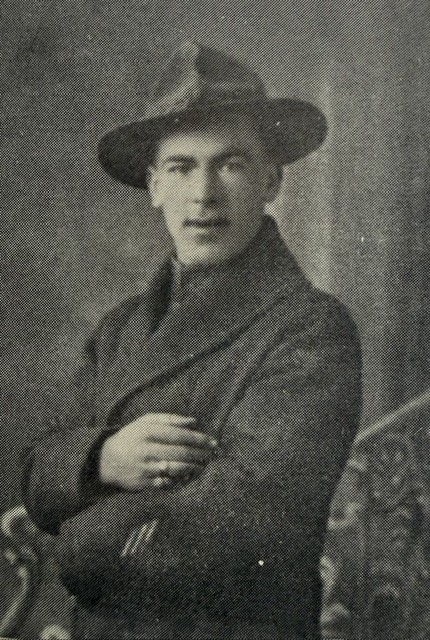
Charles Moritz was wounded on the first day of the Second Battle of the Marne. He had been working the telegraph in an area that was heavily shelled and left his dugout to repair some wires. On his way back, he discovered his signal officer downed and bleeding. “I couldn’t let my officer lie there and die, so I found a blanket and put him in that and carried him carefully to the hospital, the shells still flying all around us.” A large explosive burst within 10 feet of Moritz, and a piece of shell hit him in the left leg, four inches above the knee. “It tore a great hole in my leg, but I still kept on going with my officer, trying to reach the hospital, the blood running out of my left shoe.”
Moritz’s heroic action saved the life of his captain. After Moritz’s surgery and subsequent recovery, he returned to action and was wounded again in late October. Moritz was discharged in August of 1919, but in 1920, he re-enlisted with the Army of Occupation for a period of three years. During World War II, Charles worked at the Garden City Air Force Base.
The son of George and Catharina Moritz, Charles was born in 1891 in Larochette, Luxemburg and came to the United States when he was 12 years old to make his home with an aunt and uncle in Boston. He came to Western Kansas in 1914 and married Emma Eveleigh in 1924. The couple had four children, including a daughter who died in infancy.
Cpl. Moritz was a member of the Lakin American Legion and VFW posts, Odd Fellows and Woodmen of the World lodges. In 1941, during the Chouteau Island Celebration, Charles sang French songs bringing forth, “the loudest and most spontaneous outburst of applause of the day.” Charles Moritz died April 7, 1948, and is buried in the Lakin Cemetery.
SOURCES: U.S. Department of Veteran Affairs; Diggin’ Up Bones; Service Record World War I and II Kearny County; History of Kearny County Vol. I and II; The Lyons Republican; EBSCO.com; Encyclopedia Britannica; and Wikipedia.