One hundred and forty years ago this month, two great blizzards descended upon Kansas. The first wave began New Year’s Day with heavy snowfalls, high winds and freezing temperatures. It arrived at Dodge City about noon and continued until the early morning hours of January 3. Although little snow accompanied the second blizzard which hit January 6, temperatures plummeted to well below zero with strong winds creating massive snow drifts. The wind combined with the brutally cold air made this one of the coldest periods on record.
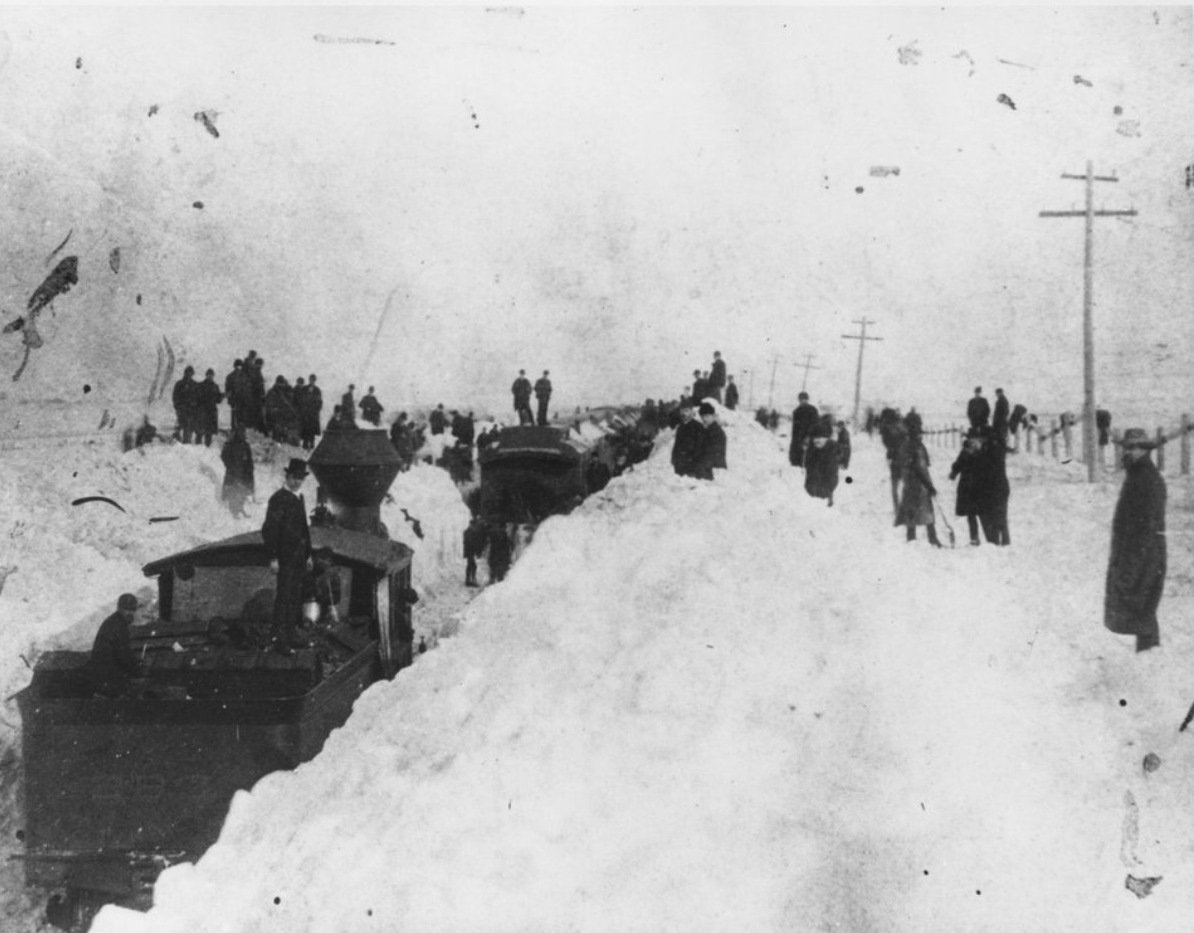
Businesses were paralyzed, and passengers were stranded on trains. According to the January 9, 1886 Advocate, snow drifts along the railroad had to be removed with the slow process of pick and shovel. The train that came through Lakin on the 3rd was drawn by three powerful engines and had a snow plow and a large number of laborers who had been “severely worked” clearing the track east of here. Several snow-bound trains stopped at Lakin, and local hotels and restaurants were kept busy. Over 100 people were served breakfast at the Commercial Hotel on January 5th. Following the second storm, there were no trains here for two days. The January 16, 1886, Advocate reported that a call of arms went out to all available Lakin men to work on the snow drifts across the railroad tracks, and quite a number of these men got frostbit on their feet and ears.
An estimated 100 Kansans froze to death. Many of the dwellings on the open prairie had been quickly and cheaply built, and settlers were ill prepared to protect themselves from such cold. According to The Advocate, during the second storm, “the snow that fell the previous Saturday was taken up in one continuous cloud and blown into every crack and crevice of our houses and buildings” and for 24 hours, it was almost impossible to travel just 50 yards without getting bewildered and lost in the blinding snow. The Topeka Daily Capital gave accounts of the most harrowing of the snow stories: people who died within feet of their own homes which were obscured by snow, men and women who froze to death along with their horses, and people whose frostbitten limbs had to be amputated.
One amazing tale of survival involved George Hill and Charlie Nation who lived near Kendall. The twosome had decided to pick up a few dollars by gathering dry bones on the prairie as the weather was nice and the bone market was active. They hitched a team to a wagon with a large box and drove southeast to the vicinity of present-day Ulysses in Grant County where the blizzard came upon them. Realizing they would be unable to face the storm and reach home or other shelter, they did the next best thing. The men unhitched the team and tethered them securely then unloaded the wagon box. They turned it upside down on the ground with themselves and what supplies they had beneath it. George and Charlie remained there for 36 hours. When the storm abated, they emerged, put the box back on the wagon, hitched up the team which had miraculously survived the storm and proceeded homeward, little the worse for their experience.
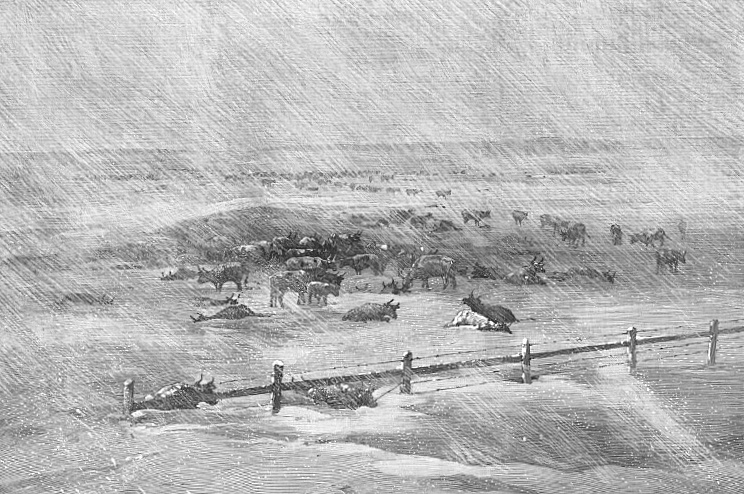
Hogs being shipped by rail were froze solid as trains sat idle, prevented from moving forward by drifting snow. Animals out in the open with little to graze upon were caught hungry and without shelter. Alex Cross lost his entire herd of sheep, estimated at 1,300 head, at his ranch northeast of Lakin. An era of large, expansive cattle ranches was in full swing, and these businessmen felt the full wrath of the storm. Cattle wandered blindly in the terrific cold and finally dropped exhausted, perishing by the thousands. The Santa Fe Railroad had just completed fencing their right of way with heavy posts and six barbwires on each fence. Dead frozen cattle were piled against this fence on the north side so thick a person could supposedly walk from Dodge City to Deerfield on dead cattle, possibly even to the Colorado line. Some men were hired by the Santa Fe to dispose of the animals, but the task of removing the dead cattle was not an easy one and carcasses could be seen for months to come. That spring, W.H. Stutzman drove his team and wagon from about 25 miles northwest of Halstead to a homestead 15 miles north of Kendall. Later, his wife joined him with their one-year-old baby, coming by way of the Santa Fe. From the train’s windows, Mrs. Stutzman saw thousands of carcasses piled on top of each other in the river and along the north side of the railroad fence.
At Hartland, Nellie Cochran Tipton was safely held up during the blizzard in her grandmother’s unfinished hotel, the Madison House. She later wrote that she would never forget seeing those long-horned cattle crowded around the building for protection. They, too, froze to death piled up.
John Andress had better luck than most ranchers in the area. He and some other men on the south side of the Arkansas River had cut and stacked hay together. Their neighbors laughed at the storing up of feed, but when the blizzards arrived, Andress’ cattle stayed close to his shed. Because they had plenty to eat, all but one of John’s cows survived.
The storms wiped out at least 75% of the cattle population – the most unprecedented loss of livestock ever experienced on the plains. Cattle companies and most ranchers went bankrupt, but there was a silver lining for the hundreds of homesteaders who arrived in the area shortly afterwards. The enormous snows had left the soil soaked with moisture which led to the raising of bountiful, prosperous crops. These homesteaders felt they had reached paradise.

SOURCES: History of Kearny Co. Vols. I & II; Kansas State Historical Society; National Weather Service; Hathitrust.org; History.com; and archives of The Advocate.
I really appreciated being able to read this well written and sharing the depth of the story of the hardships and challenges pe0ple faced in their desire to keep moving West , I’m a southeastern US native and from early fifth grade school years I have been interested in stories of early years migration from the east to the middle US and the stories of the people who so bravely made that journey. . Several years ago my family and I moved to Kansas where my children still live. Due to family roots and needs of family here, I returned home, but that interest in Kansas history and the appreciation of Kansas and its people continues.. I will be sharing this story with friends.
Thank you for your feedback! So glad you enjoyed the story!