Chances are John Danzer never saw a yucca plant until he immigrated to the United States. The German-born bachelor was in his early 20s when he came to Kearny County in the 1880s and settled north of Lakin near Onaica. A school board member and Hibbard Township clerk, Danzer was dubbed, “John, the Well Digger,” but he was best known for the baskets he made using native prairie grasses and the yucca plant commonly known as soapweed. According to the late Maybelle James Gropp, the Danzer baskets had a wide-spread circulation from coast to coast. Most local folk came to know of these baskets, and when they had company from afar, they took them to see (and purchase) Danzer’s wares. His highly useful baskets came in various sizes and shapes from pint-sized to bushel-sized hampers, lids included. John also made flat mats and rugs.
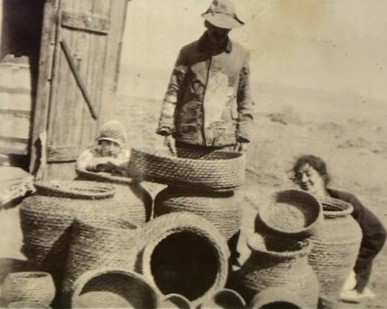
Danzer excelled at what was considered a Native American art form. For thousands of years, Native American tribes of the Plains relied heavily on the yucca plant. They soaked the tough leaves of the yucca then pounded and stripped them to extract fibers and wove these resilient fibers into baskets, mats, sandals and cordage. The soapweed was vital to indigenous tribes not just for its fibers but also for medicinal and other properties. Roots and leaves were traditionally used to treat skin ailments, stomach aches, dandruff and lice. Yucca roots contain saponins which make an excellent natural lather. Native Americans used the roots for soap, shampoo and ceremonial cleansing. The young stalks of the soapweed were roasted over an open fire and then peeled to eat the soft interior. The flowers were eaten after boiling them to remove their bitter flavor or removing the flower pistil, the most bitter part.
Pioneers like John Danzer didn’t take long to learn the value of prairie yucca. Early settlers also used the soapweed for making soap, but the process was intensive. According to High Plains Radio, the sticky green roots were dug up and then pounded on a wooden board until they were softened. “The resulting pulpy mass was put into water to soak. The juice and water mixture that was drained off became soap in a community where store bought goods were rare and costly.” Frontier families also fashioned the sharp, sword-like leaves into emergency needle and thread. In addition, the leaves made good thatching material for dugout roofs.
“Several have used soapweeds in making their barns, while others are using them for fuel, but the latest use is mulching an onion patch with them. What next?” asked the Kearny County Advocate in an April 1917 issue. The soapweed reportedly made a good, hot fire, and some homesteaders were using them to save on coal bills.
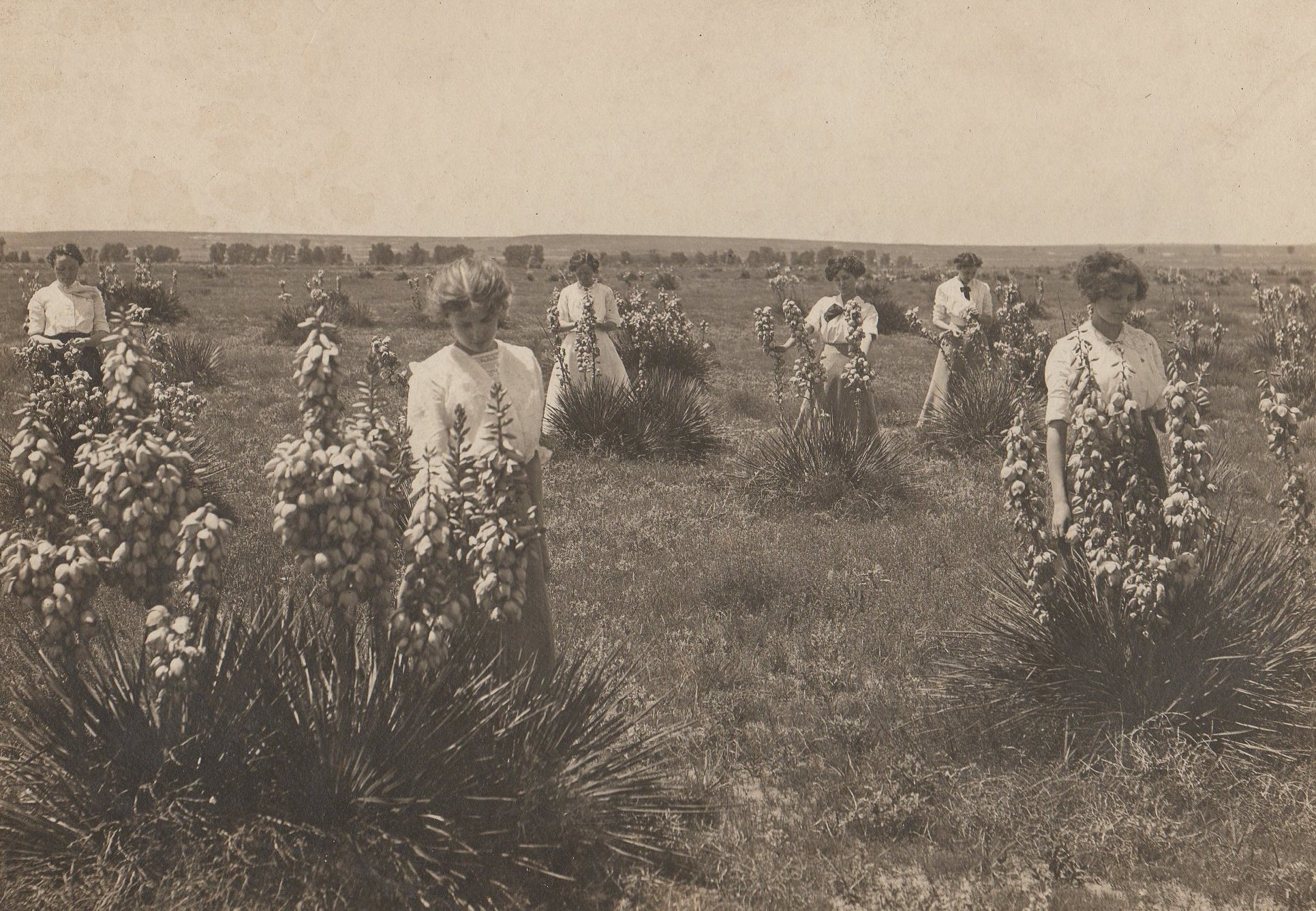
When the wheat crop was stunted and short during dry seasons, farmers fastened yucca leaves along the edge of the combine’s header platform. The first turn of the reel cut the points of the yucca fronds and frayed them, forming a soapweed ‘broom’ that swept the short wheat up on the platform and pushed it against the reel.
Yucca also became a cash crop, but only the blades were used. Once gathered, they were laid out to dry before broomcorn balers formed them into bales. “Soap weed crop in this county is being harvested and finds a ready market in St. Louis,” reported the May 1, 1914 Kearny County Advocate. “Three cars have been shipped out thus far this season.” It took 10 tons of product to fill a rail car, and manufacturers were paying $8 a ton. A 1914 U.S. Department of Agriculture report in The Advocate stated that it cost roughly $5 to $6 per ton to cut, bale and haul the product to the nearest rail station for shipment. Manufacturers fashioned the fibrous strands into rope, binder twine and even straw hats. Still today, yucca fibers are used in fishing nets, combs, sandals, mats, blankets, sewing and in making paintbrushes.
The perennial soapweed also remains important to prairie biodiversity. Native yucca plants act as ecological anchors in the Great Plains, supporting specialized pollinators and providing essential shelter and forage in the prairie ecosystem. The yucca and yucca moth share an obligate mutualism where neither species can survive without the other. The moth is the plant’s exclusive pollinator while the yucca provides a safe nursery and food for the moth’s larvae. This highly specialized partnership guarantees reproduction for both. Cattle and deer also eat the flowers and immature fruits of the yucca, and cattle ranchers often view the plant’s pods as a natural dewormer. Bison will uproot plants and consume the roots. During the Dust Bowl days, often the only grass that was available to the cattle was found in the shadow of a yucca. Snow piles up behind soapweed, and that little bit of moisture can be invaluable to grasses and wildflowers downwind.
Speaking of flowers, no longer are yuccas seen solely in the stretch of open prairies. They are now being incorporated into landscapes. Their expansive and deep taproots anchor the soil, making them perfect for planting on slopes, hillsides or in rock gardens to prevent soil erosion. The relatively long-lived plants need full sun and well-drained soil. Soapweed transplanting can technically be done at any time of the year, but professional gardeners recommend early spring or late fall when the plant is more or less dormant. An extra hand or two may be needed when transplanting the plants due to their sharp leaves and cumbersome size. Though a bit of transplant shock may occur, the hardy prairie yucca typically bounces back within a week.
SOURCES: Diggin’ Up Bones; High Plains History, a production of High Plains Public Radio; US Forestry Service; National Institute of Health; Audubon of Kansas; Kansas Wildflowers and Grasses; Wikipedia; gardeningknowhow.com; Museum archives and archives of The Kearny County Advocate.