News, Events & County History

Rep. J.M. Eves, the much-loved barn-yard philosopher


Seventy-five years ago, Joe Eves was named as Speaker Pro Tem of the Kansas House of Representatives. Two years later, Eves was elected as the Majority Floor Leader. In all, he spent 16 years as a state representative and was largely responsible for much of the progressive legislation enacted during Governor Ed Arn’s two terms, and due in part to Joe’s efforts in the late 1940s, Lakin’s vo-ag program was approved by the State Board for Vocational Education which allowed USD 215 to receive federal and state funding.

Joe was politically minded from an early age. He was born in Holden, Missouri on January 1, 1900, the eldest child of David and Jessie (Potter) Eves. Joe’s father was a life-long Republican who ran for county recorder in Holden, but Missouri was primarily a Democratic state and the elder Eves’ bid was unsuccessful. When Joe was seven years old, the family moved to Kansas where Republicans did not so often get defeated. Joe’s dad got an “emigrant car” on the Missouri Pacific Railroad and loaded their household goods, together with two mares, a cow and calf, a dog, 50 chickens, a good new wagon and other farming equipment. The car cost him $125 and was unloaded at Leoti which was in closer proximity, though not much, to their homestead at Conquest nearly 30 miles northwest of Lakin.

A young Joe Eves is pictured with his siblings. Back row left to right: Joseph and David. Middle row: William and Frederick. Front row: Mary (later Mrs. Martin Fulton), Marvin, and Francis.

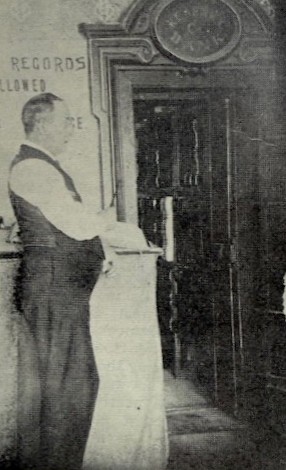
As a boy, Joe attended political rallies nearby at the rural Prairie Center school. In 1912, his father sold his livestock and farming equipment and moved the family into Lakin. David Eves served as Kearny County Register of Deeds from 1917-1921 when the oil leasing was just getting started here. Many of the lease forms were not standard and had to be copied by pen in the records. Joe helped his father in this work and with his proofreading. From this time on and up until being elected to his first term in the Legislature, Joe Eves knew he wanted to be a state representative.

That opportunity came in 1942 when Ralph Miller decided not to run again for the office. On the last day to file, no candidates had filed by 9 a.m., and the deadline was noon. Joe approached the Republican County Chairman, Dr. Grant Hastings, who said he would be pleased if Eves filed and would back him all the way. Joe filed at 11 a.m., and his political career was on its way! That November, he defeated the Democratic candidate, Thomas Daniel of Deerfield, by more than 200 votes.

Lakinite Ed Stullken, a former representative, gave the newbie some words of advice. He said Joe might be somewhat disappointed in his first legislative session and that the legislators who had served a few terms did not care to have many opinions or speeches from “first-termers.” Stullken encouraged Eves to mainly listen, learn and build an appearance and reputation. Joe found Stullken’s gentle direction to be helpful. In 1949, Joe was given the chairmanship of the Fees and Salaries Committee. This committee turned out to be very successful and overhauled the entire salary structure of all county and state officers. At a night session of the Legislature during this time, Joe had the floor for three and one-half hours. He had a keen wit and “Missouri” drawl, both of which he used to persuade other lawmakers to follow his lead. After one of Joe’s more popular speeches, he was given a 15-minute standing ovation. He was referred to many times by his colleagues as “the much-loved barn-yard philosopher.”

The same year that Joe was named Speaker Pro-Tem, he was appointed to the Legislative Council. A seat on the council was a coveted position as only 15 members from the House and 10 from the Senate were chosen. As the Majority Floor Leader or Whip, Joe’s duties were to see that Republican policies and legislation were pushed through for action. He was appointed chairman of the Calendar Committee at that time too which enabled him to keep strict control of the House’s order of business. As a joke, the House presented Joe with a set of branding irons, one with a “Y’ and the other with an “N”, so that he would be able to separate the yes votes from the no votes. They had a lot of fun with those irons although Joe never used them. After serving as chairman on the committee to remodel the House Chamber, Rep. Eves was asked to overseer the work when the bill passed both the House and Senate in 1955 but Eves declined the offer because of the inconvenience of living so far from Topeka. He served 14 consecutive years before he made the decision to run instead for state senator. Joe failed in this bid, but in 1964, he secured another two-year term in the House. Eves became close with Governors Andy Schoeppel, Frank Carlson and Edward Arn, and while Joe was always a staunch Republican, some of his best friends in the Legislature were Democrats. Following his service in the Legislature, Joe maintained a strong interest in Republican politics and served as the Kearny County Republican chairman as well as other positions.

Representative Eves is shown with a page at Topeka. Joe was always grateful to the people of Kearny County who backed him so faithfully over his many years in the Kansas Legislature.

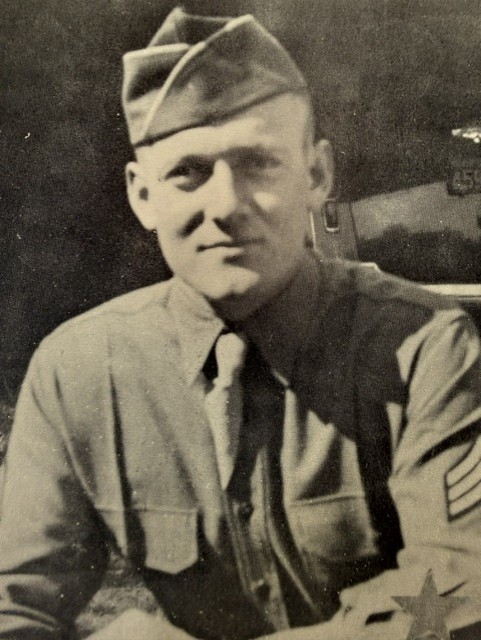
Joe was the Kearny County Farm Bureau Insurance agent for 25 years, and even after his retirement, he continued to handle hail and crop insurance. He also farmed. Joe was a member of the First Presbyterian Church where he served as an elder, deacon and treasurer. A member of the Emerald Lodge for over 50 years and a member of the Eastern Star, Joe served as District Deputy Grand Master for Kansas in 1951-52 and Grand Senior Steward in 1957. A World War I veteran, Eves served many years as an officer of the Shepherd-Moore Post.

Joe married Rosamond James in “a quiet wedding at the Methodist parsonage in Deerfield” in September of 1932. Rosamond’s parents, John and Elizabeth, had come to Kearny County with their family in 1910 settling north of Deerfield, and Mr. James eventually became a county commissioner. Rosamond attended school at Deerfield then Emporia College before teaching in rural schools and at Lakin. Like Joe, she was a member of the Presbyterian Church and was a past matron of the Lakin Chapter of the Order of Eastern Star. She was a life-long member of the 20th Century Club and served as county chairman of the Kansas Republicans Women’s Club.

Joe and Rosamond had one daughter, Phyllis Hendrix, and four sons – Daryl, Raymond, Edgar and Donald. Don was killed on Christmas Day 1952 in an automobile accident nine miles west of Dodge City. The popular 17-year-old Lakin High School student was with his brother Daryl and three friends on their way to a Christmas party when their vehicle struck an icy spot on the highway, skidded out of control and hit a tree. The 1952-53 Bronc annual was dedicated in Don’s memory.

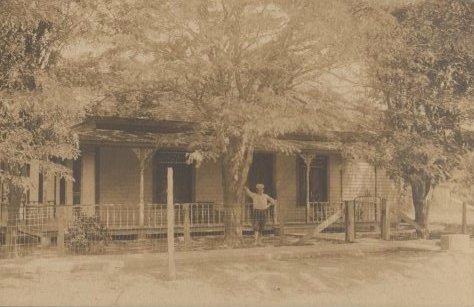
Rosamond Catherine James Eves died in 1978, and Joseph Milton Eves passed away in 1987. Their former home, a quaint cottage with gingerbread trim, is located on the northwest corner of Prairie and Western. Although the house was completed in 1904 for the Archibald Brooks family and was later owned by Clarence and Ella Thorpe, old-timers will always refer to the home as “the Eves house.”

SOURCES: Diggin’ Up Bones by Betty Barnes; History of Kearny County Vols. I & II; an article written by the late Phyllis Hendrix for Meadowlark Notes, newsletter of the Kearny County Senior Center; information provided by the late Dorothy Thorpe Weber; 1952-53 Bronc; property tax collection registers; Museum archives; and archives of the Lakin Investigator, Advocate, Independent, and Ulysses News.

This little angel is reaching out to say “Merry Christmas” and to let you know that the Kearny County Museum will be closed to the public from Dec. 24 until Dec. 30. Pictured is Donnie Bohl in 1945. Myrna Michel was to be the angel for the Christmas play at Columbia School, but she was sick with the flu so Donnie was her substitute. We think he looks pretty darling!

Memories of Christmas on the Prairie

(This story was written by the late Helen Kysar and appeared in the December 7, 1975 Methodist LIFE. Helen Grusing Kysar was born in 1906 at Salem, Oregon, the daughter of John and Anna Grusing. She moved with her family to Kearny County as a child, and after graduating from Lakin High School, she attended Fort Hays State University. Helen taught school in Kearny County before marrying Preston Kysar in 1930. After a brief time in Ellis County, they moved back to the Lydia area in Kearny County and then into Lakin in 1971. Helen was a member of the Lydia United Methodist Church in rural Kearny County and attended the Lakin United Methodist Church after moving into town. She died at the age of 96 on Christmas Day 2002.)

Helen Grusing Kysar’s senior picture from the 1927 Prairie Breeze.

Even though the times were hard and the going was rough in the early days on the plains, nearly twenty-five miles from town, there are many fond memories for me to remember. As I think back and remember how scant were the things which we now take for granted, it would seem we could not be as happy as children are today. But they were as happy (maybe, more so) than today. And, of course, Christmas time was the happiest time of the year.

One of the things that stands out in my memory of Christmas on the plains was the Christmas program at the small country church. The Christmas program was always on Christmas Eve. The church building set rather alone on the prairie and it seemed as if it could gather all the coldness there was to spare of the whole neighborhood. A large pot-bellied stove stood in the center of the building. When the day before Christmas arrived, my father would start the fire early in the morning so that the whole building could be warmed through and not have to have such a hot fire in the center of the room with the outer edges of the room freezing cold.

The Lydia Methodist Church that Helen attended was built in 1907 and dedicated December 15th that year. The country church is still being used today.

There would always be a tall Christmas tree decorated with a few beautiful ornaments (how they acquired them, I do not know), yards and yards of strung popcorn and real candles. While the candles were lit, two young men stood behind the tree equipped with long sticks, the tips covered with cotton. A bucket of water stood nearby. In case a candle burned down or caught the tree afire, the cotton tipped stick would be plunged hastily in the water and snuff out the candle. How beautiful was that tree to welcome the people in! Two kerosene hanging-lamps hanging from the tall ceiling and six bracket lamps on the walls, one at each window, added to the cheeriness and warmth of the welcome.

Because there was no other place to go, everybody went to church. The families came in lumber wagons and spring wagons, the father and mother and maybe a youngster or two on the front seat. Hay was put in the wagon bed and the rest of the children would sit on the hay with comforters put over them to keep them warm. The horses were tied to the long hitching rails near the church during the program and the comforters were put on their backs to keep them warm.

The Christmas programs were similar to today although in those days literature and program books were scarce and many times the recitations by the children were verses from the Bible pertaining to the birth of Christ. I remember one evening very distinctly when the whole program consisted of songs and reciting Bible verses. I was reciting some verses from Luke 2 in front of the Christmas tree when suddenly my father who was sitting in the front pew motioned to the boys behind the tree that a candle had gone rampant. I was just sure my hair had caught on fire, or worse yet, that my beautiful new ribbon bow on my hair was afire. I almost forgot what I was to say. Strangely, the next words were “Fear not -.” The songs sung to the accompaniment of a pump organ were some of the very songs we sing today. Always the program ended with all singing the song, “Silent Night.” How happy we children would be because we knew that now was the time we would get our sacks of candy and nuts and maybe an orange. This being the only time that we would ever get candy, it was a great expectation for us. Every one present got a sack, handed out from wash boilers carried around by two young men.

Even though the years have passed and times have changed very much, it always has been the same Christmas spirit and the same story of Jesus’ birth.


Lakin’s First Methodist Church

Hopes were high that Lakin’s Methodist Church would be completed by Christmas of 1907, but that was one wish that Santa could not fulfill. Instead, the church was completed and dedicated on March 1st of 1908. The house of worship had been a long time in the making.

Just newly ordained, Rev. William V. Burns arrived in Lakin in time to preach the first Sunday of April 1886. The April 3rd Kearny County Advocate announced the new pastor as “a young man, sent specially by the conference to this work and we trust our people will give him a warm welcome.” The first quarterly conference of the M.E. Church for this circuit was organized at the residence of B.C. Parcells later that month, and Rev. Burn’s salary was fixed at $600. In addition to his duties at Lakin, Deerfield and Hartland, Burns also often preached at Sherlock (Holcomb).

At Lakin, the fresh-faced man of God delivered his sermons in the town hall. On June 12, 1886, the Pioneer Democrat announced that “considerable interest is being manifested in the church services held by Rev. W.V. Burns, and the city hall is nearly always crowded when he holds service there.” That week’s Advocate reported that Rev. Burns had organized a Methodist Episcopal Sunday school with W.P. Haywood as superintendent. The school was to meet at 10 a.m. every Sunday, “and our Methodist friends will no doubt work energetically to build up a flourishing and promising school.”

After the town hall was destroyed by a cyclone that July, Methodists began meeting in Holmes Hall which was on the second story of the building at Main and Waterman that would later become the county court house. Later, services were held in the brick schoolhouse that was completed in the fall of 1886, but discussions were already taking place about building a church. According to the September 4, 1886 Advocate, “The necessity of erecting a building for church purposes is pressing itself upon the minds of the membership, and after discussing the matter the question was thought to be both advisable and practicable, and steps were inaugurated looking to that end. We feel confident that our church going people will render aid to such a desirable undertaking.” Still, by the following summer, no church building was in the making. The Pioneer Democrat reported, “Rev. A.P. George P.E. Methodist church passed through Lakin Thursday evening. He says when this county seat question is settled he will attempt to build a church here, as he could not get the minds of the people in harmony until that time. We hope he will take hold of the matter and push things forward. We need a church and must have one.”

An August 1895 Lakin Index noted that a Metodist church was going to be erected that fall as several hundred dollars had already been promised; however, that did not come to fruition. By the turn of the century, Lakin’s Methodist congregation had reached the 100 mark, but there was still no church even though members had long been hoping to build one of their own. Then, in 1901, two lots were purchased at the corner of Kansas Street and Prairie Avenue. Construction did not begin until the summer of 1907 with the cornerstone being laid on September 29.

Laying of the cornerstone of Lakin’s Methodist Church on September 29, 1907.

Dedication Day was a red-letter day for Methodists. At 11 a.m. on the first Sunday in March 1908, the new church was filled to capacity. Other churches dismissed their services and joined in the festive occasion of dedicating the church. Excellent music was rendered by a large choir made up of members of all the church choirs of the community. Methodist pastor, Rev. H.A. Schneider, along with Rev. Thomas of Lakin’s Presbyterian Church, Pastor A.W. Yale of the Baptist Church, and Rev. Dr. F.E. Mossman of Southwest College at Winfield, addressed those in attendance. Three services were held, and Rev. J.F. Irwin, the Presiding Elder of the district, administered communion at the afternoon service.

The building committee reported the cost of the building to be $3,600. According to a history of the church compiled by the late Hazel Stullken, the church was built with donations from many sources and from all denominations.  The Ladies Aid Society adopted a novel method of helping raise money for the new building. “The idea was an exemplification of the old adage, ‘take care of the pennies and the dollars will take care of themselves.’” The object was to gather a mile of pennies and to do that, each member was provided with a narrow strip of paper one foot in length. Each foot held 16 pennies. When the mile of pennies was received, the sum of $844.48 would be added to the building fund. A very large contingent from Deerfield also helped in a very material way in raising the necessary funds.  After footing up the pledges and contributions at the morning service on dedication day, the church was about $50 short of the necessary amount. “This was soon subscribed and the church was dedicated to the service of God.” There was no air conditioning and no plumbing, but Methodists believed it to be a splendid home for worship.

In 1927-28, the white frame building was raised and a full basement was put under it to provide kitchen and dining room space as well as additional Sunday school rooms. While this remodeling was being done, church and Sunday school were once again held in the building at Main and Waterman. By 1951, the Methodists had begun to think seriously of enlarging their facilities again. Times were good. Natural gas development in addition to greatly enlarged farming operations brought an unprecedented prosperity to the area. The last service in the old church was held on April 13, 1952. The building was sold, lifted off the basement and transported intact to north Buffalo Street where it was made into an apartment complex and where it still stands just across the street from the swimming pool.


SOURCES: “Lakin Methodist Church” by Nina Russell for History of Kearny County Vol. 1; “History of the M.E. Church Begins in ‘86” by Luella Stutzman; “Laity Sunday” by Hazel Stullken; Archives of Peabody Gazette-Herald, Garden City Telegram, Lakin Index, Pioneer Democrat, Kearny County Advocate, and Lakin Independent; and Museum archives.


Deerfield’s first Methodist Church dedicated in December 1907

Rev. William V. Burns was sent to southwest Kansas in 1886 to serve the Methodists of Deerfield, Lakin and Hartland. It was his first charge as a missionary as he had just been granted a license to preach at the Annual Conference of the Methodist Church held at McPherson in the spring of 1886. The western part of Kansas was then being settled, and the church was ever mindful of the spiritual needs of new communities within its jurisdiction. Rev. Burns was sent with instructions to “Go Preach.” It was a large field with big responsibilities and even greater possibilities. The enthusiastic young preacher, not yet 21 years of age, met the challenge.

At Deerfield, Rev. Burns found five Methodists to organize a church. They were A.R. Downing, R.A. Beckett, Mrs. C.L. Beckett, “Grandma” Mary Keep and Mrs. Sam Barker. The first year the members met in the office of a lumber yard or the general store. The first trustees, five in number, were required to sign an official document upholding the Constitution of the United States and the State of Kansas. This was notarized August 17, 1895 by B.B. Bacon. A school house was built in 1887, and church services were held there until a church was erected.

In the fall of 1905, the United States Sugar and Land Company gave a building site and $100 towards the building of a church. The Methodist’s new church was dedicated to worship on Sunday morning, December 9, 1906. According to Garden City’s Reflector, the weather was a little threatening early in the day, but by 11 a.m. the church was well filled. Dr. F.E. Mossman, president of Southwest Kansas College at Winfield, delivered the address “after which, in a comparatively short time, nearly $1,400 were raised to cover the remaining indebtedness on the church building, its entire cost being about $3,000.”

In 1919, the church basement was begun. It was completed in 1920 and dedicated by the Rev. E.L. Nicholson. Services were held in the Baptist Church during construction. After completion, a community kitchen shower aided materially in furnishing the basement kitchen. A remodeling program was begun in 1949 under the leadership of Rev. W.A. Hawes, and on Easter Sunday 1950, a dedication program was held. The electric organ, a gift of the Ralph Miller Family, and other furnishings were dedicated by the district superintendent, Rev. J.R. Throckmorton.

On November 19, 1961, Deerfield Methodists celebrated their 75th anniversary by dedicating a beautiful new educational building. The building and furnishings cost $34,434.44 plus donated labor. Designed by Howard Blanchard, the building was constructed by Richard Landon. The Rev. Bob Fleenor was the minister at that time, and Dr. Lester R.Templin, district superintendent, was guest speaker for dedication activities which included morning and afternoon worship services as well as a family basket dinner. The event brought to a close a successful three-year funds campaign.

On March 21, 1973, a building committee was elected to look into replacing the old church building. The last service was held in the old church on Sunday, March 3, 1974. The building was torn down starting on Monday, March 11 that year. This was done by men, women and children working together. Soon the workers razed the facility, cleared the site and made ready for the construction of a new church.

Groundbreaking ceremonies for the new brick structure were held on April 21 of 1974, and construction began the following day. The placing of the cornerstone was held March 2, 1975, following church services in the Lutheran Church where services had been held since March 10 of 1974. The placing of the cornerstone was done by Richard and Kent Landon and Anson Maddux. Some of the articles placed in the cornerstone included bulletins from special services; special anniversary bulletins; articles written about the Methodist Women, Men’s Brotherhood, choir, youth groups, ministers and church history; Bibles; hymnals; choir tape, Sears and Montgomery Ward catalogs and 1974 coins.

Consecration services were held April 20, 1975, and a record number of former pastors, members and friends came to participate. Then, on December 7, 1975, the Rev. Dr. Ruben Reyes, pastor of the church, was assisted by Bishop Earnest T. Dixon of Topeka at the dedication service. Rev. Charles Hadley was the pastor when the church initiated the building program, drew plans, and launched the successful financial campaign which raised sufficient funds to begin building. Designed by architect Keith Fillmore and constructed by Richard Landon, the beautiful new building at Eighth and Walnut was originally estimated to cost $139,000, but the cost at completion was $125,000. “It was the labor and love of this congregation for many previous years, that made this possible for us to have this beautiful sanctuary, fellowship hall and kitchen.”

On October 16, 1990, the decision was made to remodel and add on a second floor to the educational building. On November 4 that year, Jay Dean Landon, Dick Horton and others started removing the roof and soon the volunteers were in action. Richard and Kent Landon were the contractors for the remodeling and new addition, and they too volunteered many hours. The first Sunday School classes were held in the new addition in April of 1993 with the dedication taking place on October 17, 1993 under the leadership of then minister Rev. Don Koehn. The total cost for remodeling and the new addition was around $75,000. Memorial money helped fund the addition and furnishings, and two beautiful stained glass windows were designed and donated by Jay Dean and Joan Landon for the new addition. This addition would not have been possible without the hard work of all volunteers and the love, the skill, and dedication of the congregation. A VIP club (Volunteers In Painting) was formed and donated money to have both levels painted. The educational building was then named “The Hazel Shriver Educational Building” in honor of one of Deerfield’s own who gave immensely to the community as well as to the church to help it grow and reach its goals.

“We celebrate, however, not only the beauty and magnificence of this building, but the faith, the love, and the dedication of all those who worked, prayed and gave of their monies that we might have this house for the praise of Him who is the giver of the house itself, our lives, and all things.”

SOURCES: October 17, 1993 Deerfield UMC program; archived Deerfield UMC Congregation Directory; History of Kearny County Vol. I; Museum archives, and archives of the Harper Sentinel, Reflector, Garden City Telegram, Methodist LIFE, and Lakin Independent.

KCHS Royalty through the years

This Saturday, a Kearny County couple will be honored with the title of Kearny County Historical Society King and Queen and ride in a carriage of honor down Lakin’s Main Street during the Frances Bostrom Memorial Lighted Christmas Parade. This tradition dates back to 1979 when Sam Boman and Vivian Thomas were crowned as the first KCHS royalty. Vivian Thomas, Henry and Emma Molz, and Norman and Ethel Simshauser were all bestowed with the honor twice, and there were junior and senior princesses a few years. Instead of a royal pair in 1987, several city officials and past officials rode down Main Street in convertibles to kick off the start of Kearny County’s centennial, and there was no parade or royalty in 2020 due to Covid. Who will this year’s royal couple be? Come to the parade Saturday at 6 p.m. and see for yourself!!!


Resiliency has been key to Kearny County’s survival

The prospect of cheap land and owning something of their own led settlers to Kearny County in the 1800s. This area, once labeled as the Great American Desert, was promoted as the Garden of the West by land speculators and the Atchison, Topeka & Santa Fe Railroad.  From 1883 to 1888, extensive advertising campaigns and the passing of the Homestead and Tree Claim Acts brought in settlers in ever-increasing numbers. Then a seven-year drought and nation-wide economic depression set in. This led to a large number of settlers leaving the area. Only the hardiest remained, trudging ahead with faith and fortitude.

A new boom arrived in the early 1900s. Real estate companies like the Lakin Land & Immigration Company lured settlers to the area by touting the benefits of our county. In a large, multi-page brochure, the land company beckoned potential residents. “Kearny County wants people, thrifty, intelligent, law-abiding citizens to come and build homes, help develop our agricultural and industrial resources and share in the general prosperity . . . If you want to make an investment that will double in three years, come to Lakin and let us show you.”

Irrigation was Lakin Land & Immigration Company’s main drawing point. “The underflow, as it is called, furnishes an unlimited supply of water at all seasons of the year. This remarkable underground flow has been the marvel of government engineers. They have never been able to determine its exact area, but they have tested it for years, and have pronounced the supply practically inexhaustible.” The underflow referred to was the Ogallala Aquifer, the largest underground store of freshwater in the nation.

Our long-gone Lake McKinney was the largest body of water in the state at the time and also another benefit hailed by the company. Fed by the Arkansas River, it afforded the best fishing, duck and goose hunting, boating and swimming to be found within hundreds of miles.

“If you would share in the greatly increased prosperity, which this community is bound to enjoy, now is the time to come to Kearny County . . . Kearny County’s growth in the immediate future is assured.”

Things were looking pretty peachy here, but those real estate men had no idea that irrigation, their main talking point for moving to this region, could one day lead to the area’s downfall. They didn’t know how long the battles would go on between Kansas and Colorado over the waters of the Arkansas nor could they have predicted the Dirty 30s and the Great Depression that caused some to move away while others stayed and persevered.

The rains returned, the crops were bountiful once more, and the economy improved. Then the gas and oil industry arrived and changed our economic landscape even more. Although natural gas was discovered in the Hugoton gas field in 1922, very little was done in the way of development as there was no market for gas at that time. Lakin and Deerfield received their first gas for domestic use in 1936 when the Tri-County Gas Company laid lines here, and that fall we became a producer of natural gas. Then, on a Sunday morning in July of 1941, Stanolind hit pay dirt, striking oil on the G.O. Patterson farm northwest of Lakin.

Gas and oil brought prosperity to Kearny County, added greatly to our tax base, led to a leap in population and a frenzy of building activity. We have enjoyed amenities here for years that other small towns could only dream about. But now, gas and oil production is but a shadow of what it once was. According to the Kansas Geological Survey, Kearny County’s gas/oil production is at its lowest point in 30 years. The KGS also reported that the Ogallala fell more than a foot last year.

Without the monies that the gas and oil industry brought into our county, property owners are now shouldering a larger tax burden. Last year, members of the Historical Society’s board met with county commissioners and were told that funding may be affected for some of the quality of life programs/services that Kearny Countians benefit from. When we presented our budget to the commissioners in May this year, the forecast was even more bleak. Commissioners had tough decisions to make, and one of those decisions was to drastically reduce the historical society’s appropriation for 2026.

What will that mean for the Kearny County Museum? Fortunately, we have been good stewards of county appropriations and donations so there is some money in our reserves. However, those reserves are not endless nor are they likely to be replenished. Some of our donation money has also been earmarked to erect another building on museum grounds which means it cannot be used for other purposes. While the museum will continue to be conservative with our funds, we may need to start charging for programs and services that we have offered at no cost in the past. We have already started applying for grants, and the board is considering various fundraisers – like having a booth in the Finney County Museum’s Flea Market Festival this summer IF we have enough antiques donated specifically for this purpose. We will NOT get rid of nor sell any museum artifacts.

Our KCHS board and staff are thankful for all the support we have received and to all those who came before us. We are forever indebted to those 16 charter members who had the foresight, faith and fortitude to embark on this journey back in November of 1957. Nearly seven decades later, we have a fine museum, and with a little help, the Kearny County Museum can continue to grow, improve and give back to our community.

Photos from The Lakin Land & Immigration Co. flyer.

Offices of The Lakin Land and Immigration Company on West Waterman Avenue.
Amazon Irrigation Canal, Owned by Kearny County Farmers.
Southside Irrigation Ditch.
Waters of the Arkansas River.
Pumping Plant located 5 miles southwest of Lakin and owned by E.R. Thorpe, President of The Lakin Land and Immigration Company.
Great Eastern Canal.

Busy Times!

While sorting through our files to write the history of the Kearny County Historical Society and Museum, I came across this gem of a story written by the late Dick Crump. Crump  was elected KCHS president in 1976.

When Naomi Burrows asked me if I would serve as president of the historical society (if duly elected), she told me that it wouldn’t be very busy. There would probably need to be quarterly meetings, but there wasn’t much going on. We got off to a great start at the annual meeting when several folks commented that it was good to have someone so young in charge! And, of course, I ate that up!

The first meeting I conducted was in the former Scotty’s Café building, where the museum was located at that time. There were about eight people present with about ten different ideas on how we should build a museum! The problem was that most weren’t legal. As a tax entity of Kearny County, we couldn’t borrow money or commit the county to anything we didn’t have the money to pay for. That was the last quarterly meeting we had! At our next meeting, I asked county attorney Bob Frederick to join us and explain our rules and options. After lots of interruptions and protests, we knew what we had to do. But there wasn’t any question about the intent of that board. They wanted to build a museum! Although we were short of money, we weren’t short of dedication!

Jennie Rose O’Loughlin had given us the O’Loughlin house along with a complete half a block of property. The house had great potential but lots of problems. The roof leaked! The front porch wasn’t safe to walk on! Most of the woodwork was original, but it was covered with about 17 coats of paint. Lucile Dienst and Ella Maune volunteered to begin work on the house. Most of us buy paint remover a pint at a time, but we bought it in case lots in gallons! The first thing we had to do was put on a new roof! We barely had enough money to buy the shingles.

Things were so different then. The state of Kansas had a surplus! The state would return money to the county to be used on some ongoing project. When we found out about this, Della Enslow (society treasurer) took the bill for the shingles to the county commissioners. And they paid it! We used this program a lot the next couple of years. We began to build a museum. I remember thinking it was so big it would be quite a while before we had it anywhere near full! We decided on a cinder block building, partly because we could stop and start building. We would build as much each year as we had money to do so. We bought supplies as we could afford. When we learned the commissioners had X number of dollars, we had enough going on that we could present a bill for that same X number of dollars! We bought cinder blocks, roof supports – whatever we needed. Della made quite a number of trips to the commissioners’ office. We had also asked for and received an increase in mill levy! We had expected it to take several years to build the museum, but each time we were able to get something paid for, we made more progress. We had such great cooperation. A limestone barn was torn down in Kendall, and we were offered the stone. All we had to do was haul it to our site and clean the Kendall site. We had plenty of trucks and helpers to do the job one Saturday. Of course, it made the front of the museum so much more attractive!

It was decided that we needed a “date stone” to dress up the stone front which was coming along quite nicely. Farmers Co-op loaned us Jack Pepper and the big tire repair truck with a hydraulic hoist to haul such a stone. Jack knew of one possibility located with a rock pile just to the south of the Kendall cemetery. Jack and I took off about 2:00 one afternoon to first measure and ‘eyeball’ that stone. We found that it would do the job well. But Jack and I both wanted to make sure we found the best slab of stone we could find. So, we headed south and west of Kendall to examine some areas we had been told had some possibilities. We found some nice stones, but nothing better than the one on Kendall hill. We went to a spot somewhere south of Syracuse! I remember telling Jack he sure had me lost and I was depending on him to get me back to Lakin! We were looking along a draw that had some fine rocks, when suddenly the truck went “whump” and stopped! Our left real dual had fallen into a hole, and the back of the truck was on the ground! There were plenty of rocks around. We decided to jack up the truck and fill the hole with rocks. No problem, just a slight delay. While Jack jacked I carried rocks, and we put them under the wheels. But much to our surprise when Jack released the jack, the truck settled right back down! Four times we jacked that truck up and filled the hole with rocks, and each time it would return to its original position! It was also getting farther to get rocks of any size. We decided we needed a tractor. Our first problem was that it was at least three miles to any road. I hadn’t seen a farmhouse in hours. Jack assured me there was a farm building with a telephone, but he didn’t admit how far away it was. Of course, it was getting dark. We finally made it to the road and began walking toward ‘this building’. We had walked quite a ways when a pickup came our way. Jack and I were not shy about making sure we were seen, waving like a couple of idiots who were beginning to feel just a little desperate. There were two young ladies and two kids in the pickup, but we all crowded in. We hadn’t gone a half mile when Jack began to admonish the driver about the dangers of picking up a couple of guys in the dark! I told him, “hush, she is a nice lady who has saved at least one life.” She assured Jack she had recognized him, in spite of all the jumping around. As I remember, it was at least five miles to the building Jack had told me “was just a ways!” The ladies waited while Jack called the owner of the building and arranged for him to come pull us out. We made it back to Lakin by 11:30 PM but without our stone! Jack brought it in a day or two later! I suppose that stone will always have a special meaning for me, and I hope it does for Jack!

One day a trucker called me. He was delivering supplies for the museum (the roof supports, I think) and wanted me to be present to show where they should be put and to sign his invoice. I drove to town, but he wasn’t there yet. So I decided to pass the time with the ladies working in the house. They didn’t approve of me leaning against the wall talking. “You might as well be taking 3-4 coats of paint off that door while you wait.” So, I went to work! I scraped for about an hour and a half before I realized I was getting a blister from the scraper! I wasn’t smart enough to keep still, but instead showed Ella how hard I’d been working. “You big baby” was her reply! She and Lucile really poured it on for my being so tender. I really began watching for the truck and was quite happy when it arrived. I still don’t think I was a whimp, although compared to those two gals, I perhaps was. They worked at least five days a week, and blisters had long ago given away to callouses! By the way, I believe we did get the state to pay for the supports!

Maybelle Gropp gave us Columbia schoolhouse if we wanted to move it. We were so involved with the house and museum that I, in all my wisdom, wanted to wait until we got some more done on those two projects before taking on another. At our next meeting, there wasn’t a question raised about moving it, just where it should be located. We did want the O’Loughlin house to be the focal point for anyone approaching from the north. It is a bit hard for a president’s vote to break a tie when it is unanimous. In their enthusiasm, I don’t even think they were aware I was dragging my feet! What a leader! There was already a crew ready to fix it up as soon as it arrived! When we did move it, we found the north wall was rotting and any delay would have caused problems. The wall was fixed as well as some siding, and it looks great! I had attended Columbia School the 4th through 8th grades and to have my old school become a history item was special. Shortly after the schoolhouse was moved, I took two granddaughters to see it. I tried to impress upon them how amazing it was for something that I was involved with as a child to become a special history item. They didn’t see the connection. “Well, you’re old too, Papa,” Crickett said.

This photo taken at Columbia School house in the mid-40s shows Dick Crump with some of his classmates. Back row L-R: Dick Crump, Marvin Yakel, Robert Crump, Merle Yakel Front row: Don Bohl, Leon Michel, Charles Hilger

“Some day there will be a half block of history,” I promised at an annual meeting. I don’t’ believe we had the schoolhouse yet, and of course, I had no idea of an annex or Santa Fe depot, let alone all that is across the street! Even with Jennie Rose’s fantastic gift, I am not sure as much could be accomplished today. Can’t you see us sending Della with a bill for shingles to the state of Kansas today? Our timing was great, our cooperation greater! The state’s extra help was very valuable. Kearny County was also in great shape financially. As president, I tried to attend as many annual meetings of the counties around us as possible. They simply couldn’t make such use of the state’s rebate money, theirs went for repairs and salaries. I always came away from their meetings with a sense of gratitude for what we had. The cooperation we received from the county commissioners was fantastic, and we also had great support from the citizens of Kearny County. The historical society’s board was great – I just had to keep them legal and hang on for the ride!

I remember very well watching Jennie Rose, with Gary Hayzlett’s help, cutting the ribbon to open the museum. I am very grateful that Jennie Rose got to see the progress we had made. George Matthews had the lawn looking great! Not only had we built a museum, but we had done it in about half the time most of us expected! And, we had an office! We had left the office for last as we thought we could do it whenever we could scrape up the money. I will always marvel at the job Lucile and Ella did! They really changed that old house in a year. I am sure it was at least 30 miles in and 30 miles back home each day Ella worked. I don’t’ remember either one of them muttering a discouraged word. I still feel a huge sense of pride being a part of that group!

Dick Crump was one of the KCHS past presidents who addressed the crowd at the 2008 Annual Meeting which commemorated the historical society’s 50th anniversary.