News, Events & County History

June 1983 storm rocked Lakin

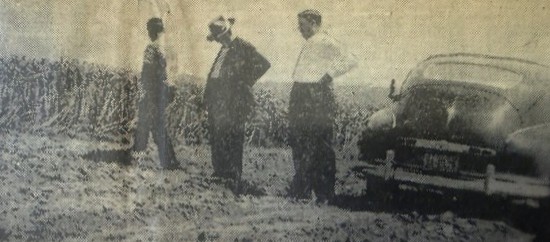
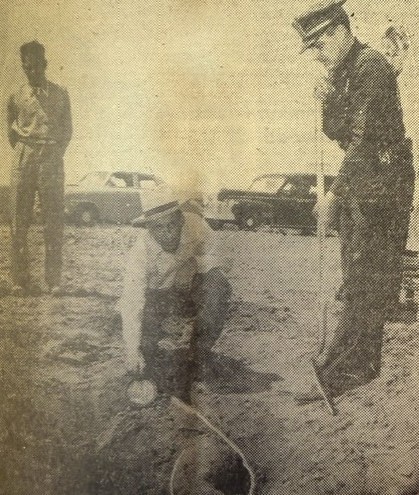
Some called it a downspout. Others say it was just extremely high winds, but many Lakin residents swore the town was hit by a tornado on June 4, 1983. Although the “official report” was that there had been no tornado sightings, several people, including public service employees, stated that they had definitely seen twisters.

Doug Stebens, City of Lakin’s light superintendent, said that he had seen three funnels and from his observation of the way the damage was done in various parts of the city, he was convinced it was tornadic winds. He noted that in some places it was obvious that the wind had been from all different directions which indicated whirling motion.

After hearing about the extensive damage that was done, Mike Ryva, weather service specialist with the National Weather Service in Dodge City, said the damage sounded more like what could be expected from a tornado. “You can often tell from the debris whether it was a tornado or just high winds. In a tornado, debris will be tossed in many directions, not just one,” Ryva said.

After inspecting the damage first-hand, Col. Mahlon Weed, director of the State Division of Emergency Preparedness, said, “I really think it was a downspout because there was no pattern to the destruction. It was spotty. There was no wide sweep in one area in town such as you see in a tornado’s path. A downspout comes down and puts out little fingers of wind reaching in all directions. I really think that is what it was.” However, Weed admitted that he had changed his mind three different times.

Many homes were damaged, and one couple’s mobile home was overturned. According to the Hutchinson News, about five mobile homes were deemed “unlivable” after the storm tore through. The rear wall of the Insurance Agency at Lincoln and Main was sucked out. Many buildings about town received damage to their roofs, with the entire roof being torn off of an unoccupied house on O’Loughlin Street. When the roof blew off the Lakin Auto parts store, it sailed through the air and hit the Tampa & Edward home of Marvin Swank, making a hole “big enough to drive a small automobile through.” Windows were broken all over town. Thirty windows were blown out of the nearly-completed High Plains Retirement Village. One resident on south Hamilton Street said he felt his home “lift up and sit back down.”

Power-line poles were left leaning, power was knocked out to almost all of Lakin, and trees uprooted and toppled. Nearly all the lawns and streets were left cluttered by leaves, shingles and other debris. Kansas Highway Patrol Trooper Lary Cole was driving south on Main Street when his back window was sucked out. The June 9, 1983, Lakin Independent reported that Mayor Gene Hornbaker and City Administrator John Speer placed storm-related damages in the neighborhood of $1.5 million. Hornbaker said at least 80 percent of the homes in town had some damage.

The severe weather started about 6:30 p.m. when a tornado was confirmed on the ground 15 miles north of Lakin. It was on the ground for about five minutes and then dissipated. Lakin and Kearny County were under a tornado watch but never under a tornado warning, according to Sheriff Jim Jarboe. By 7:20 p.m. the storm seemed to be letting up. The Sheriff’s department kept in contact with Muddy Roads project director and meteorologist English Hammond who recorded a peak wind gust of 60 mph at the airport. At 7:22, weather spotters reported high winds moving toward Lakin, low-hanging clouds, and a wall of dust moving in.

Tornado-warning sirens then sounded, and the courthouse was opened so people could take shelter. At approximately 7:30, Larry and Grace Skipton’s mobile home was flipped upside down with them inside. “We never heard a siren, just the wind,” Larry said. “One minute it was upright, then it was upside down.” Larry suffered cuts to his face, shoulder and hand from items flying around inside his home. Fortunately, no other serious injuries were reported in town.

Most of Lakin’s power was restored by early Sunday morning, and crews from Pioneer Electric came from Ulysses with four bucket trucks, two pickups and a tree shredder to assist City crews in their efforts. Hamilton County sent deputies in to help patrol traffic and prevent looting. The American Red Cross from Garden City set up in the Veterans Memorial Building on Sunday and Monday to assist and feed volunteers who were helping with clean-up efforts, and even with part of its building missing, the Insurance Agency was opened all day on Sunday to receive property damage claims.

Agency spokesperson Jane Vanover told a reporter that she received 32 claims Sunday morning alone and the phone rang constantly on Monday. “I think actually we were very lucky here in Lakin. No one was killed or hurt too much. I was looking out my window at the storm, and I saw roofs flying off mobile homes across the street. Insulation and tin were everywhere, and a lot of windows were broken out of cars.”

The entire rear wall of the second story of the Insurance Agency’s office building was sucked out and fell into the shop area on the back of the building. The local business had only recently moved into the old historic Snow Theatre building at Main and Lincoln after having done restoration work.
Larry and Grace Skipton were in their trailer when it flipped over during the June 4, 1983 storm.
The roof of Doug Ochoa’s house lies in pieces on the lot behind it.
Ed Estes surveys what is left of his mobile home. Although the Estes family was inside, there were no injuries.
The north side of Marvin and Lena Swank’s home was badly damaged from the roof that blew off of the Lakin Auto Parts building to the north.
The utility barn from the Robert Neese residence was deposited in Butch Anderson’s back yard several houses away on the east side of Lakin.
Chuck Rice and Kirk Yakel trim broken tree branches at the home of Kirk’s father on Kansas Street. Photo by Ben Bigler.
The door on the garage at the Gary Hayzlett’s was literally sucked out.
A toppled spruce blocked the entrance to the Dick and Glenda Meisel’s home on Soderberg.

SOURCES: Archives of The Lakin Independent, Garden City Telegram and Hutchinson News. Photos, except where otherwise noted, were taken by Shirley Henderson and Vivian Fletcher Fankhouser.

Local fraternity’s roots date back to 1886

Despite chilling winds, a large crowd was on hand to witness the laying of the cornerstone of Lakin’s new Masonic Temple on April 28, 1956. Distinguished visitors from across the state took part in the festivities which began at the old hall on the southwest corner of Main and Lincoln. Led by the Lakin Grade School band, a procession of nearly 100 Masons made their way north up Main Street to the site of the new temple where several addresses were given and musical numbers performed. A box placed in the cornerstone contained a list of 1956 officers, coins minted in the year 1956 and a number of publications.

Charles A. Loucks, Past Grand Master of Masonic Order of Kansas; Karl J. Baumgerter, Grand Master of Masonic Order of Kansas; and Joseph M. Eves, Secretary of Emerald Lodge #289, at the cornerstone laying ceremonies April 28, 1956.
Masons of Emerald Lodge #289 and other lodges across the state form a procession and march to the site of the lodge’s new temple to lay the cornerstone in April of 1956. The lodge’s old hall can be seen in the background.

Also in the cornerstone box were the last will and testament of William H. Johnson and a trust agreement between Charles A. Loucks and Emerald Lodge #289. Johnson, a pioneer Kearny County rancher and 50+ year member of Emerald Lodge, left property valued at nearly $86,000 to the Masons to be used for the construction of the new temple. Loucks, also of Lakin, was a past Grand Master of the state lodge and furnished additional funds to complete construction and equip the building.

The new lodge was completed in September that year and dedicated September 24th. Many of the Grand Officers of the Kansas Grand Lodge were on hand for the ceremony which included a short program and musical numbers by a sextet of male singers and piano selections by John Sample, music instructor of the Lakin schools. After the dedication service, a picture depicting “One Hundred Years of Kansas Masonry” was shown followed by a dinner.

This picture of the lovely shaded entrance to the Masonic Temple graced the cover of the Lakin Independent Sept. 21, 1956. The trees are no longer there, but the hall is still in use.

Designed by architect Howard Blanchard and built by Mel Krebs, Lakin’s Masonic Hall was one of the finest structures of its kind in Kansas at the time and equipped with modern conveniences and equipment throughout. The fully air-conditioned temple included a spacious outer lobby, dining room, kitchen, cloak room, restrooms, secretary’s office and storage and utility areas. The main lodge hall was functional in design with a pleasant color scheme blending rich blues with white and soft tints. The exterior stone was gifted by Vernon Kropp of Winfield who owned land west of Lakin, and Brothers Johnson and Loucks were honored for their benevolence with a bronze plaque bearing their images near the entrance to the lodge.

Interior pictures of the lodge from 1956 Independent.

The Masons are the oldest and largest secular fraternal organization in the world. According to kansasmason.org, the history of Freemasonry can be traced back to the early 17th century when the first Grand Lodge was established in London. This was followed by the establishment of Grand Lodges in other parts of the world, including Scotland, Ireland, and the United States. During the 18th century, Freemasonry gained popularity and acceptance among the social elite in Europe and America. Many notable figures, including George Washington and Benjamin Franklin, were members of the fraternity. Freemasonry played a significant role in the American Revolution as many of the founding fathers were members of the fraternity.

Freemasonry continued to grow and evolve during the 19th and 20th centuries. The fraternity played a significant role in the development of the modern welfare state as many of its members were active in social and political reform movements. Today, Freemasonry continues to be a popular and respected fraternity around the world. Membership offers a unique opportunity to join a brotherhood of like-minded men dedicated to improving themselves and their communities by focusing on moral character development, brotherly love, charity, and community service.

The roots of Lakin’s Masonic Lodge date back to 1886 when several Free Masons were among a large influx of settlers who came to this area. About 25 Master Masons answered the call to meet and took steps to organize a lodge, a goal that was met on March 19, 1887 when Lakin was part of Finney County. Shortly afterwards, the unorganized county of Kearney was attached to the organized county of Hamilton for judicial purposes thus Emerald Lodge #289 of Lakin, Hamilton County, Kansas, was chartered Feb. 15, 1888, by the Grand Lodge of Kansas. Brother Benjamin B. Bacon opened the lodge in form on St. Patrick’s Day 1888 and installed officers. Ten days later, Kearney County was proclaimed a county of its own right by Kansas Governor John A. Martin. Lodge minutes from 1887 and 1888 literally reveal Kearny County history in the making. (In 1889, the second “e” was dropped from Kearney to match the spelling of General Philip Kearny, the man whom this county is named for.)

A room in the 1886 school was used by the Masons and other social organizations until that room was needed when a new wave of settlers came into the county in 1906 and 1907. Then, according to the late Virginia Pierce Hicks, the upstairs of the Main and Lincoln building began being utilized as the local lodge. The downstairs of this building was the location of Mullany and Houser and Mullany and Sons which was discussed in last week’s article. This location was used until the new hall was completed at 214 N. Main.

SOURCES: kansasmason.org; History of Kearny County Vol. I; Museum archives, and archives of The Lakin Independent, Kearny County Advocate and Lakin Investigator.

James Mullany … from famine to fortune

In 1848, Ireland was in the grip of the Great Famine, a devastating seven-year period of disease and mass starvation. James Mullany was born amid all this suffering at County Sligo in the northwest part of the country. He was one of 11 children born to Anthony and Catherine (Bolan) Mullany. Following poor harvests in the early 1860s, the Emerald Isle was on the brink of another famine, and over 80,000 people emigrated from there in the first seven months of 1863. Still but a teenager, young James set his sights on the New World.  He joined some of his neighbors aboard the Adriatic and sailed to the United States in search of fortune. After landing in New York, Mullany made his way to his older sister, Mary McNellis, who was living in Iowa.

At the tender age of 16, James enlisted in Company K of the Eleventh Minnesota Volunteer Infantry. This infantry patrolled the Tennessee/Kentucky state line during the Civil War to protect the Louisville & Nashville Railroad against Confederate guerrillas. James was serving with his comrades in Sumner County, Tennessee when the news of General Lee’s surrender reached the regiment. He continued with his command in the South until the summer of 1865 when he received an honorable discharge at Fort Snelling, MN.

James visited several of the southern states after that time and finally settled in Arkansas where he raised cotton and married Alice Williams, a native of Alabama, in 1871. Life was not kind to the young couple. In 1872, Alice gave birth to twins, but both died the following year. Three more children were born to the union. A son died at the age of two and a daughter at the age of 11. Alice died in 1885. James and his only surviving child, a daughter named Lulu, then moved to Wayne County, Iowa, but Mullany was not satisfied with his future prospects there. Encouraged by his sister who was already living in Kearny County, the nearly penniless Irishman came here with Lulu in 1887. For a few months, he worked as a railroad section hand, receiving $1.10 a day. Later, James worked on a farm for which he received board and $20 a month. Then he clerked for O’Loughlin & Weber.

Mullany served as the clerk of Lakin Township before being elected Clerk of the District Court in November of 1892. In May of 1897, he married Maggie Nash, the “bright, pretty and amiable” daughter of John Keating and Mary Ann Nash. Following his second term as District Court Clerk, Mullany returned to work for O’Loughlin & Weber before moving to Garden City to be the head clerk for Knox’s grocery. Sons Anthony Glen and James ”Babe” Verne were born during this time.  In 1901, Mullany moved back to Lakin after forming a partnership with his niece’s husband, J.C. Hart, a former Santa Fe Railroad agent. The two men purchased E.S. Snow’s complete stock of dry goods and groceries and opened Hart & Mullany on the southwest corner of Main and Lincoln.

Early in 1906, Hart disposed of his interest in the company, and James took on his son-in-law, Steve Houser, as a partner. Houser had resided here for years, according to The Advocate’s announcement regarding the new firm. Six years later, Mullany & Houser sold out their entire stock of groceries to A.G. Campbell. Subsequently, James was elected as Register of Deeds. His wife died in 1915, and at the end of Mullany’s second term, he returned to the mercantile trade. Mullany & Sons rapidly built up an extensive and lucrative business, but in 1918, the entire stock was sold to the Equity Exchange citing Mullany’s desire to take it easy for a while. The Irish-born merchant didn’t retire completely though. He filled in at the Equity, Campbell Mercantile and Nash Brothers which was owned by his brother-in-law, Jack Nash. Mullany was also active in the GAR, veterans’ affairs, and Democratic party. He even served on the City Council and was mayor at one time.

After retirement, James began spending winters in California with his daughter and family, and he went to live with Lulu permanently in 1922. He passed away from pneumonia in 1938. His remains were laid to rest at Holy Cross Cemetery, a graveyard in San Diego which was dedicated for the exclusive use of Roman Catholics. Fortune comes in many forms, and James Mullany found his as a husband, father, prosperous merchant, respected official, and “one of the very best citizens of Kearny county.”

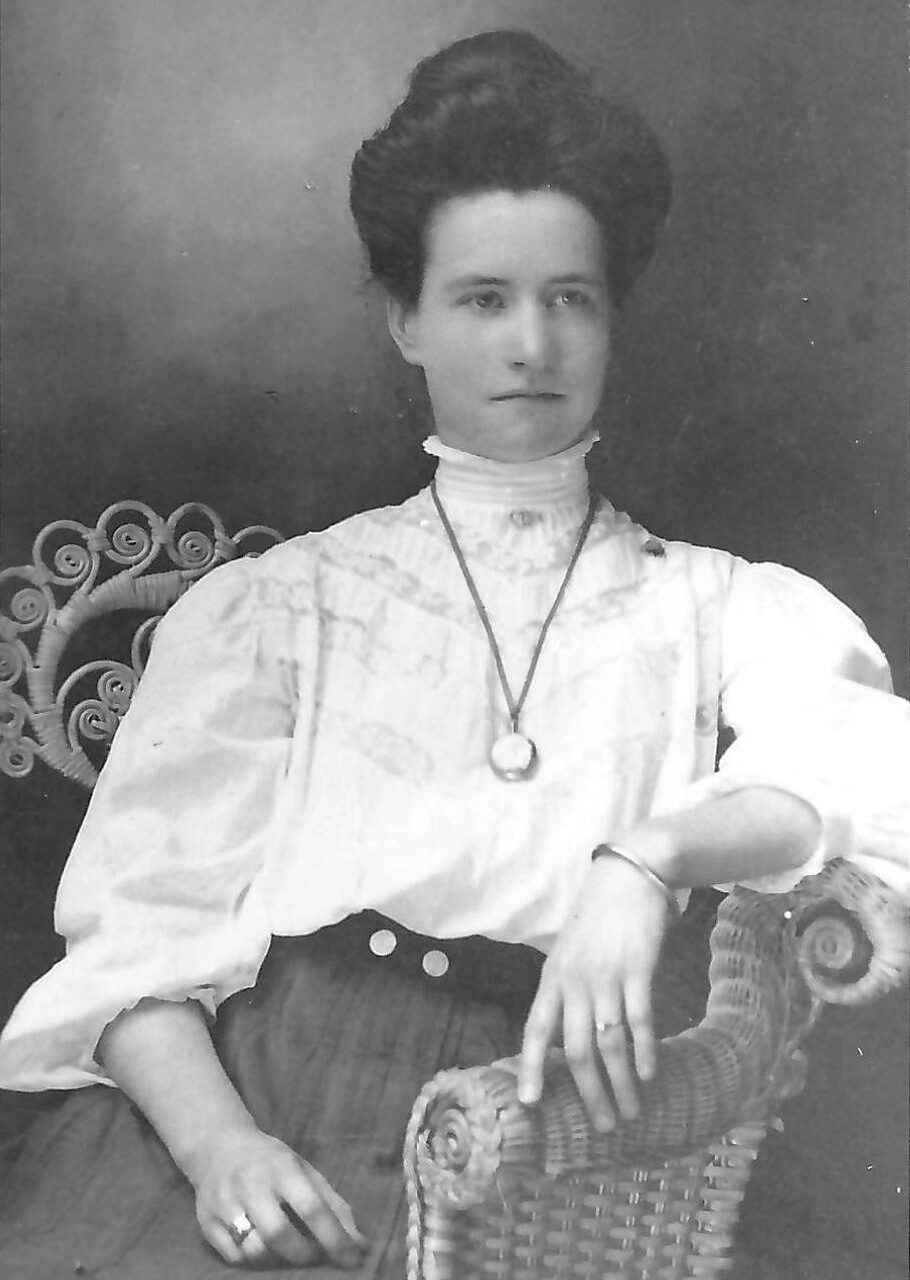
James and Maggie Nash Mullany
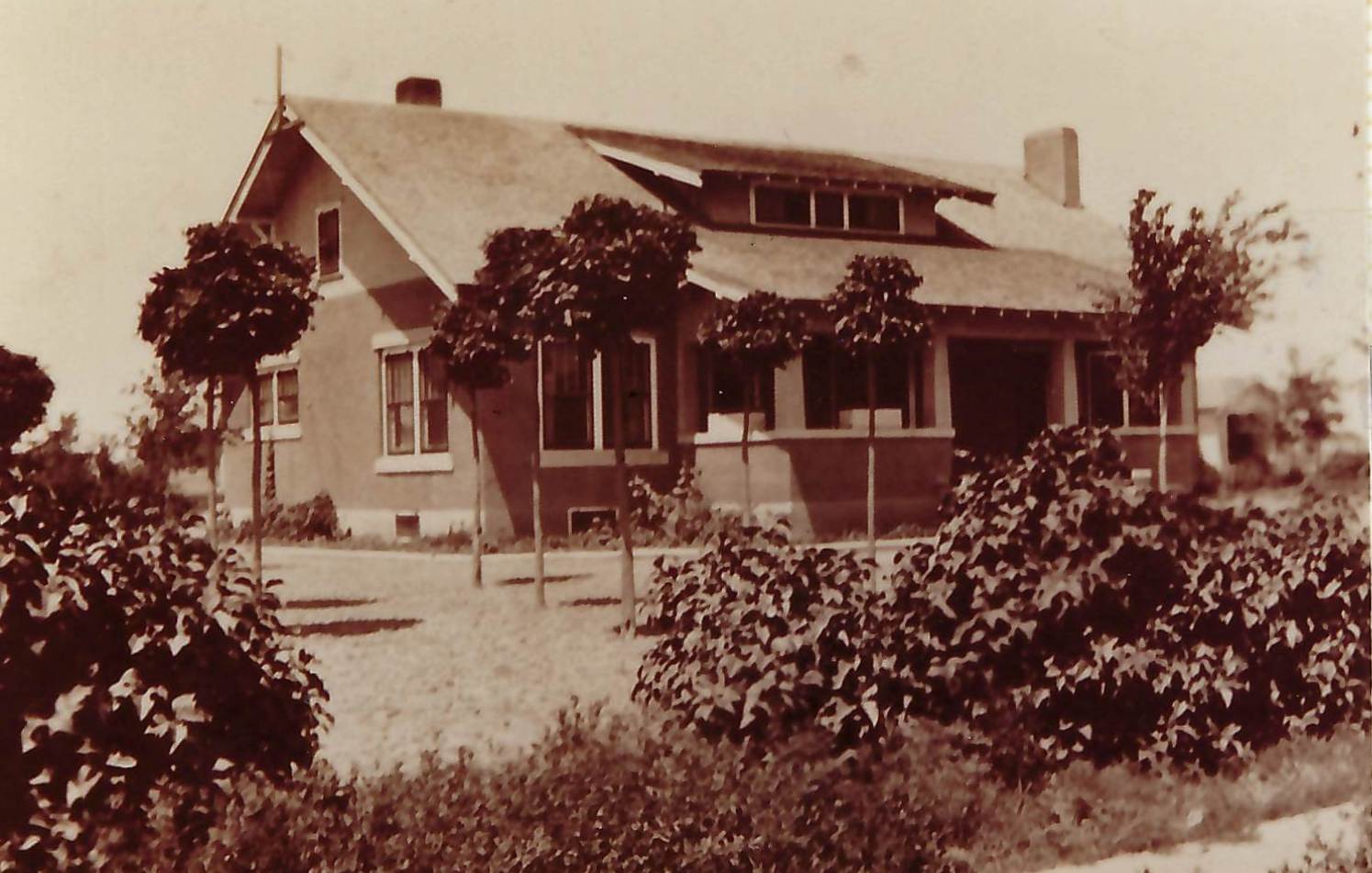
One of James and Maggie’s young sons stands in front of their home on the northeast corner of Waterman and Western in Lakin.
This building once located on the southwest corner of Main and Lincoln and remembered by some as the Baptist Temple was where Mullany and Hart opened their grocery and dry goods store in 1901.
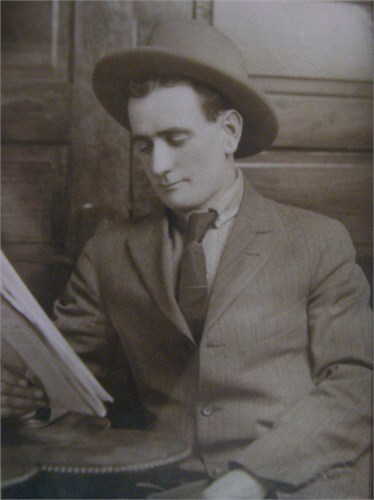
James Mullany, former Clerk of the District Court and Register of Deeds.


SOURCES: History of Kearny County Vol. I & II; A Standard History of Kansas and Kansans by William E. Connelley; Diggin’ Up Bones by Betty Barnes; Ancestry.com; findagrave.com; Wikipedia; Museum archives and archives of The Lakin Independent, Advocate, Lakin Index, Investigator, Garden City Herald and Garden City Imprint.


Remembering local here Oscar Wayne McAfee

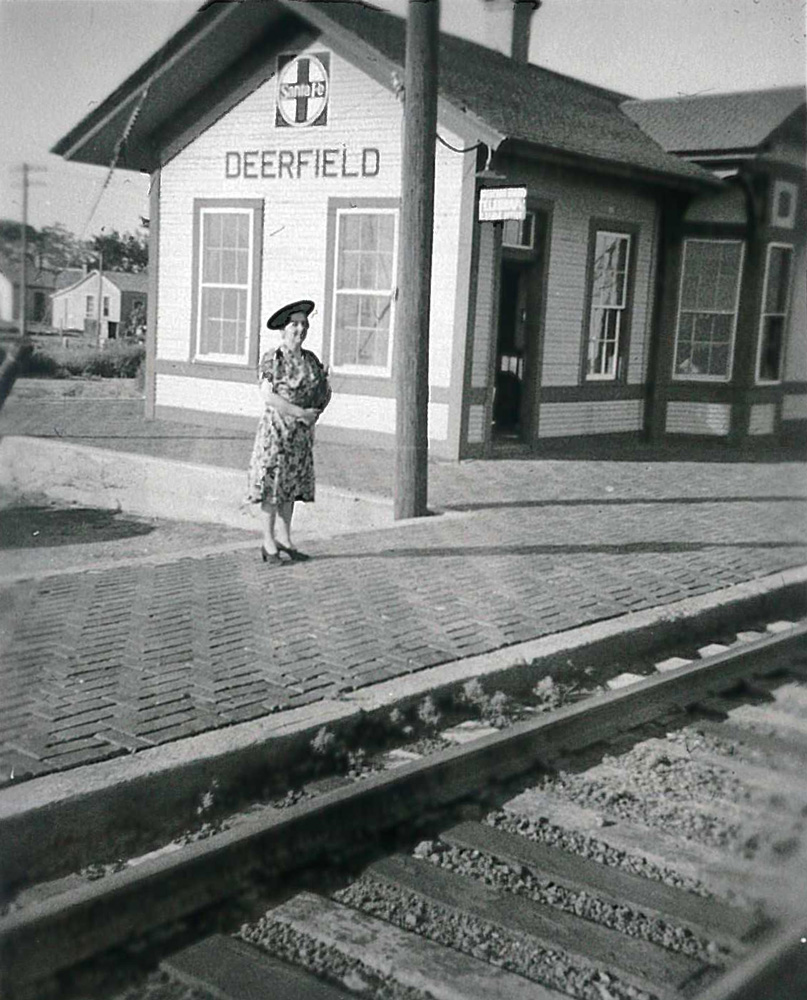
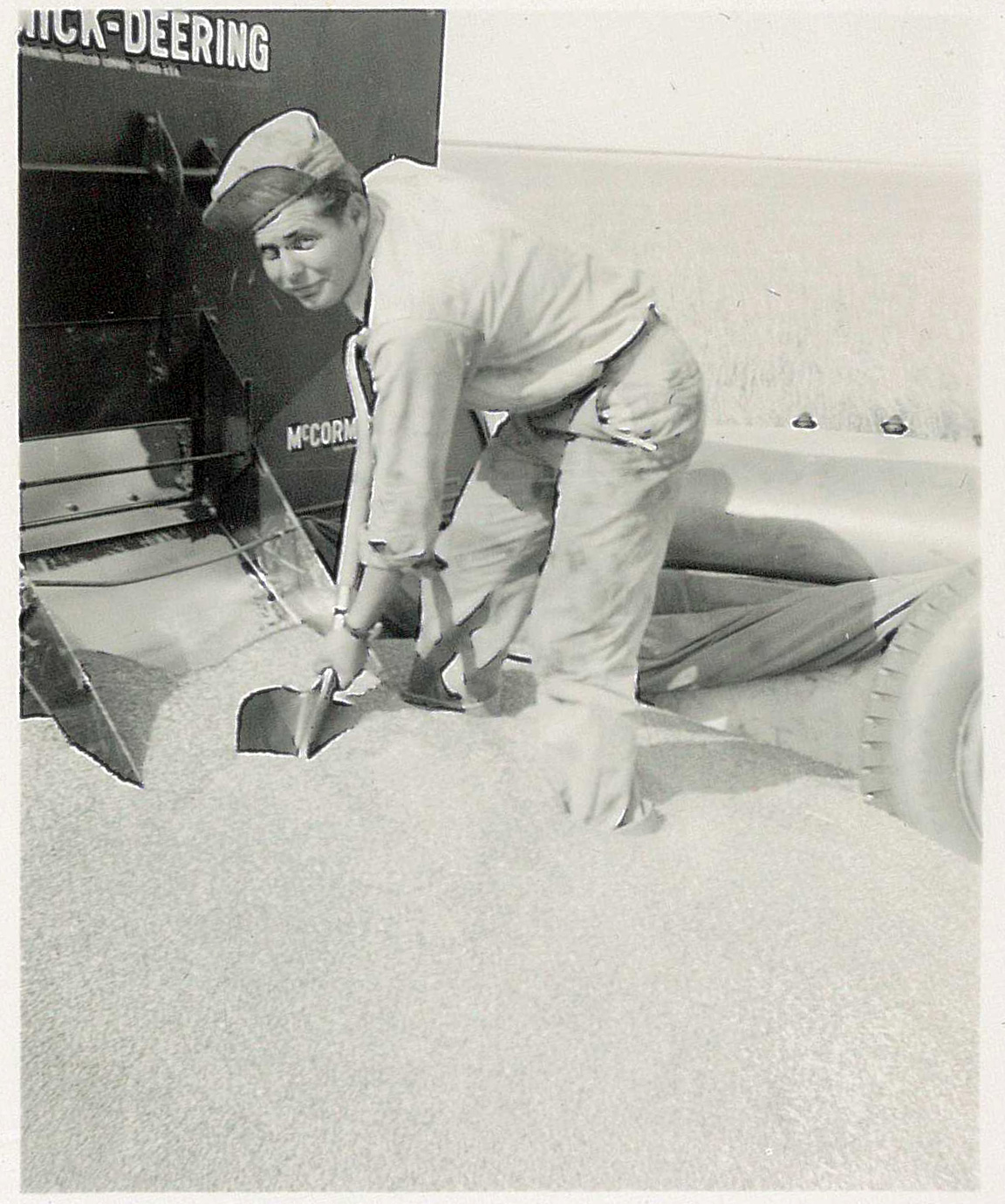
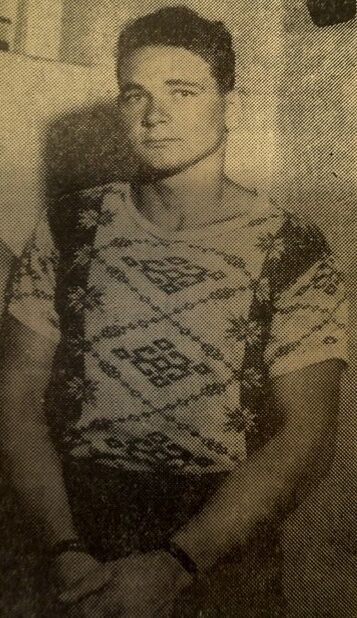
Since the American Revolution, more than 1.3 million Americans have died in battle or during wartime service. Each year on Memorial Day, these men and women who made the ultimate sacrifice are remembered with reverence. Among them is Sgt. Oscar Wayne McAfee, a Deerfield native, who was lost in the line of duty in 1944.

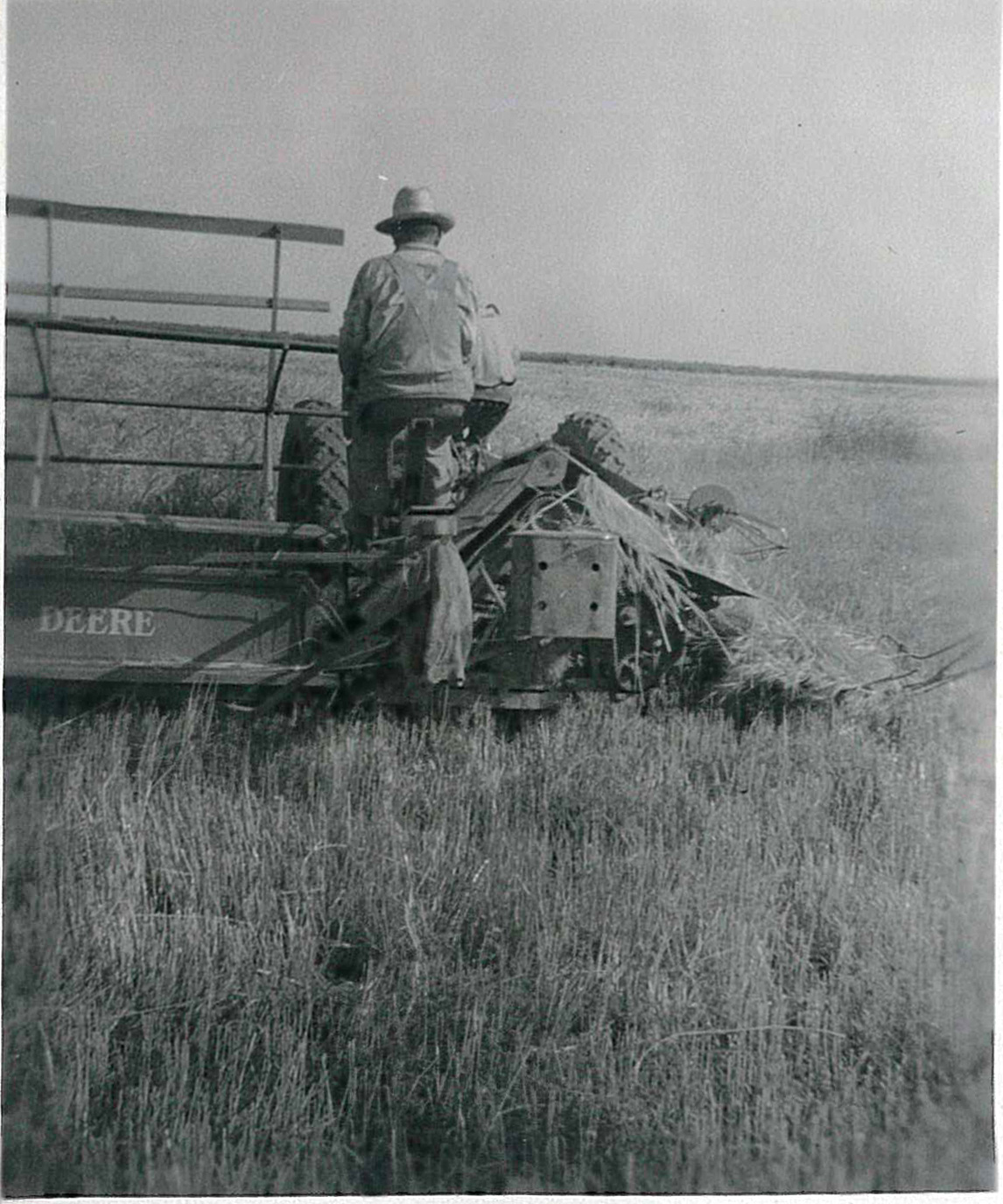
McAfee was born in 1921 at Garden City, the son of Harrison and Lulu McAfee. He grew up in and near Deerfield where he graduated with the Deerfield High School Class of 1939 and engaged in farming with his father, a World War I vet. McAfee married Eloris Scheuerman in August of 1942, just three days before leaving for military service.

He took his basic training at Camp Roberts, California, joining the 127th Regiment of the 35th Infantry Division in December of ’42. The division was the same one in which his father had served. McAfee received additional military and maneuver training in Alabama, Tennessee, North Carolina, and West Virginia.

His team sailed to England, landing May 24, 1944. They were stationed at Newquay until early July when the regiment sailed and landed on French soil at Omaha Beach.  In the initial attack of Company B, harassing enemy machine gun fire impeded the progress of the unit. Sgt. McAfee, accompanied by three others, voluntarily went forward in an attempt to destroy an enemy machine gun emplacement in a hedgerow 100 yards to its right. Despite enemy fire of all types, the patrol was successful in reaching the emplacement where McAfee destroyed the machine gun position by using three hand grenades, killing two enemy machine gunners and wounding two whom he took as prisoners. McAfee, his patrol and prisoners were discovered by an enemy observer when returning to the unit. They were fired upon, and Sgt. McAfee, the two prisoners and two members of the patrol were killed. McAfee’s obituary lists his date and place of death as July 11, 1944 near St. Lo, France.

For Sgt. McAfee’ gallantry in action, his courage and devotion to duty in accord with the high tradition of the military service, he was posthumously awarded the Silver Star. He was also cited with an American Theatre Ribbon, Victory Medal, European-African-Middle Eastern Ribbon with two bronze service stars, Good Conduct Medal, expert carbine and rifle badges, combat infantryman’s badge and Purple Heart.

Sgt. Wayne McAfee’s body arrived by rail in Garden City in February of 1948, accompanied by a military escort from the American Graves Registration Distribution Center in Kansas City, Mo. Delegations from the Garden City VFW and American Legion posts met the train, and Kearny County posts also took part in the burial services. Funeral services were conducted February 10, 1948 at the Deerfield High School auditorium. Despite a near-blizzard, more than 500 people attended the memorial services. As friends and comrades of the deceased gathered to pay a final tribute at the Deerfield Cemetery, a high wind swept a blizzard into Kearny County.

Sgt. McAfee was preceded in death by an infant sister and older brother, Vern, a Marine who also died while serving his country. Sgt. Oscar Wayne McAfee was survived by his parents, wife and their young daughter, Lola Wynn, who was born six months after his death. Eloris never remarried. She lived in Garden City where she worked for Montgomery Wards and Woolworths and volunteered at St. Catherine Hospital. She was laid to rest beside her husband at Deerfield in 2010, her marker engraved with the words, “SWEETHEARTS FOREVER.”

Area crippled by 1951’s spring weather

In the spring of 1951, Mother Nature played havoc with our little corner of the state. On Sunday, May 13, 7 inches of rain fell within an hour in an area six to seven miles northwest of Lakin bringing draws and creeks in the area to flood stage. Soon the highways were flooding, and the Highway 50 detour, seven miles north of town, was closed down. More rain on Monday raised the water in the flooding gullies even higher. The washout damage on highways continued north and east of town, but things were just getting started. That morning, a heavy rain also fell in eastern Colorado, and soon a record-high flood crest on the Arkansas was reported. Local police and highway officers kept watch throughout the night as the river continued to rise.

The crest reached Lakin about 6 a.m. Tuesday morning. As flood waters spread out over lowlands, travel on K-25 between Lakin and Ulysses was cut off, and Lakin was marooned from highway travel most of that day. The only way out was to Garden City by taking the Grange Hall Road nine miles north of town and then going east until arriving north of Deerfield. Rail and bus travel was at a standstill, and mail was delayed for days. Although the Arkansas was out of its banks all the way from Lakin to Lamar, neither Lakin nor Deerfield were in any danger of flooding from the river or the surface water from the north.

Rain-swollen streams caused wide-spread flooding in parts of Kansas, Oklahoma and Texas. Four miles east of Syracuse, 22-year-old Gene Lusk of Kendall fell off a railroad bridge while working with a Sante Fe crew repairing flood-damaged tracks. Lusk, wearing hip boots and a heavy raincoat, was thought to have struck his head as he fell into the Arkansas River. Fellow workers tried to rescue him, but the young man drowned.

The following Sunday, May 20, Lakin was struck by a flash flood, and streets became roaring rivers as the wall of water rushed through town in a matter of minutes. The water varied in depth from about five feet at the corner of Waterman and Buffalo to about five or six inches over most of the lawns in the high sections of town. The depth of water on Main Street ranged from about 20 inches to two feet near the depot and about six to eight inches on the higher levels.

Hail, violent winds and two small tornadoes preceded the flood. One to the south of Lakin tore through a two or three-mile stretch and demolished buildings and trees in its path. Considerable damage was done to the farms of Wallace Roderick, William Schibbelhut, Davis Williams and Paul Bentrup. The other twister struck government storage bins two miles north of town, wrecking about five or six of them and strewing them for a half mile or more over a wheat field to the east.

Following a 40-minute heavy rain that dropped 2.5 to 5 inches in a small area northwest of Lakin, a wall of water formed across Sand Creek and was held back by the Amazon and Eastern irrigation ditches. US highway 50 also held back a considerable amount of water. When this spilled over the top of the ditches, it rushed down the highway in a solid wall of water about two feet deep. Water flowed across HWY 50 at the ditch bridges just west of town to the depth of the side railings, and several persons in automobiles raced into town ahead of the rushing water. The fire siren was sounded as a warning for all residents to prepare for the flood conditions, but there was little time to sandbag or even move valuables to higher ground.

Cars were unable to move east and west through the town, and several tractors were used to get people back and forth over the deepest areas. Men struggled through water as deep as their shoulders to reach homes and businesses. At the crossings where the current was the swiftest, chains of men formed to ford the rushing waters so that no one would be swept from their feet. Practically every home owner received damage to either their home or lawn from the muddy water, and many had as much as 18 inches of water coursing through their homes. Acid Engineers, Chemical Process Co. and Colorado Interstate Gas Co. had trucks and men available to help pump out basements.

Considerable damage was also done to vehicles and houses by hail ranging in size from golf balls to larger than hen eggs. The Santa Fe Railroad tracks east of town also washed out. Only moments before the lights went out and with back-up lighting provided by two candles and a cigarette lighter, Kyle Penelope Davis, daughter of Mr. and Mrs. Drexel Davis, was ushered into the world by Dr. Sabo and his staff at the Sabo Clinic on Lakin’s Main Street.

Just a few days later, another terrific hail storm slashed across the northern part of Kearny County smashing farm buildings, homes, vehicles and crops. The storm originated in Greeley County and spread over an area more than 100 miles long and 15 miles wide. All the windows on the north side of the Leo Michel home 17 miles north and six miles west of Lakin were smashed, and the house was stripped of its shingles. Just to the west and north of Lakin, every window facing west in Gordon Crone’s new home was broken. One hailstone bounced 21 feet through the living room and smashed out another window on the south side. Crone reported that even the buffalo grass in his pastures was beaten into the ground. Many more homes also felt the storm’s wrath. North of Deerfield, where the hail strip widened and mowed everything down in its path, hail battered the siding on Maurice Combs’s house making holes large enough to stick a quart paint can into.

Noah Hoyt, Lakin’s official government weather observer, recorded a total of 6.24 inches for the month of May 1951 with most of the moisture recorded over a 10-day period from May 12 to 22. Another 1.71 inches was recorded in the first six days of June. Some sections of north Kearny reported as much as 10 inches that May, and nearly $167,000 was sustained in flood damage that year. After being breached on several occasions and sustaining continual flood damage, the Great Eastern Ditch was abandoned after the 1951 flood.

The Maddux home located just northeast of Lake McKinney was completely cutoff by flood water. 5-18-1951 Independent
High water from torrential rains cut through and washed out the detour of highway 50 seven miles north and four east of Lakin. 5-18-1951 Independent
TORNADO RIPS PMA STORAGE BINS – A small twister struck the government grain storage bins north of Lakin. Whole bins and pieces were smashed and scattered over a half mile stretch in Dan Ratzlaff’s wheat field. 5-25-1951 Independent
An abandoned house on the Davis Williams farm received the full force of the twister which struck three miles east of Lakin. 5-25-1951 Independent

SOURCES: History of Kearny County Vol. II and Archives of The Lakin Independent, Wichita Eagle and Parsons Sun.


Fred Harvey and Alice Steele steal the show at KCHS’s 2026 Annual Meeting

The Kearny County Historical Society’s Annual Meeting was held April 18th at the Veterans Memorial Building. Seventy-five people signed the guest book, and four signed up for memberships that evening.

President Linda Peters welcomed everyone in attendance. The crowd stood and recited the Pledge of Allegiance, and then the blessing was given by Bob Price, second vice-president. Next, a delicious meal of pulled pork, New Orleans potatoes, baked beans, rolls, coleslaw and cupcakes was enjoyed. The meal was catered by Webbs BBQ.

Following the meal, Peters introduced the board members and Museum employees. Minutes from the 2025 Annual Meeting were included in the program and approved as read. Treasurer Marilyn Wolfe presented the 2025 year-end financial report, and the financial report was approved as read.

Peters announced that the KCHS will probably start charging a minimal fee for the meal in 2027 due to budget cuts. She also gave a review of museum activities in 2025 which included school tours, Night @ the Museum, work on the White House porches, replacement of the lights in front of the Main Building, the award of a Western Kansas Community Foundation grant, the receipt of an antique truck from the Joe Tarbett estate, and the continuation of newsletters and Julie’s weekly article in The Lakin Independent. The Museum had 865 guests from 19 states and seven different countries sign the register in 2025.

Next order of business was the election of board members. Karen Burden, Robbie McCombs, Bob Price, Brenda Rios and Marilyn Wolfe were all up for re-election. Joe Eskelund, long-time board member, opted not to run again. Other names submitted for the ballot were John Craig and Wilma Day.

Following the collection of ballots, Julie McCombs introduced Steve and Suzanne Germes, former Lakin residents who now live in Topeka. Steve portrayed Fred Harvey, and his eldest son, Ford, while Suzanne portrayed Harvey’s personnel manager, Alice Steele. Their program covered how Harvey came to be known as the “Father of Hospitality” and the “Civilizer of the American Southwest.” Following Harvey’s death, his children continued in their father’s shoes expanding the Fred Harvey Company into other venues with Fred’s signature style of excellence.

McCombs announced election results. All incumbents were returned to office, and Craig was elected to fill the vacancy. Karen Burden, Kelley McCormick and Lisa Grant won the door prizes.

Wagon train’s arrival was Kearny County’s first official Bicentennial activity

In celebration of the nation’s 200th birthday in 1976, Americans across the country took part in a very unique road trip, the Bicentennial Wagon Train Pilgrimage to Valley Forge, Pennsylvania. Described as a replay of history in reverse, five trains of covered wagons crossed the country from West to East adhering as closely as possible to original pioneer trails and wagon routes. The event was sponsored and planned by the Bicentennial Commission of Pennsylvania which provided an authentic Conestoga or prairie schooner for each state as well as a Pennsylvanian Conestoga and chuck wagon to accompany each of the main caravans. Citizens were also encouraged to join the trek on horseback or in their own wagons for all or part of the journey.

When the covered wagons made evening camp, singers, dancers and musicians in buckskins and ginghams entertained with ballads, reels and other early American songs and dances. Reenactments and local celebrations in towns along the routes also took place.

A caravan of four covered wagons kicked off the first leg of their journey at the Rose Bowl Parade in Pasadena, CA, on New Year’s Day. The train traveled through Arizona, New Mexico and Colorado, picking up official wagons from each of those states along with several privately owned wagons and numerous riders on horseback. The train arrived at Coolidge, KS April 5 and was joined by a prairie schooner representing Kansas.

The wagons rolled into Kearny County shortly before noon on April 7. They stopped for a short noonday repast and were greeted by the official nine-member welcoming committee. Also present were Lakin students Sonja Smith and Rob Jaeger and Deerfield student Pete Ramirez. Smith won the local Bicentennial essay contest for high school students while Jaeger and Ramirez won the poster contests for grade schoolers. These three were invited by the wagon master to ride in the wagons to Loucks Park.

Elsie Heisinger joined the group at Kendall, and Dick Grusing, driving his wagon loaded with the local folks, welcomed Jack Pepper who kept the entire wagon train entertained with his guitar playing and singing as they made their way the last 12 miles. Twenty wagons and some 75 to 100 trail riders were in the train when it arrived.

A crowd estimated at over 500 persons greeted the wagoneers as they entered Loucks Park and the rodeo grounds. The Lakin High School marching band, dressed in full uniform, played while the wagons made their circle for the night’s encampment.

The job of feeding around 225 hungry wagon train members, workers and visiting dignitaries began about 5 p.m. The meal was prepared by volunteers with the Kearny County Saddle Club donating and barbecuing the beef. Some 35 pounds of pinto beans grown in Wichita County and donated by Bryant Holmes of the Leoti Standard were consumed along with gallons of potato salad and pans of piping hot cornbread made by USD 215 lunchroom cooks. Karen Burden was chairman of the committee to arrange a reception, overnight stay, and a place to present the show put on by the troupe traveling with the wagon train.

Also as part of the festivities, Pony Express riders presented scrolls bearing the names of Deerfield and Wichita and Grant county residents to the wagon master of the Bicentennial Wagon Train. These scrolls, Pledges of Rededication reaffirming the people’s belief in American principles, were relayed from rider to rider. Kearny County Saddle Club President Butch Anderson arranged the ride and coordinated the efforts of the Lakin riders with those of the Leoti Rough Riders Saddle Club and the Easy Riders Saddle Club of Ulysses. The transfer point for the Grant county group was the Menno Road. Kearny County riders making the run from Menno Road to Lakin were Bret Tate, Wade Berlier, James Davis and John Moore. Brian Dumler, Tammy Hammons, Troy Hammons, Jack Coyne and Neil Schibbelhut rode the route from the Wichita-Kearny County line, and Gary Patton, Teal Burrows and Bill Jennings brought the Deerfield scrolls to Lakin.

The Bicentennial Wagon Train had special meaning for all of Kansas. As it traversed the Santa Fe Trail, the old gateway to the southwest, the prairie schooners and Conestogas were reminiscent of early Kansans coming from the east to settle a new land. The wagoneers were experienced trail riders and teamsters. Students, craftsmen, professional people, housewives and even some grandparents joined the train in the spirit of patriotism. The train crossed into Missouri May 5, and a few days later met up with more wagons from the Oregon Trail wagon train. They were loaded onto river barges and floated to Pittsburgh by way of the Missouri, Mississippi and Ohio rivers. All the caravans that were spaced across the US converged at Valley Forge for an encampment and Bicentennial festivities July 4th.

The wagon train paused at the west Kearny County line for lunch and to meet the official welcoming committee.
The welcoming committee was led by Chairman Jack Rice of the Kearny County Commissioners and Lakin Mayor John Henderson. Included in the group were Elene Henderson, Florence Fletcher, Gladys Stallard, Ida McKinney, Cora Holt, Naomi Burrows and Vivian Fletcher Fankhauser, photographer.
Winners of the poster and essay contests were L-R: Pete Ramirez, Sonja Smith and Rob Jaeger.
L-R: Brian Dumler, Saddle Club President Butch Anderson receiving the scrolls from Neil Schibbelhut, Jim Davis, Bret Tate, John Moore and Wade Berlier.
Pony Express riders Tammy Hammons and Jack Coyne astride their steeds.
L-R: Bill Jennings, Teal Burrows and Gary Patton brought scrolls from Deerfield.


SOURCES: Ford Presidential Library; Museum archives; and archives of The Lakin Independent, South Pasadena Journal, Philadelphia Inquirer, Kansas City Star and Wichita Eagle. Photo credits: Vivian Fletcher Fankhauser and Lakin Independent.


XY Ranch was another of Fred Harvey’s enterprises

Fred Harvey’s business ventures in Kearny County were not limited to Lakin’s two-story railroad dining hall. He also owned one of the largest ranches in the area. When Harvey learned a herd of 10,000 cattle had been put up for sale, he reached out to William Strong of the A,T & SF Railroad, and offered him the chance to be his partner in ranching. Soon, Harvey and Strong partnered up with another Santa Fe executive. Harvey spent $4,000 for his share with an option to purchase the rest, and the men established the XY Ranch about six miles east of Lakin. Headquarters were north of the tracks near Deerfield while the range sat south of the railroad. Eventually Harvey and his partners bought so much land that the XY range spread over 4,000 square miles, extending down through the Oklahoma Panhandle and into Texas. This made the XY almost as big as the state of Connecticut.

Major Falls was in charge of the ranch, but quite a number of hands were needed to operate the enterprise among whom was Samuel Harris Corbett. During the four years Corbett was employed, he traversed the Harvey range from Garden City west to Hartland, and the spring roundups brought him in contact with almost every hill and vale within a radius of 250 miles.

Another ranch hand was a young lad by the name of Eli Hall. Eli left Chicago at the age of 18 in 1882 to seek his fortune as a cowboy in the West. He promised his childhood sweetheart that he would return to Illinois in a few years and marry her. Eli quickly earned the nickname “Romeo” from the other cowboys while working for the XY. In the fall of 1885, the young cowpoke came down with the fever and was eventually taken to Deerfield’s railroad section house to receive medical care, but sadly Eli lived only a few more days. A casket was made from boxcar doors, and the young man’s body was interred on the hill on the south side of the Eastern ditch at Deerfield where he often sat upon his pony gazing over the broad expanse of prairie, river and sandhills. In 1886, a schoolhouse was built near his grave, and the grassed-over mound of Eli “Romeo” Hall’s final resting place was visible in the school yard for years to come.

Ranch life was dangerous but also exciting. The boys had to continually be on the lookout for hostile Indians and cattle rustlers. Those were the days of the open range before barbed wire fencing. During roundup time, there were often more than 200 cowboys roaming Harvey’s land looking for XY cattle or others that had strayed from nearby herds. At night, there would be huge campouts where cowboys would drink and share stories.

Each cowboy had a favorite pony which he dearly loved. One such horse was Gyp. Gyp was not only the favorite steed of his rider, Jim Mahoney, but of every cowboy who knew of the horse. Gyp was born, branded and raised on the XY and was said to have run in 100 races, winning every time. One night during a roundup, some horse traders camped with the cowboys.  The traders had a racehorse that had been raking in the money, and they soon let it be known they wanted to arrange a race. The cowboys kept quiet about Gyp’s record, allowing the strangers to think Gyp would be easy prey. The strangers would not race for less than a $100 purse which sort of took the cowboys’ breath away at first as money was mighty scarce. Five dollars looked like a big stake at that time. The more the Missourians bragged, the more anxious the cowboys were to back up Gyp, and finally the money was made up.

The strangers wouldn’t let their horse run on the prairie; they insisted on going where there was a hard track. Mahoney finally agreed, and with the foreman’s consent, took Gyp to Lakin where there was a smooth hard stretch of the Santa Fe Trail reaching from the old depot eastward to the east ford of the Arkansas. Gyp‘s quick pace gave him the initial lead against the longer strides of his opponent, a glossy black horse by the name of Prince, but soon Gyp’s lead was shortened with every second. Mahoney felt desperate. While touching Gyp on his shoulder, he managed to strike with much more force than usual in a seemingly accidental way. At the same time, he spoke to Gyp in the loving voice he always used on the range, yet with a strong note of urgency, “Come Gyp. Do your best, old boy.” Gyp seemed electrified. He leaped forward, fairly spurning the ground with his swift, light hoof beats and exultingly reached the wire a full body length ahead of Prince amid shouting and rejoicing from spectators. Mahoney stood at his horse’s head patting him, and Gyp bent his knee and dropped his head for the audience like a little bow of acknowledgement.

Fred Harvey always stopped at the XY to check up on his cowboys and the livestock during eating house inspection trips. He loved the cattle business, and about 1882, Harvey took full ownership of the ranch. Even though he owned several thousand head of cattle, they did not provide Harvey easier access to meat for his restaurants. Since the West had few slaughterhouses and scant refrigeration, cattle were still shipped live on the railroad cars back to Chicago or Kansas City to be butchered.

An increasing number of settlers in southwest Kansas led Harvey to move the XY farther west in 1885. The May 30, 1885 Kearny County Advocate reported, “Major Falls, XY manager, of Granada, was on our streets Tuesday morning. The major has moved the XY ranch from Deerfield to Granada, Col., where they now have permanent quarters. Lakin will miss the boys very much.” Harvey’s Colorado operation expanded into raising dairy cattle and chickens for his eating houses, and with much of the acreage under irrigation, produce was grown for Harvey’s dining halls as well. Harvey’s ranch was one of the most successful in the valley.

Fred Harvey died in 1901, and that same year, The Pantagraph of Bloomington, Illinois reported that D.H. Bane and Owen Bassett, two wealthy Illinois capitalists, had purchased the XY for $250,000. The expansive acreage of choice Arkansas Valley land was to be broken up into 20 and 40-acre tracts. Decades later, a portion of the XY was used for the Granada Relocation Center (also known as Amache) during World War II.

The program for the Kearny County Historical Society Annual Meeting will be about Fred Harvey, his Harvey Houses, and the entrepreneur’s role in civilizing the West. Harvey will be portrayed by Steve Germes, and Steve’s wife, Suzanne, will take on the role of Alice Steele, Harvey’s head of personnel. This April 18th event promises to be entertaining and educational. If you haven’t placed your reservation yet, please do so by 3 p.m. April 9 by calling the Museum at 620-355-7448.


SOURCES: History of Kearny County Vol. I; Appetite for America by Stephen Fried; National Park Service; and Archives of the Kearny County Advocate, Lamar Register, Rocky Ford Enterprise, and The Pantagraph. Photo courtesy of the Kansas State Historical Society.


Laboring in love, Lutherans have had presence in Kearny County since 1888

Missionaries began visiting Kearny County in 1888 to preach to Lutheran settlers here. The first was the Rev. J.H. Hamm of Bellefont, Kansas who was followed by seven others over the next several years. Although the times and conditions were not ideal, the missionaries and the Lutheran families did not mind. Services were conducted in school houses, private residences or whatever place was best suited for them. Some services were conducted in Deerfield and others in Lakin. During these years, “the little flock of Lutherans” steadily grew and were anxious to organize into a congregation.

In 1906, the services of the Rev. Theo Arndt of Lydia were acquired. Since Rev. Arndt was able to come more often than the missionaries before him, new hope filled the members and they could envision the possibilities that lie ahead. On April 15, 1906, a constitution was accepted and signed by 15 charter members with Henry Entz, William Meyer and Peter Schroeder serving as the first elders.

Desiring a suitable church home, the decision to build was made at the May 27 meeting that year. At first the congregation decided to erect a school, but in a meeting held that fall, they opted instead to build a church. The congregation was given additional encouragement to take this step when the U.S. Sugar and Land Company offered an acre of land ½ mile north of Deerfield and $100 in cash towards construction. Using the name, “Deutsche Evangelische Lutherische Immanuels Gemeinde U.A.C.” which means Lutheran Immanuel Congregation of the Unaltered Augsburg Confession, the congregation incorporated on May 20, 1908. (The name was later listed with the Secretary of State as the Evangelical Lutheran Emmanuel Church.)

With additional financial help from the Mission Board of the Kansas District and a number of Christians outside of Deerfield who were endeared to the community, the church became a reality and was dedicated October 18, 1908. The first resident pastor, the Rev. A.C. Dubberstein, was welcomed in the fall of 1909. For many years, services were conducted alternately in German and in English in the small wooden frame church which was heated by a pot belly stove. In 1934, the church was wired for electricity, and lights were installed. Due to World War II and the political climate of that time, the decision was made in 1942 to conduct all Sunday services only in English.

Kearny County’s first Lutheran Church was located just north of Deerfield.
An interior view of the 1908 Lutheran Church.

As the years passed by, weather and time took its toll on the church building, and the congregation outgrew the little church. Henry and Emma Molz donated a church site east of City Park on Deerfield’s Main Street in 1946.  Work began on a new church in 1949, and cornerstone laying ceremonies were held June 25, 1950. Lovely springtime weather prevailed on Sunday, April 8, 1951, when a large crowd attended a full day of dedication festivities.

The second Lutheran Church at Deerfield was constructed on Main Street across from City Park. It is now the home of Christ the King Catholic Church.

The new church featured Gothic-style open rafters with an exterior finish of light brick veneer. Seating capacity of the main auditorium was approximately 125 persons. A kitchen, assembly room and rest rooms were located in the basement. Members of the building committee included chairman Leland Waechter, August Kettler, Arnold Kettler, William Kueker, Elmer Bisterfelt, Henry Molz, Clarence Ploeger and Pastor P.H.C. Stengel, ex officio. Mel Krebs of Garden City was the contractor and V. Preston Terrill of Kansas City the architect. A building committee made up of Eldor Bentrup, Otis Molz, Clarence Meyers, Alvin Coerber and Harold Purdy were put in charge of a new educational wing which was added in 1964.

The second Lutheran Church after the education wing was added.

Late in 1990, a proposal to sell the church and build in Lakin passed by a 2-to-1 margin. This action was not only to satisfy Lakin members who made up the majority of the congregation but also in hopes that a larger community would provide a better opportunity for future growth. While the move was not welcomed by all members of the church, the project hinged on whether or not the church building at Deerfield sold. It did.

Groundbreaking ceremonies for the third and current Lutheran Church were held at the Mattie Street and Bopp Boulevard location in Lakin on Sunday, April 12, 1992. Keith Fillmore of Garden City was the architect, and Laborers For Christ, a Lutheran organization of volunteers who dedicated themselves to doing missionary work for minimum wage, did much of the construction work alongside congregation members and other local volunteers. Together with their spouses, nine LFC workers from all over the Midwest helped with the Lakin project.

Building Committee chairman Norman Simshauser has his hand on the shovel at the groundbreaking ceremonies in the spring of 1992 at Lakin. Others serving on the building committee included Don and Cleone Neff, J.D. and Carol Rice, Bob Winwright, Steve Gestenslager, Don Thomas, Debbie Schiffelbein, Judy Kleeman, Mark Newton, Bruce Ansel, Tim Kohart, Kenny Grauberger, Harold Waechter and the Rev. Robert Roberts.

Immanuel Lutheran Church was dedicated Dec. 6, 1992, St. Nicholas Day. Featuring beautiful limestone work, the church offers 8,378 square feet of space on the main floor and seating for approximately 176 in the sanctuary. A choir loft overlooking the sanctuary, fellowship hall, kitchen and education wing are also part of the facility. In addition to the Lutheran congregation, Grace Church of Lakin is also currently using the church for worship.

Work progresses on the limestone facade of the Immanuel Lutheran Church in Lakin.


SOURCES: History of Kearny County Vols. I & II; archives of The Lakin Independent, Lakin Investigator, Kearny County Advocate and Garden City Telegram; lcms.org, and Museum archives.

Hold onto your hats! The legendary Fred Harvey and his head of personnel, the highly capable Alice Steele, are coming to Lakin April 18th for the 2026 Kearny County Historical Society Annual Meeting! Steve and Suzanne Germes are returning to portray this legendary duo.
Rail lines greatly expanded across the U.S. between 1830 and 1910. This dramatically reduced travel time from months to days, opened the West for settlement, fueled the steel and mining industries, and created a single, massive national market. Railroads essentially built our nation, but it was Fred Harvey who “civilized” the West by providing high-quality, standardized food service and hospitality along the Santa Fe Railroad. Steele was the female executive who managed recruitment and hiring of the famous “Harvey Girls” waitresses, setting strict appearance and conduct standards to bring respectable young women to the West.
Join us at the Veterans Memorial Building to learn more about Fred Harvey and his impact on our nation. Doors will open at 6 p.m., and a meal will be served at 6:30. Webb’s Food Crew is cooking up a delicious meal of pulled pork, baked beans, New Orleans potatoes, cole slaw, and dinner rolls. Celebratory cupcakes in honor of our nation’s 250th birthday will be served for dessert.
Immediately following the meal and prior to the program, a short business meeting and election of board members will take place. Those seeking re-election include Marilyn Wolfe, Karen Burden, Brenda Rios, Robbie McCombs, and Bob Price. Nominations will also be accepted from the floor.
You do not have to be a Historical Society member to attend Annual Meeting, but reservations are required for this free event. Call the Museum at 620-355-7448 by 3 p.m. Thursday, April 9, to make yours! Donations will be accepted to help defray meal expenses, and lifetime memberships will be sold at the door for $20 per person. Only members may vote and make nominations.
Steve and Suzanne Germes as Fred Harvey and Alice Steele. Photo courtesy of The Brandin’ Iron, Florence, Ks.